


Key takeaways
- Ray tracing in gaming simulates realistic light behavior, tracing rays of light through a 3D environment to create accurate reflections, shadows, and illumination.
- 80% of RTX 40 users enable ray tracing (Tweak Town), showing how common it has become among high-end GPU owners.
- Performance costs remain high, with many titles showing a 20–50% frame rate reduction even on advanced hardware (Digitalfoundry).
- AI upscaling technologies like DLSS 4 and FSR 4 have made ray tracing practical by boosting frame rates up.
- Some newer games now require or encourage ray tracing, establishing it as a standard feature rather than an optional visual upgrade.
TL;DR
Ray tracing revolutionizes how games simulate light, delivering lifelike reflections and global illumination that mimic real-world physics. Today, adoption has reached 80% among RTX users (Tweak Town) driven by advancements like NVIDIA DLSS 4 that offset the heavy performance cost. While demanding hardware is still a requirement, games such as Cyberpunk 2077 and Indiana Jones and the Great Circle demonstrate why ray tracing is no longer just an optional visual flourish, but the foundation of next-generation realism.
What is ray tracing in gaming and how does it actually work?
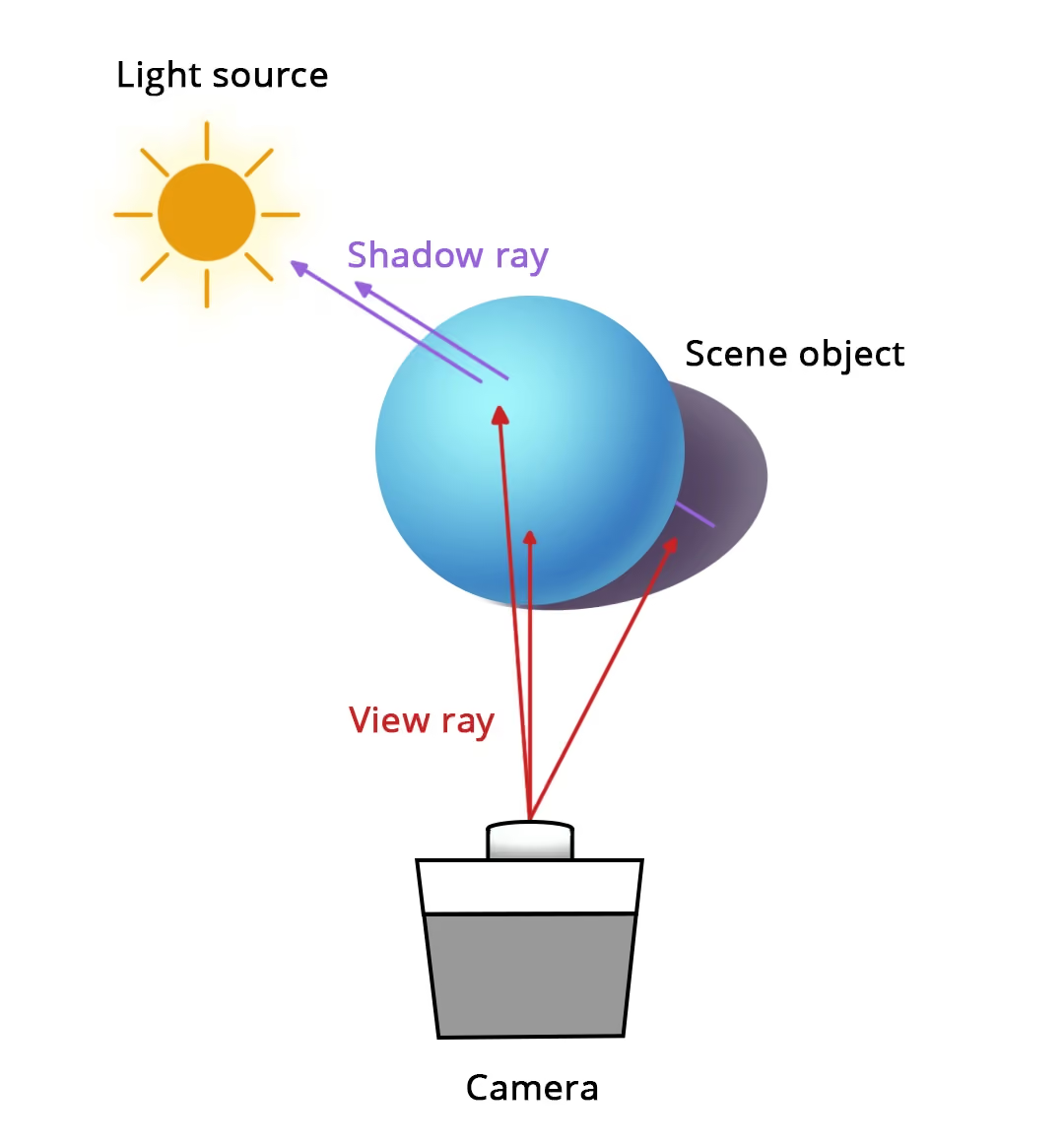
Ray tracing is based on the real-world physics of light. It traces the paths of light rays as they bounce through a scene, interacting with surfaces and materials according to physical laws. When a ray hits an object, it can reflect, refract, or scatter, each interaction producing the light and color data that make up the final image.
Types of ray tracing effects
There are different types of ray tracing effects, all with their own ways of dealing with light and shadow. Below are some of these effects:
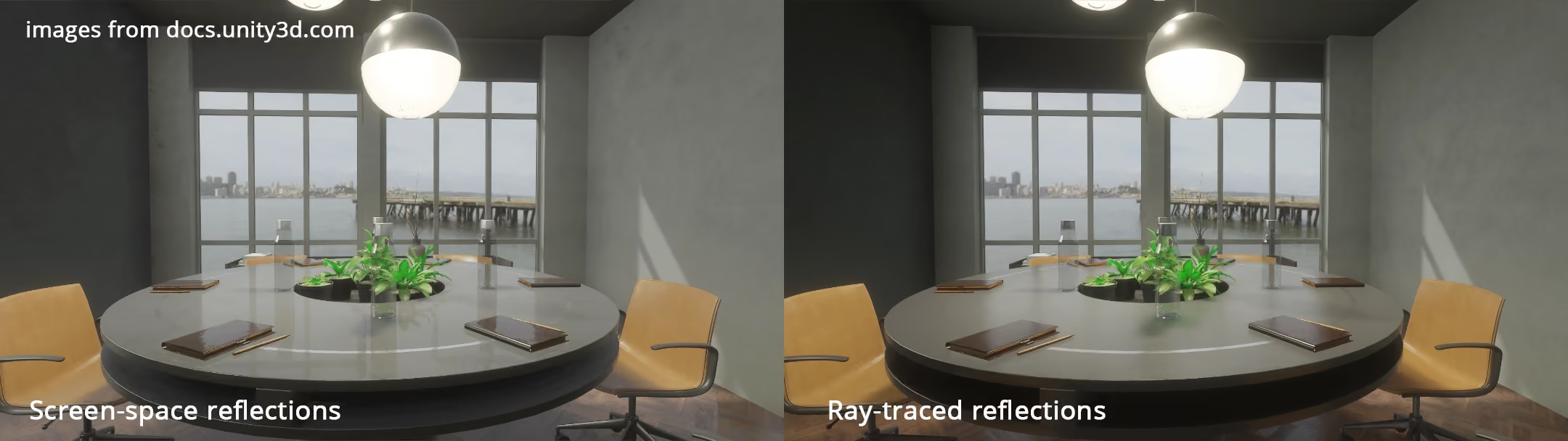
Ray-traced reflections
This effect calculates reflections based on a surface’s properties and viewing angles, producing mirror-like accuracy. Unlike screen-space reflections, it captures off-screen objects and dynamic motion accurately.
Global illumination
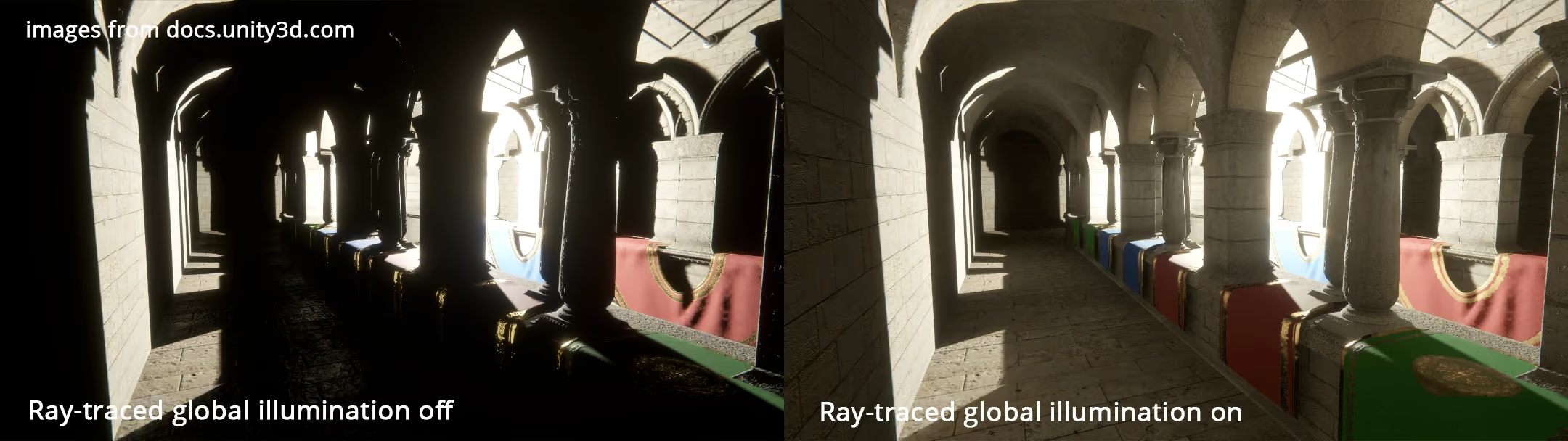
Ray tracing models indirect lighting (the way light bounces from one surface to another) creating realistic ambient light and color bleeding that unifies a scene visually.
Ray-traced shadows
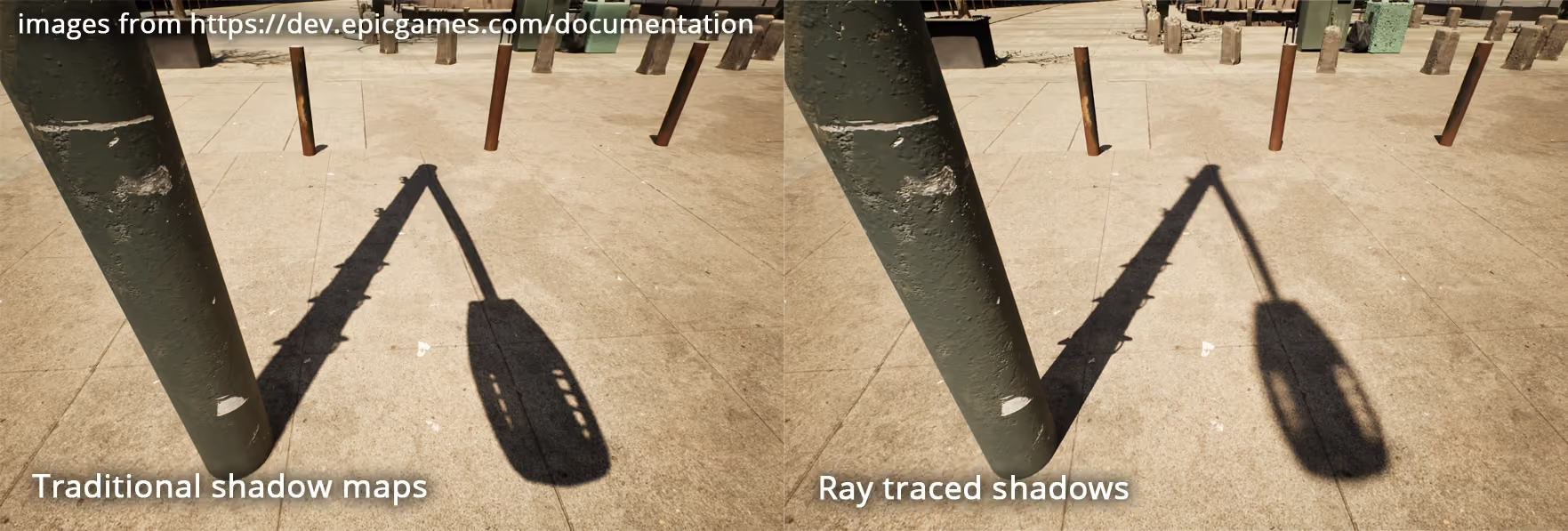
These shadows adjust in sharpness depending on the distance from the light source, producing natural penumbra effects that make lighting feel three-dimensional.
Path tracing
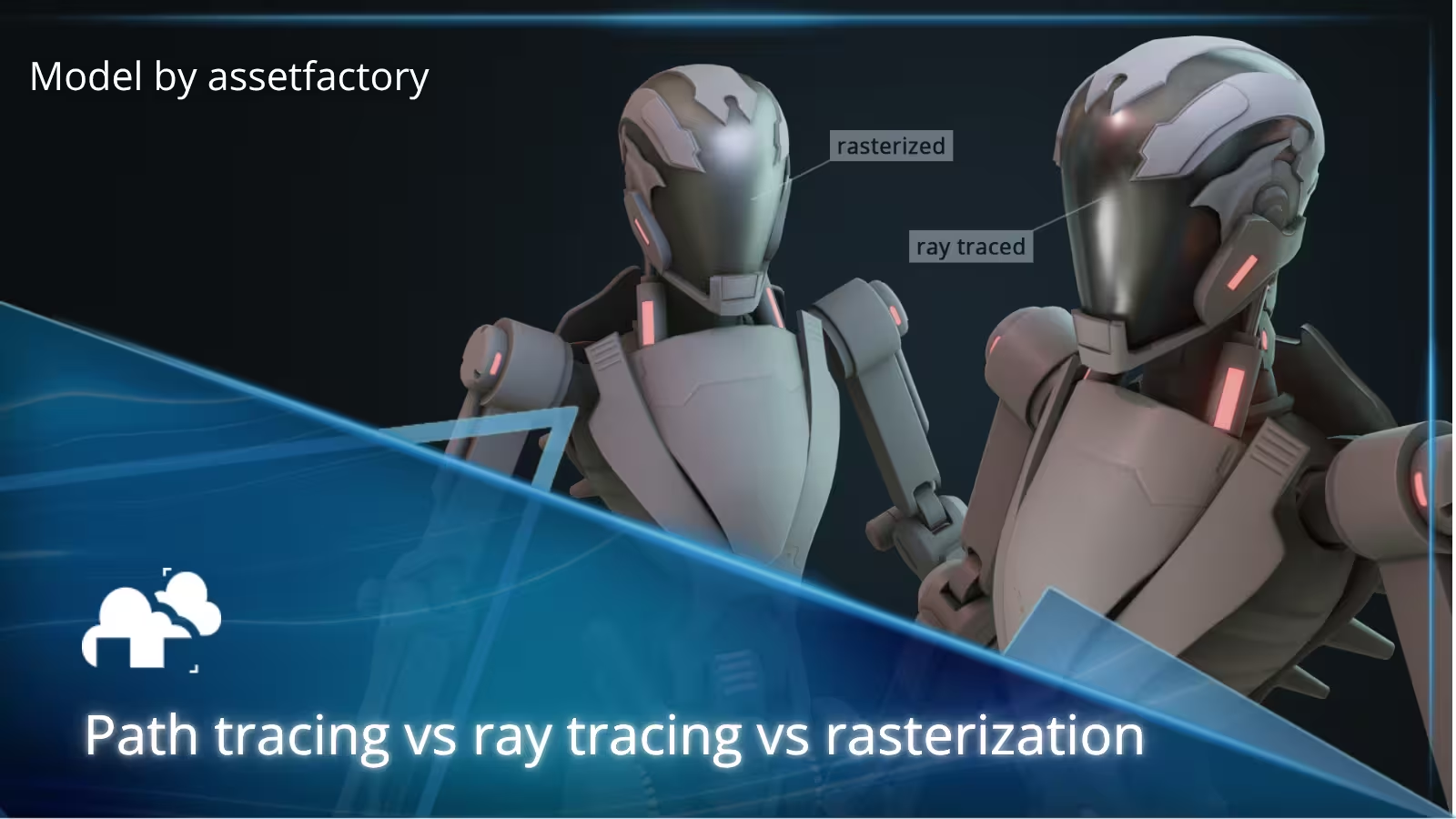
Path tracing simulates countless light paths per pixel, delivering physically accurate lighting and reflections at the cost of extreme computational demand. It is the ultimate form of ray tracing, offering the most realistic results possible in computer graphics. This quick video from MxBenchmarkPC shows an example of regular ray tracing versus path tracing:
Why does ray tracing in games make such a big difference?
Ray tracing makes a big difference in modern games because it brings cinematic-quality lighting, reflections, and shadows that react naturally to the game world, making everything feel more immersive and visually striking, especially in motion; almost like a movie!

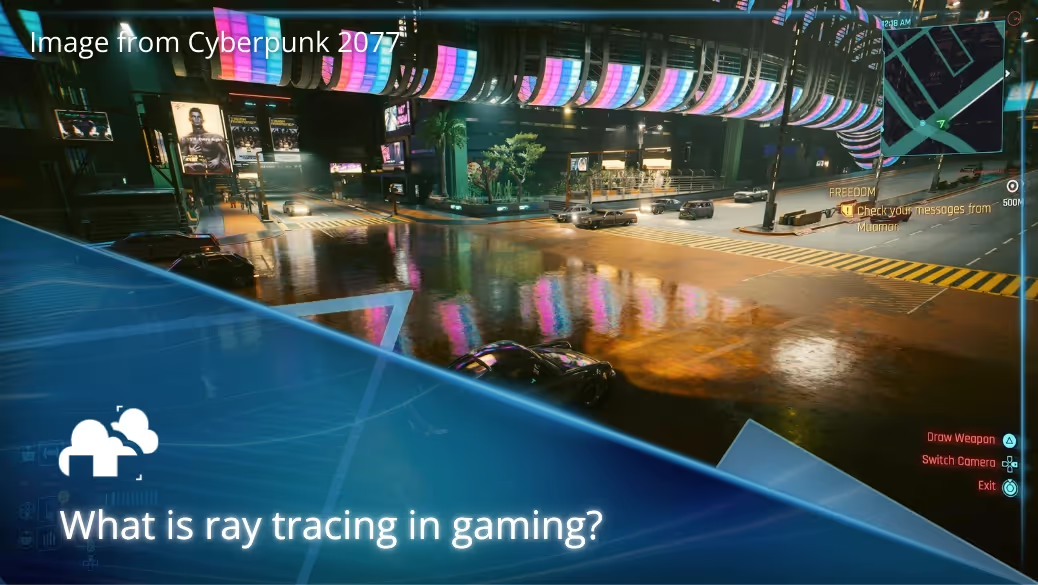
When Cyberpunk 2077 introduced its Overdrive mode with full path tracing, it fundamentally changed the look of Night City. Neon lights scatter across wet pavement, shadows soften with atmospheric realism, and glass surfaces reveal layered reflections (Nvidia). Similarly, Indiana Jones and the Great Circle integrates ray-traced lighting by default, showcasing environments that react to light dynamically rather than relying on pre-rendered tricks.
The end of visual “tricks”
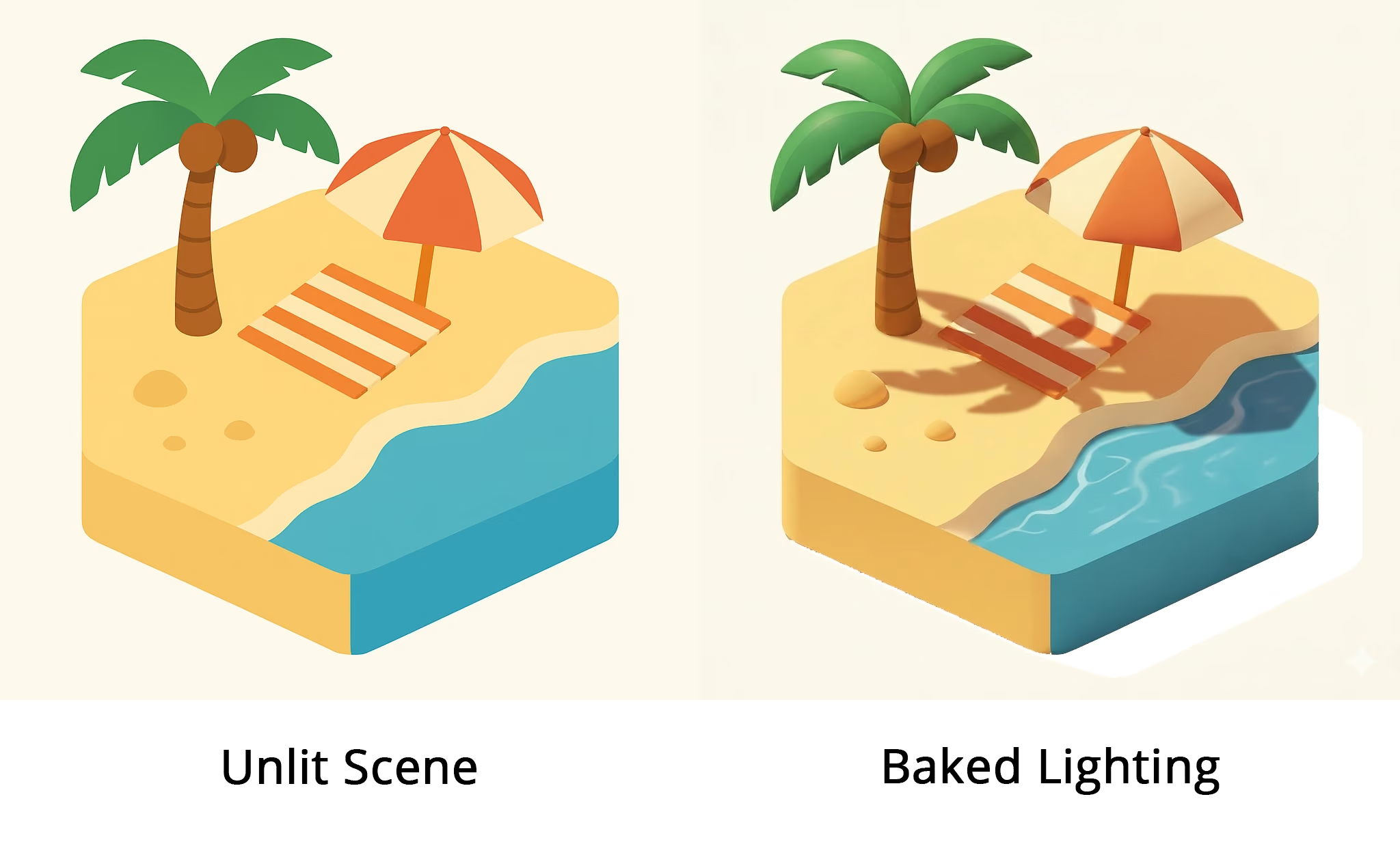
Before ray tracing in games, developers used baked lighting, cube maps, and shadow approximations to mimic realism. These methods were efficient but were at times static. Ray tracing replaces them with real-time light simulation that adapts to movement, weather, and perspective. This makes scenes more responsive, immersive, and physically believable, an important shift from stylized representation to simulated reality.
When ray tracing makes sense vs. when it doesn’t
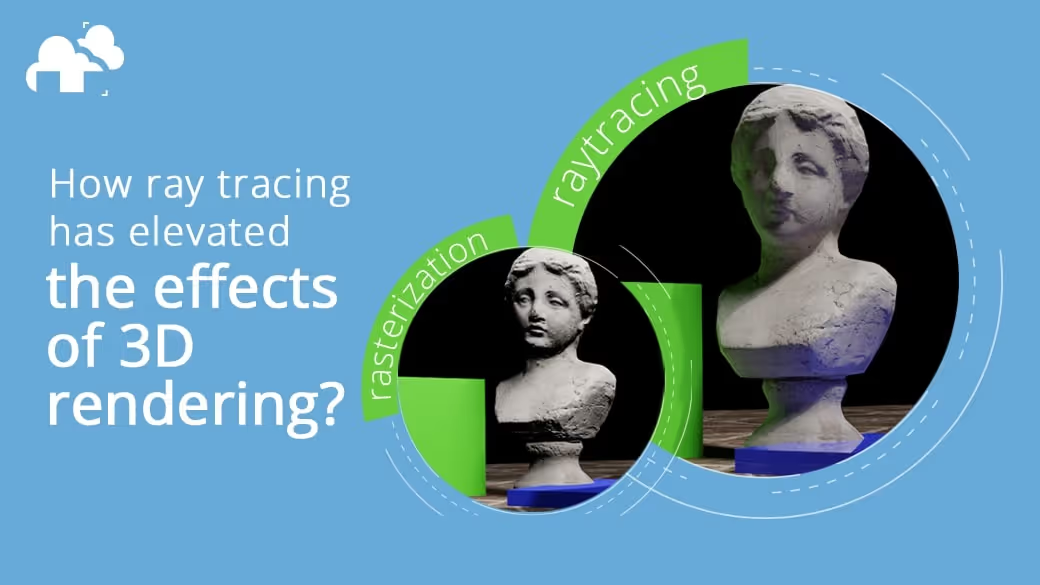
For cinematic single-player experiences, ray tracing heightens immersion and emotion by enhancing lighting, color, and atmosphere. In competitive gaming, however, performance and responsiveness take precedence. Budget-conscious players might prefer hybrid rendering, which is mixing rasterization for speed with selective ray-traced effects for visual polish.
What hardware do you need for ray tracing?
While early generations of GPUs struggled to manage ray-traced workloads, modern graphics processing units handle them much more effectively.
- Entry-level: RTX 3060 or RX 6600 XT for 1080p ray tracing with medium settings.
- Sweet spot: RTX 4070 Super for smooth 1440p gameplay with ray tracing enabled.
- High-end: RTX 5090 for full 4K path tracing with advanced lighting features.
These GPUs feature dedicated ray tracing cores and improved acceleration structures such as bounding volume hierarchies, which allow real-time computation of millions of light interactions per frame.
The role of AI upscaling technologies
AI-powered tools like NVIDIA DLSS 4 and AMD FSR 3 help games run faster and look better, especially when using ray tracing or playing at high resolutions. In perfect conditions, DLSS 4 can boost frame rates by up to 8 times by using AI to create extra frames. But in most real-world situations, the improvement is more often around 20% to 80% (Techspot). These technologies make demanding games smoother and more playable, though the results can vary depending on the game and your hardware.
Is ray tracing actually worth the performance cost?
Despite improvements, ray tracing still taxes GPUs heavily. Even high-end systems see 20–50% frame rate drops when full effects are enabled (Digitalfoundry). Games like Alan Wake 2 or Cyberpunk 2077 demand an RTX 4070 or higher for consistent 1440p gameplay. Yet as NVIDIA’s Matt Wuebbling observed, “DLSS 4 and path tracing are no longer cutting-edge graphical experiments but the foundation of modern PC gaming.”
Which games actually use ray tracing well?
Countless modern games make great use of ray tracing. Some standout ray tracing showcases include:
Cyberpunk 2077
This game remains the gold standard in path-traced rendering, offering unmatched detail, lighting realism, and hardware-demanding visuals.
Control
Control helped establish the visual credibility of real-time ray tracing early on, especially through its reflective surfaces and global illumination.
Alan Wake 2
Alan Wake 2 uses complex illumination systems to amplify atmosphere, depth, and realism, pushing ray-traced lighting for narrative impact.
Fortnite
Even in a stylized art style, ray tracing still proves to be useful and delivers beautiful visuals to games like Fortnite. The change in lighting, atmosphere, and materials makes a huge difference as seen in this video by ZelexFPS
Games that require ray tracing
Indiana Jones and the Great Circle has made path tracing available (Nvidia), setting a precedent for upcoming titles. Doom: The Dark Ages follow suit, designed with ray tracing as a default rendering model (Heise online).
How has ray tracing adoption changed since 2018?
In 2018, only 37% of RTX 20 series owners enabled ray tracing (Nvidia), possibly due to high performance demands or limited support. As of today, adoption has reached 80% among RTX users (Tweak Town), and over 870 games and applications now feature RTX support (Nvidia), and 250 PC games use path tracing (Gamesmarkt). The technology has shifted from novelty to standard practice across both PC and console ecosystems.
Developer and industry perspectives
For some game developers, ray tracing can be an important rendering component. Engines like Unreal Engine feature global illumination systems such as Lumen that integrate ray tracing seamlessly (Epic Games). For artists and studios, it means less time baking static light maps and more flexibility in dynamic lighting design with just a simple toggle of a button.
What does the future hold for ray tracing in gaming?
Modern major consoles like PlayStation 5 and Xbox Series X/S include GPUs with hardware‑accelerated ray tracing support. Recent advances also bring ray tracing to mobile class devices, for example the Arm Mali G1‑Ultra GPU, announced in 2025, claims “desktop‑class ray‑traced gaming” on mobile and about 2× the ray tracing performance of previous mobile GPUs (Eeworld). However adoption on mobile remains limited to newer flagship hardware, and use of ray tracing in games depends heavily on developers balancing visual fidelity and performance.
Beyond current limitations
As ray tracing performance improves, more developers are shifting away from baked lighting in favor of dynamic solutions. This can simplify workflows and speed up iteration, especially in complex or changing scenes. While full path tracing is still limited by performance demands, ongoing research is making it increasingly viable. The gap between offline and real-time rendering is narrowing, though most projects still rely on hybrid approaches. This video by Stylized Station also perfectly explains this:
Should you upgrade your gaming setup for ray tracing?
Whether ray tracing is worth upgrading for depends on what you value most. If visual storytelling and realism are priorities, a ray tracing-capable GPU is a smart investment that will remain relevant through 2030. If performance and competitive gameplay are more important, hybrid rendering or streaming platforms that support ray tracing might be better alternatives.
Optimization tips for current hardware
You can still enjoy ray-traced visuals without a top-tier GPU by balancing performance and quality. This includes lower ray tracing quality settings for reflections and shadows, using DLSS or FSR to upscale frames for smoother gameplay (DLSS gives you really smooth and sharp gameplay, while FSR is a great all-around option that works well on most setups), and prioritize key lighting effects, such as global illumination, for the greatest visual impact.
Register Now and Get $50 FREE Credits!