


Key takeaways
- There’s no single winner in the rasterization vs ray tracing debate. Hybrid rendering pipelines have become the standard approach.
- 83% of GeForce RTX 40 Series desktop gamers with RTX-capable games enable ray tracing, and 79% turn on DLSS (Tweak Town).
- Ray tracing can still lower performance by around 30–50% compared to rasterized graphics, though AI upscaling tools like DLSS 4 are narrowing that gap.
- Over 175 games now support NVIDIA DLSS 4, with path tracing in major 2026 titles such as Resident Evil Requiem and Directive 8020 (Nvidia).
- Four flagship releases between 2024 and 2025 (Stalker 2, Indiana Jones, Star Wars Outlaws, and Black Myth: Wukong) use ray tracing.
TL;DR
Path tracing, ray tracing, and rasterization aren’t rivals anymore but have now become collaborators. Rasterization still leads for speed and efficiency in real-time graphics, while ray tracing delivers unprecedented realism by simulating physical light behavior. While there is no publicly published 2024‑2025 adoption figure, in 2023 NVIDIA reported that 83% of RTX 40 Series users enabled ray tracing. So the possibility of its use now could be even larger. The future belongs to hybrid rendering systems, where AI upscaling and selective ray tracing balance performance with photorealism.
What’s the real difference between path tracing, ray tracing and rasterization in 2026?
In computer graphics, rasterization and ray tracing represent two fundamentally different ways of rendering light, geometry, and materials. Both serve the same goal, which is turning 3D data into 2D images. However, their processes could not be more distinct.

How rasterization creates the illusion of reality
Rasterization has been the backbone of real-time computer graphics for decades. It works by converting 3D shapes, typically made up of triangles in a polygon mesh, into pixels on a framebuffer. Each pixel’s color is determined through shading algorithms that simulate how light interacts with a surface.
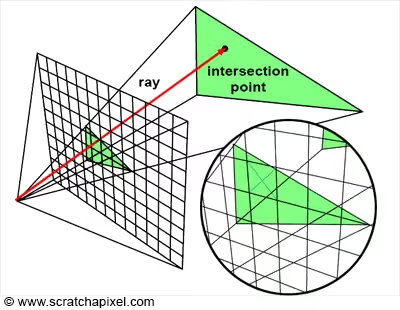
Rather than tracking individual rays of light, rasterization projects geometry through a camera and determines visibility using Z-buffering (or hidden-surface determination). The graphics processing unit (GPU) handles millions of these operations per frame, allowing for frame rates exceeding 120 FPS even on mid-tier hardware (Tomshardware.com).
How ray tracing simulates actual physics of light
In contrast, ray tracing mimics the physical behavior of light using optics principles. Rays are cast from the camera into the scene, bouncing between surfaces and accumulating reflections, refractions, and shadows based on materials and lighting.
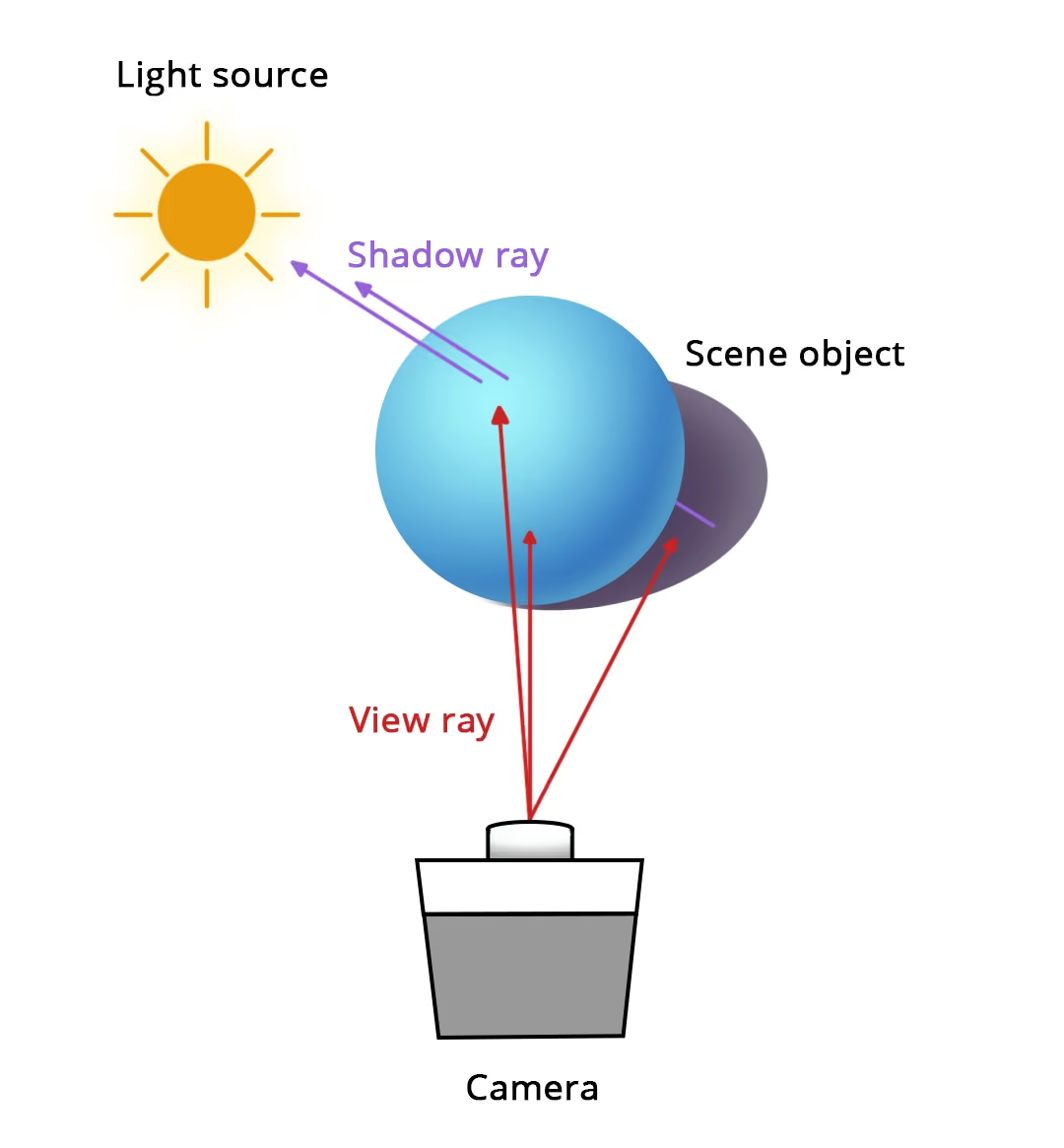
Through recursive algorithms, each ray can generate secondary rays to simulate global illumination, ambient occlusion, depth of field, and caustics. The result is photorealism that captures the subtleties of reflected and refracted light on materials like glass, metal, or water, something rasterization approximates through tricks rather than physics.
Where path tracing fits into the ray tracing family
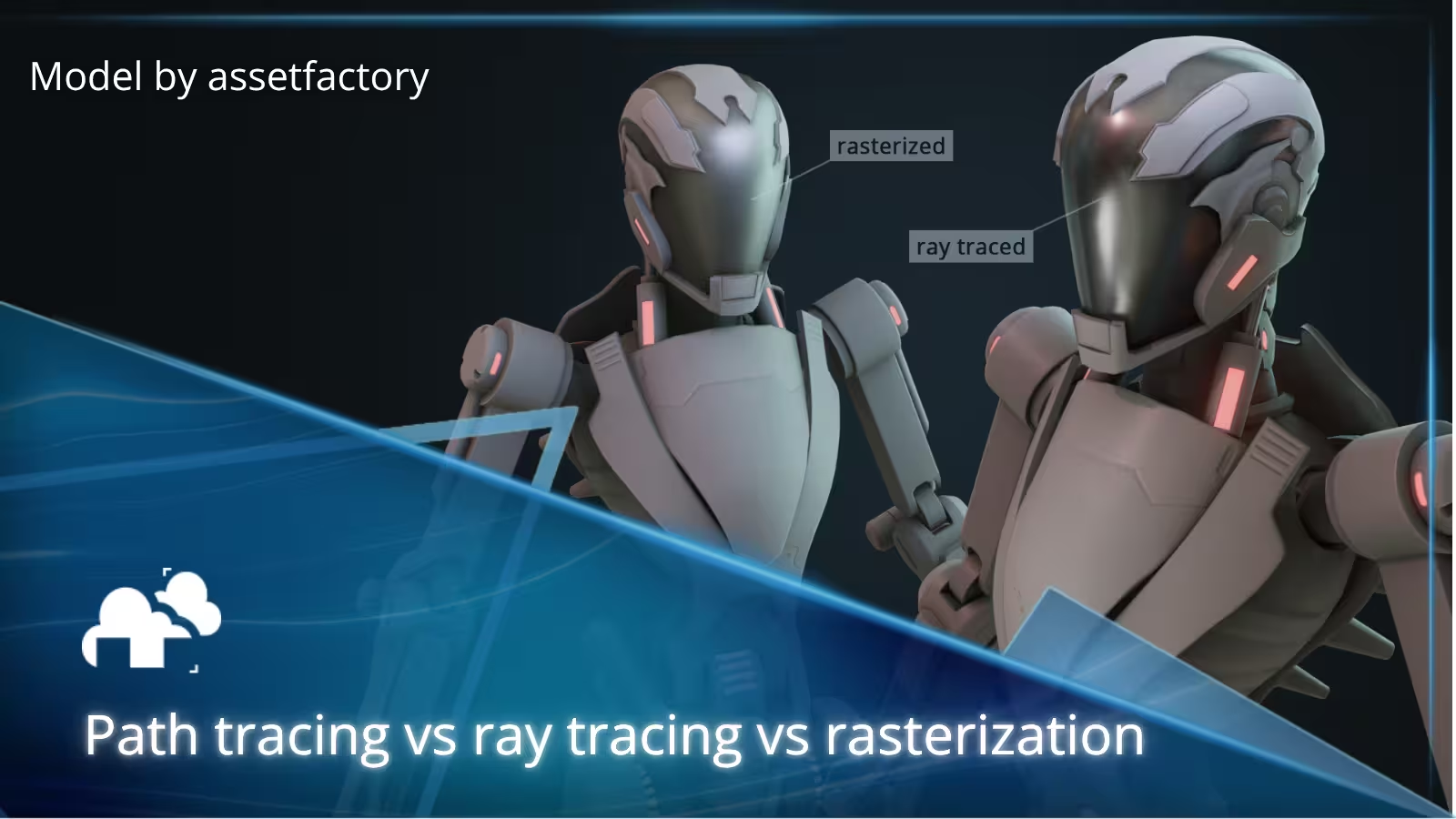
Path tracing is a more advanced form of ray tracing. Instead of tracing only selected effects like reflections, shadows, or ambient occlusion, path tracing follows many possible light paths as they bounce through a scene. Think of it as ray tracing only shooting one ray (smarter way), while path tracing is shooting a whole bunch of rays (more accurate but slow way). This can create more natural global illumination, softer shadows, more accurate reflections, and better light interaction between surfaces. For more information, check out this video on path tracing by K. Drebin:
In simple terms, ray tracing is the broader technique, while path tracing is one of its most physically accurate versions. This is why path tracing is often described as “full ray tracing” in games and real-time demos. It can look closer to offline film rendering, but it also needs far more samples, stronger denoising, and heavier GPU performance.
Which rendering method actually performs better for gaming?
Rasterization’s speed advantage: why it’s still used
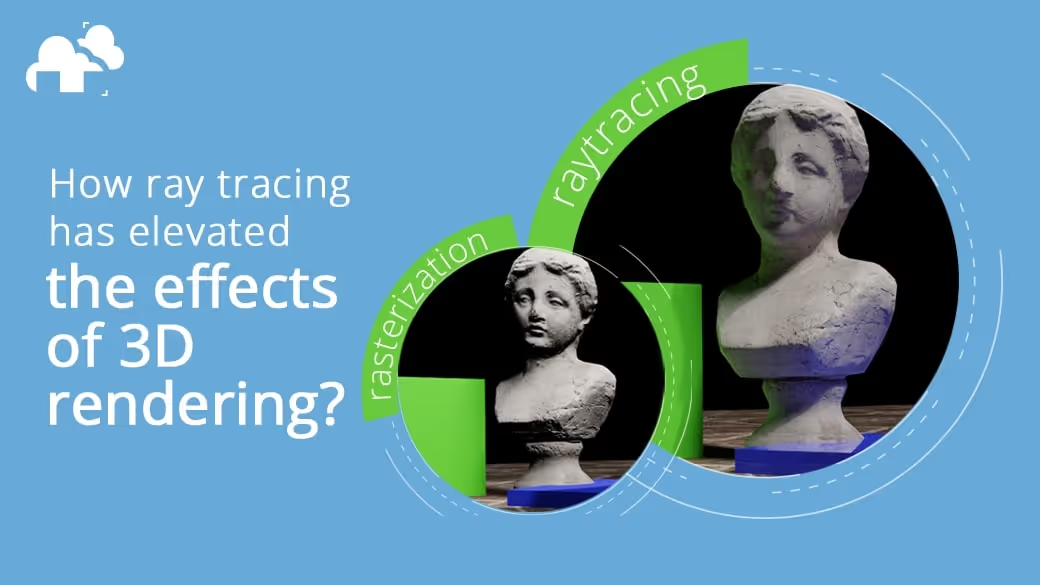
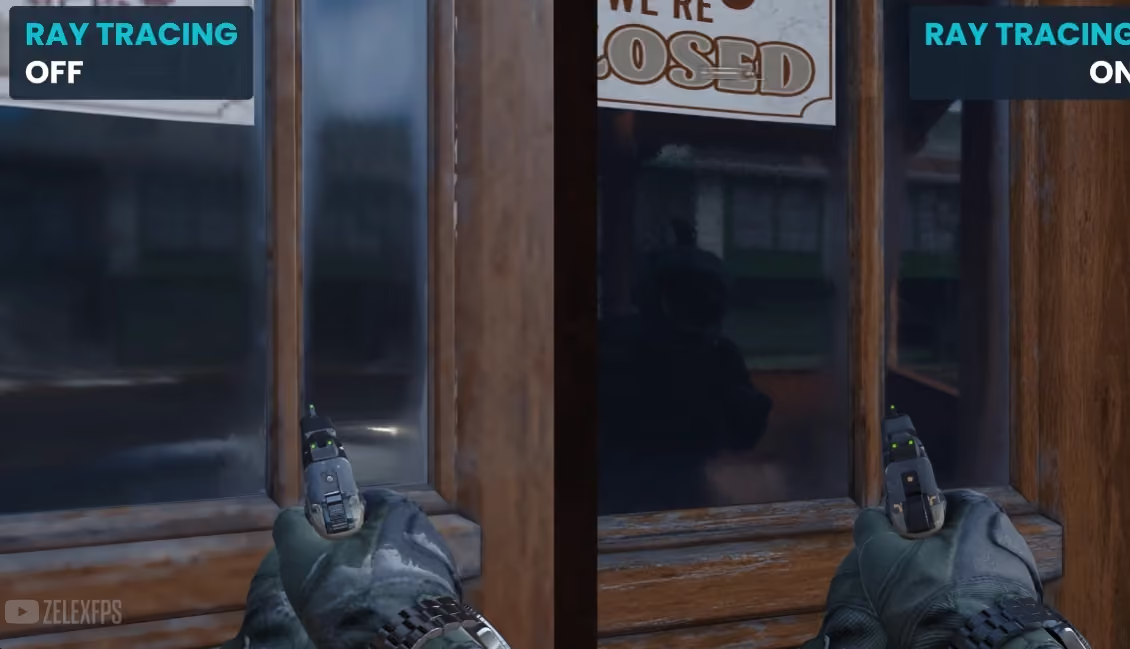
The main reason rasterization still dominates is its direct link to refresh rate and frame rate performance. Games can maintain high visual quality without massive computational cost, making it ideal for competitive gaming or large-scale 3D simulations. In the example below, we see that while there is a difference with having ray tracing than just rasterization, this visual difference just does not matter in the competitive gaming world, especially when reaction time is more important.
Modern GPUs, such as those using NVIDIA’s Turing or AMD’s RDNA 2 architectures, are optimized to process triangles and textures efficiently. The shading process is highly parallel, ensuring smooth gameplay even in large, complex scenes.
Ray tracing’s visual quality: the performance trade-off
Ray tracing, however, delivers a level of realism that rasterization cannot replicate. Reflections, soft shadows, and realistic lighting behave naturally, enhancing immersion. For non-competitive games or 3D showcases, rasterization is great for seeing the full beauty of the visuals.
Yet, even on top-tier GPUs like the GeForce RTX 4090, enabling full ray tracing can reduce frame rates by 20–50% (Techspot.com). So it’s important to note if frame rates are more important or not when using ray tracing. Ray tracing can still lower performance by around 30–50% compared to rasterized graphics, though AI upscaling tools like DLSS 4 are narrowing that gap.
Hybrid rendering: the best of both worlds
Most modern video games now combine both methods. Engines like Unreal Engine 5 use hybrid pipelines, where ray tracing handles reflections and global illumination, while rasterization takes care of geometry and base lighting. This blend balances speed and realism, a hallmark of 2025’s gaming visuals.
How much does ray tracing really cost your frame rate?
Even with dedicated RT cores and hardware acceleration, ray tracing introduces noticeable performance penalties (Techspot.com). High-end GPUs can maintain playable frame rates, but mid-range cards may need compromises in resolution or visual settings.
DLSS 4 and FSR 3: AI to the rescue
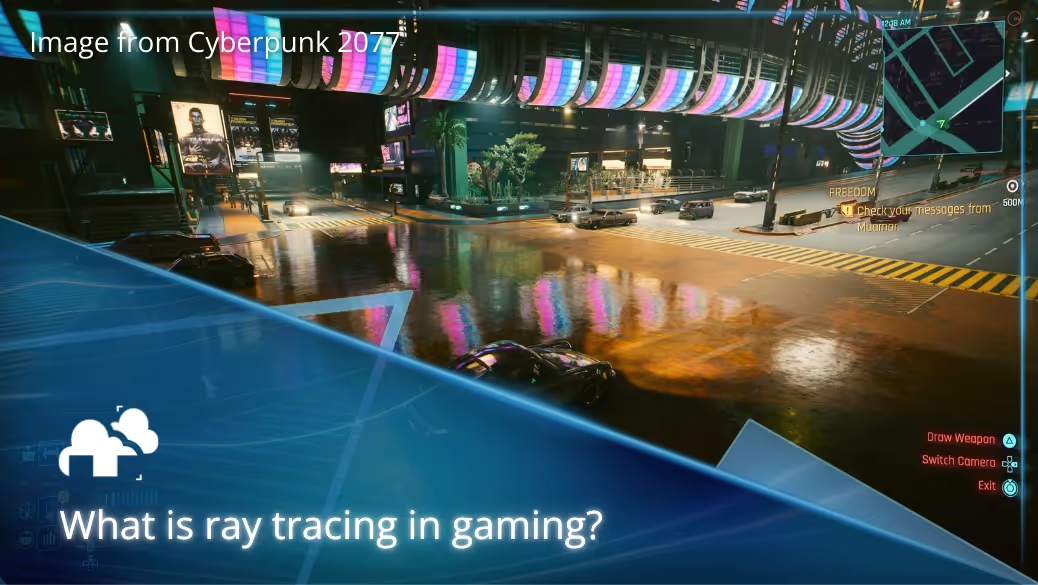
AI-driven upscaling has redefined how gamers experience ray tracing. NVIDIA DLSS 4 and AMD FSR 3 predict frames and upscale images using machine learning, compensating for the FPS loss. In Cyberpunk 2077, enabling DLSS 4 can double frame rates with ray tracing active, turning a 40 FPS experience into over 80 FPS (Windowscentral.com).
Hardware requirements: what you actually need
To use ray tracing effectively, a GPU with dedicated RT acceleration (like NVIDIA’s GeForce RTX 20 Series and newer or AMD’s RDNA 3 cards) is essential. Without hardware-level bounding volume hierarchy (BVH) traversal and ray-triangle intersection units, performance becomes impractically low (NVIDIA).
What can each technology do that the other can’t?
Rasterization’s strengths: speed, compatibility, and efficiency
Rasterization thrives in environments demanding high refresh rates and instant response. It’s also compatible with nearly all graphics APIs, including DirectX, OpenGL, and Vulkan. Developers can optimize assets easily without the need for physically accurate lighting simulations. Rasterization has also come a long way and can look just as amazing as ray-tracing if done well. This video by Vex shows us some examples of this and you can see for yourself if ray tracing is really needed or preferred:
Ray tracing’s superpowers: perfect reflections and global illumination
Ray tracing excels where realism matters most. It produces lifelike reflections, refractions, and shadows without relying on pre-baked lightmaps or screen-space effects. Its capacity to simulate photons and volumetric lighting allows artists to achieve film-quality visuals within a game engine. Although rasterization is capable of looking similar, there are just some aspects that ray tracing does better in, especially full ray tracing (path tracing).
What path tracing does better than standard ray tracing
Standard real-time ray tracing often focuses on specific effects. A game might use ray tracing for reflections, another for shadows, and another for ambient occlusion. Path tracing goes further by trying to solve the full lighting of the scene in a more unified way, as we can see in this video by RTXLobby that shows a comparison between ray tracing and path tracing:
The downside is cost. Path tracing usually needs more samples per pixel and stronger denoising to avoid noise, flickering, or unstable lighting. For still images and cinematic renders, this trade-off can be worth it. For fast competitive gameplay, rasterization or hybrid rendering is still usually the better choice.
Where each method fails and why
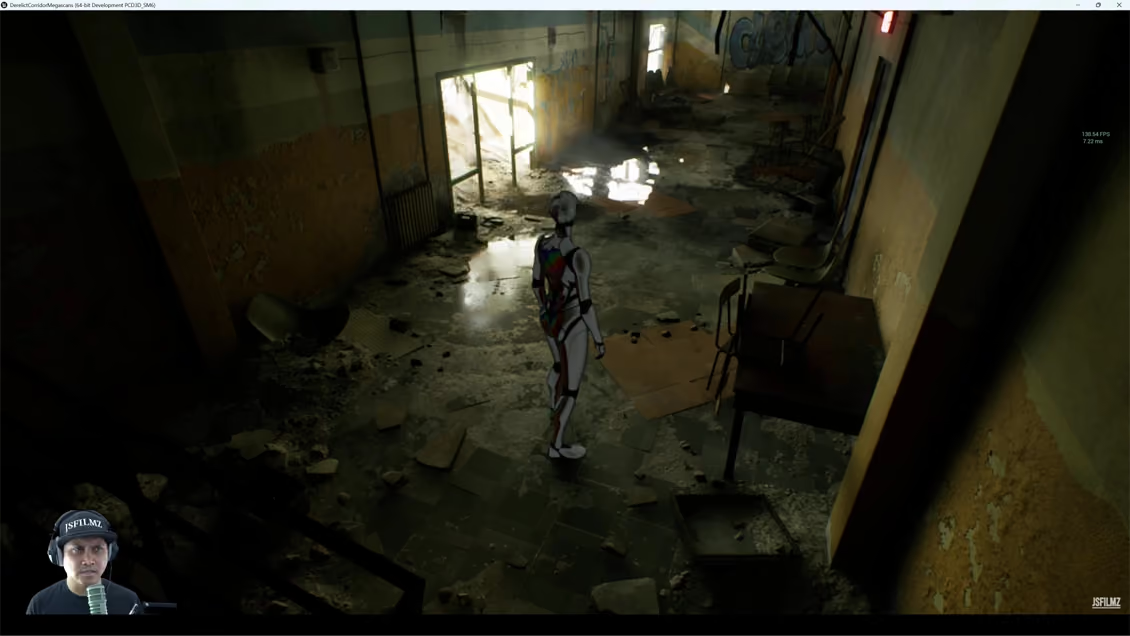
Rasterization struggles with indirect lighting and accurate reflection, while ray tracing can be prohibitively expensive for large scenes. Each technique’s shortcomings explain why hybrid rendering can be the prevailing choice. Lumen, for example, is a surface cache and ray tracing hybrid that is meant to give results almost as close to path tracing in real time. From this example from JSFILMZ alone, are you able to distinguish which is path tracing and which is Lumen?
Are gamers actually using ray tracing in 2026?
According to NVIDIA’s 2025 gaming data, 83% of desktop RTX 40 Series users enable ray tracing in supported titles, with 79% enabling DLSS.
Game support: 400+ RTX games available
From only very few titles supporting ray tracing in 2018, the ecosystem has expanded to over 800. Major releases like Black Myth: Wukong, Stalker 2, and Star Wars Outlaws have made ray tracing central to their rendering pipelines.
The reality check: most gamers still can’t use it
Despite growing adoption, 47% of NVIDIA users still operate GPUs that are two or more generations old (Jonpeddie.com). For them, full ray tracing remains inaccessible without substantial performance loss.
How do modern games combine ray tracing and rasterization?
Hybrid rendering pipelines in Unreal Engine 5
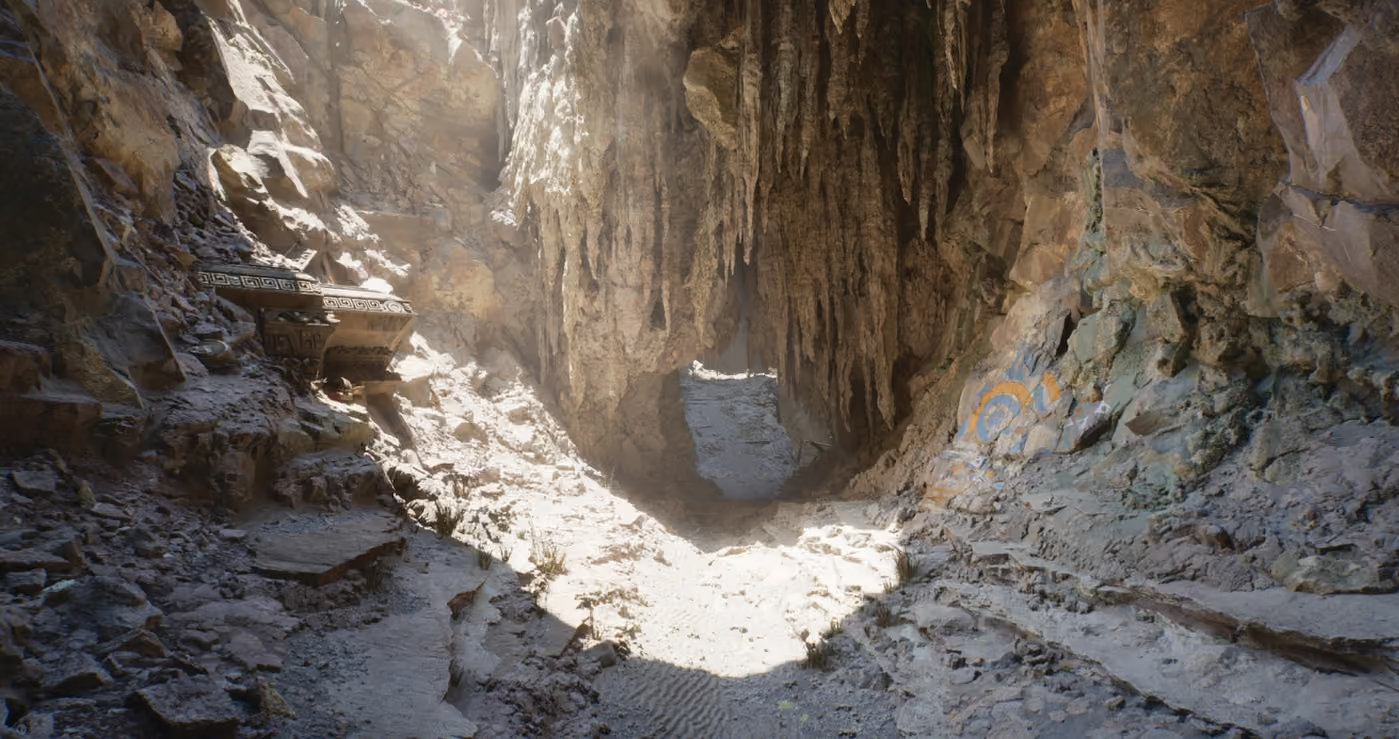
Unreal Engine 5’s Lumen system exemplifies hybrid rendering. It uses screen-space global illumination alongside hardware ray tracing for reflections. The result is realistic lighting even on mid-tier GPUs.
Path tracing in hybrid game engines
Modern games rarely use only one rendering method. Rasterization still handles much of the base image because it is fast and efficient. Ray tracing may then be added for reflections, shadows, or global illumination. Path tracing sits at the highest end of this spectrum, though advances are being made for recent games, as seen in this video by NVIDIA GeForce
In practice, a game engine might use rasterization for geometry, selective ray tracing for certain effects, and path tracing for a special ultra-quality mode. This gives players options. Someone with a mid-range GPU can still use hybrid rendering, while someone with a high-end RTX card can try a path-traced mode with AI upscaling enabled. This is also why path tracing should not be treated as a direct replacement for rasterization yet. It is more like the visual ceiling that modern rendering is moving toward.
Selective ray tracing: primary geometry vs effects
Modern engines often trace only specific effects, like reflections, shadows, or ambient occlusion, while rasterizing everything else. This selective approach reduces computational load without sacrificing realism.
API evolution: DirectX Raytracing and Vulkan RT
Microsoft’s DirectX Raytracing (DXR) and Vulkan RT have matured, providing developers with robust APIs to integrate ray tracing into games seamlessly. These frameworks standardize acceleration structures and improve interoperability between GPUs.
Which graphics cards handle path tracing, ray tracing, and rasterization best?
NVIDIA RTX 50 Series: the ray tracing champions
The RTX 50 Series GPUs deliver leading ray tracing performance with advanced path tracing support and increased RT core counts. Combined with DLSS 4, they can render fully ray-traced scenes at high refresh rates.
AMD RDNA 4: catching up but still behind
AMD’s RDNA 4 architecture has improved ray tracing throughput but remains slightly behind in pure ray-tracing workloads. However, its rasterization efficiency remains excellent, making it a solid value choice.
Entry-level options: what works at different price points
For gamers on a budget, cards like the RTX 4060 and RX 7700 XT handle hybrid rendering well at 1080p. While full path tracing is unrealistic at this tier, hybrid modes remain visually impressive and performant.
What’s the future of path tracing, ray tracing vs rasterization?
Path tracing represents the final step toward unified, physically based rendering. It traces every possible light path in a scene, producing unmatched realism. Games like Cyberpunk 2077: Overdrive Mode demonstrate what full path tracing can achieve, though the cost in computation remains high. However, hybrid rendering will most likely still be best in terms of both optimization/speed and visuals.
Hardware trends: more RT cores, less raster focus
Recent GPU architectures include dedicated RT cores and tensor units, reflecting a growing focus on ray tracing and AI workloads alongside traditional rasterization. This shift reflects the industry’s long-term trajectory toward physically accurate rendering.
The timeline: when will ray tracing become standard?
According to NVIDIA, More than 870 games and applications now support RTX, including top-selling titles, widely used creative tools, and major game engines. Furthermore, over 175 games now support NVIDIA DLSS 4, with path tracing in major 2026 titles such as Resident Evil Requiem and Directive 8020. Developers have embraced NVIDIA’s DLSS, ray tracing, and RTX-accelerated AI features at a record pace. So given hardware and software trends, it is likely that by the early 2030s ray tracing (or hybrid rasterization/ray tracing) will be common in many high‑end games and applications, though rasterization will probably persist alongside it for a long time.
Should you buy a graphics card for ray tracing in 2026?
When deciding whether to invest in a ray-tracing-capable GPU, it's important to weigh the cost against the benefits. If visual fidelity and modern game aesthetics are your priority, such an investment is worthwhile. However, for competitive or eSports players, traditional rasterization performance remains more valuable. It's also essential to consider your game library, as not all titles support ray tracing or DLSS, and genres like indie games may not benefit enough to justify the added hardware cost. Looking ahead, with rapid advancements in ray-tracing acceleration, choosing a GPU with at least second-generation RT cores is a practical way to future-proof your system, ensuring compatibility with new engines and APIs and maintaining viability for the next five years.
Register Now and Get $50 FREE Credits!