


Key takeaways
- Cloud rendering is usually the better choice for short deadline pressure and sudden spikes in render demand.
- A local render farm is often the better choice for steady workloads and predictable day to day rendering.
- Cloud rendering can improve creative iteration, but cost control matters.
- A local render farm gives studios more direct control, but idle capacity can become expensive.
- For many studios, a hybrid render pipeline is the strongest long term answer.
TL;DR
Using a cloud render farm is usually better when a studio or artist needs flexible scale fast. A local render farm is usually better when render demand is stable enough to keep machines busy most of the time. For many animation and VFX studios, the best setup is a hybrid render pipeline that keeps core capacity local and adds cloud rendering when deadlines or project volume suddenly increase and render times are crucial.
Rendering in a 3D software
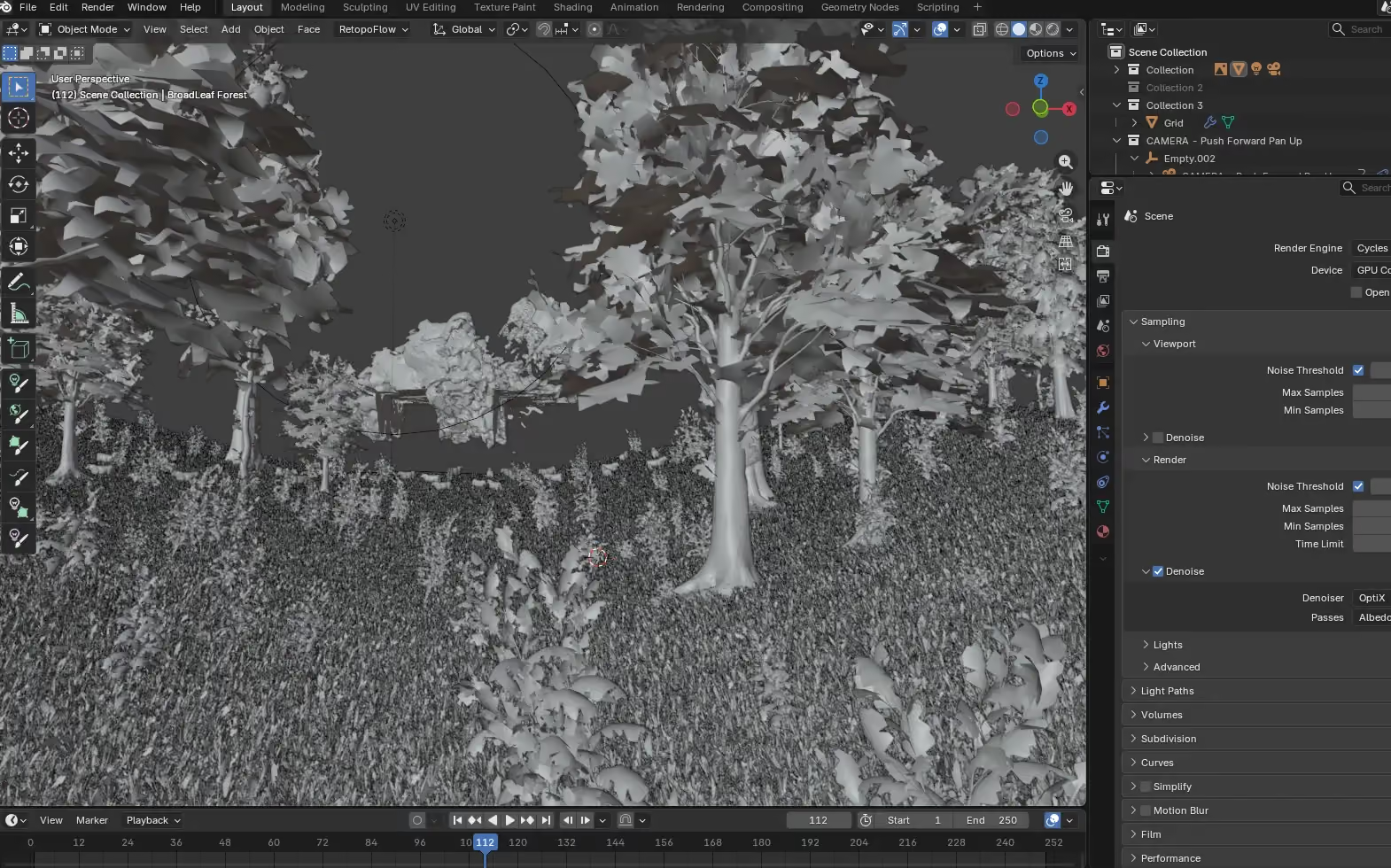
3D rendering is the process of turning a digital 3D scene from 3D software into a final 2D image or animation. During the rendering process, the rendering software calculates materials, lights, shadows, reflections, camera angles, and other visual details so the creative work looks realistic, stylized, or production-ready. Artists can render locally on a local machine with local hardware, use a traditional render farm or in-house render farm, or send a project to a render farm for more computing power when they need to render faster or meet a tight deadline.
In this comparison, “local render farm” refers mainly to a studio-owned group of render nodes rather than rendering on a single artist workstation. A workstation is effectively the smallest local setup, but the economics, maintenance requirements, and available capacity change considerably once multiple machines are involved.
Why cloud rendering vs local render farm matters more now
Using cloud rendering services vs local render farm is no longer just a technical decision. For animation studios and VFX studios, it affects render speed, review cycles, scheduling, costs, and how confidently a team can take on heavier shots.
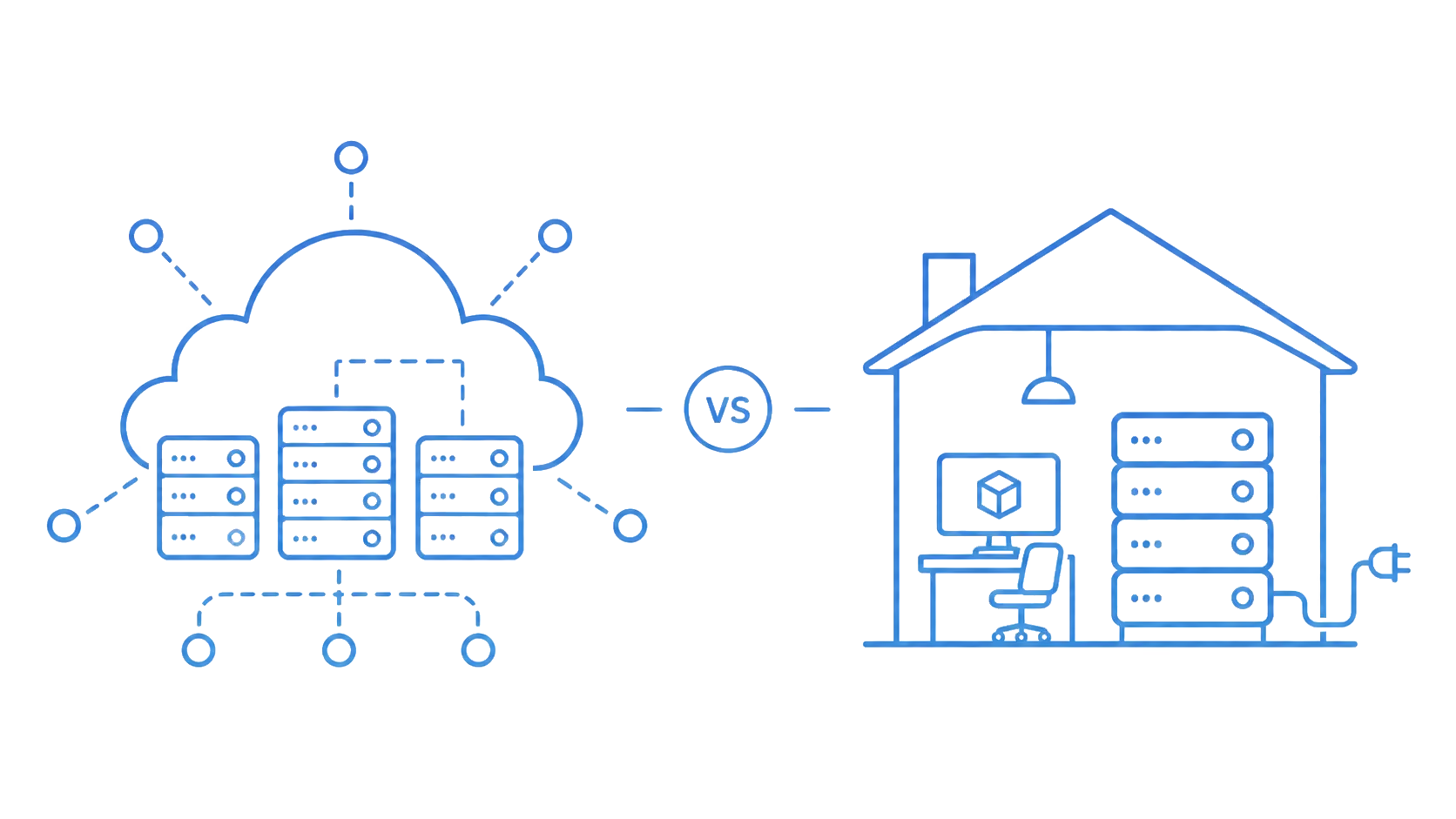
That matters because rendering is tied to almost everything else in production. It affects how often artists can test ideas, how quickly supervisors can review changes, and how much schedule risk a studio can absorb before a delivery starts to wobble. As environments get larger, lighting gets richer, and client feedback loops get tighter, render capacity stops being background infrastructure and starts becoming a real business decision.
Advantages of cloud render farms
The biggest advantage of cloud rendering is flexibility. A cloud render farm gives studios access to extra capacity when they need it, without forcing them to buy permanent hardware for the busiest week of the year. Cloud render farms can offer the latest GPU and CPU render nodes available for more powerful rendering.
Burst capacity for deadline heavy production
This is where cloud rendering for animation and cloud rendering for VFX stand out most. Real production demand is uneven. A studio or an individual artist might be comfortable for weeks, then suddenly hit a sequence that is heavier than expected, overlap two deliveries, or pick up extra work that needs final frames fast.
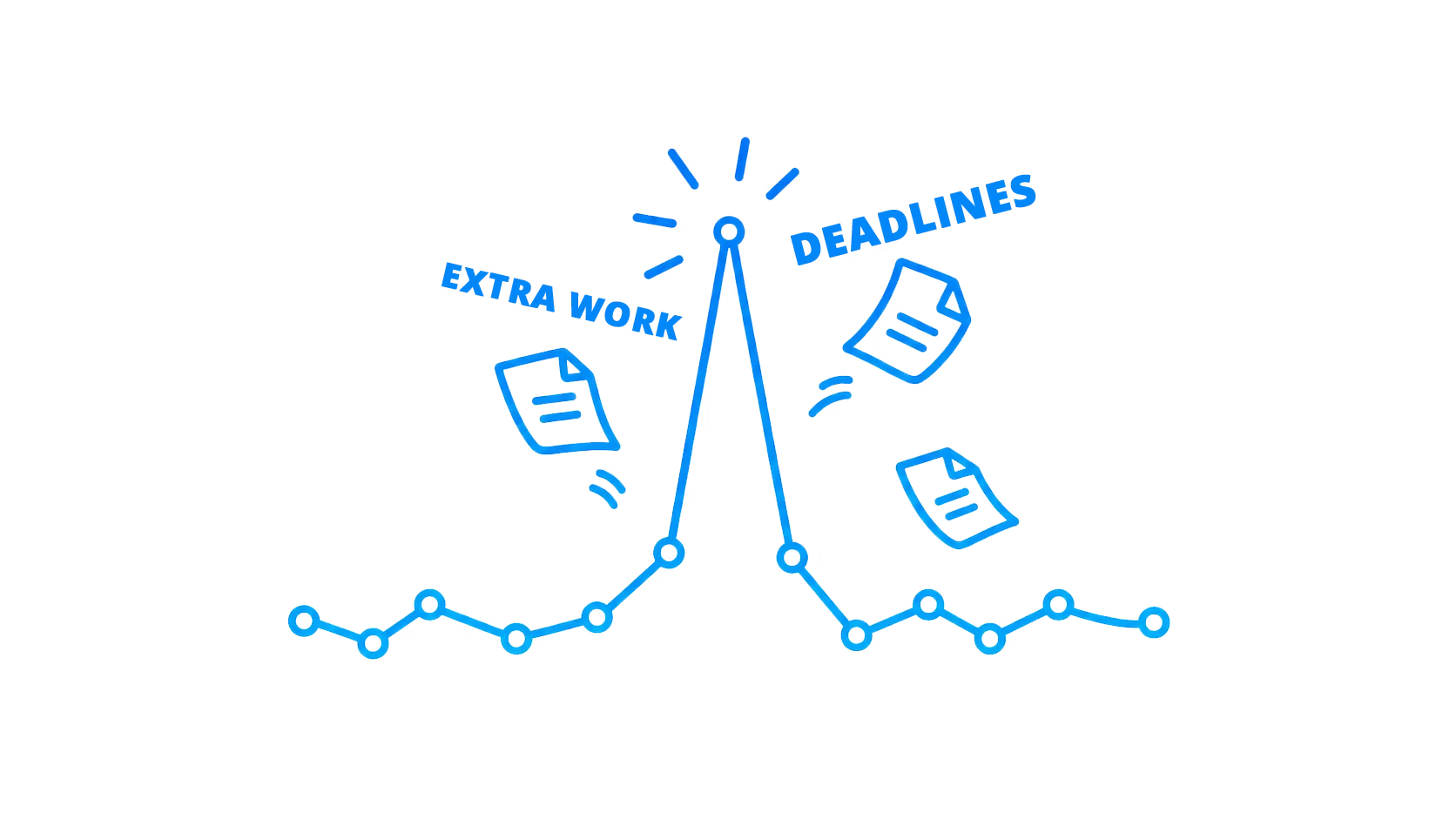
That is where a cloud render farm can make a dramatic difference. In one project rendered with us, a three-person team working in 3ds Max and V-Ray had roughly 1,000 frames to finish. Their own computers estimated close to a week of rendering, while the same shots were completed on the farm in less than six hours. For a small team facing a deadline, that difference can determine whether local capacity is simply slow or actually becomes a production bottleneck.
You can read the full 3ds Max and V-Ray project case study.
In 2024, AWS announced that Deadline Cloud lets teams set up a cloud based render farm in minutes, scale to run more projects in parallel, and pay for the resources they use (AWS). That pitch resonates because it mirrors how real production works. Studios rarely need maximum capacity every day. They need it at the exact moment things get busy.
A 2024 AWS case study from CoMix Wave Films shows what that can look like in practice. During work tied to Suzume, the studio used up to 300 cloud nodes and processed 6,202 tasks, 2,221 jobs, and 1,205 hours of rendering in a single week. That kind of burst capacity is one of the clearest arguments for cloud rendering.
Faster review loops and more experimentation
The best case for cloud rendering is not only about raw power, but also about what faster turnaround does to creative behavior.

A team that can review more versions and 3d scenes in less time is more likely to catch problems early, explore better lighting choices, and avoid settling too soon. Faster iteration does not automatically make work better, but it gives artists and supervisors more room to push quality before the clock runs out.
When a local render farm is the better choice
A lot of cloud rendering conversations treat the local render farm like old thinking. That is too simplistic. For many studios, a local render farm still makes excellent sense.
Steady demand can reward owned capacity
If a studio or artist renders heavily every day, across many shots and many months, a local render farm can still be a good choice. Once the hardware is in place, the economics change. The question becomes whether the studio can keep that capacity busy often enough to justify owning it.
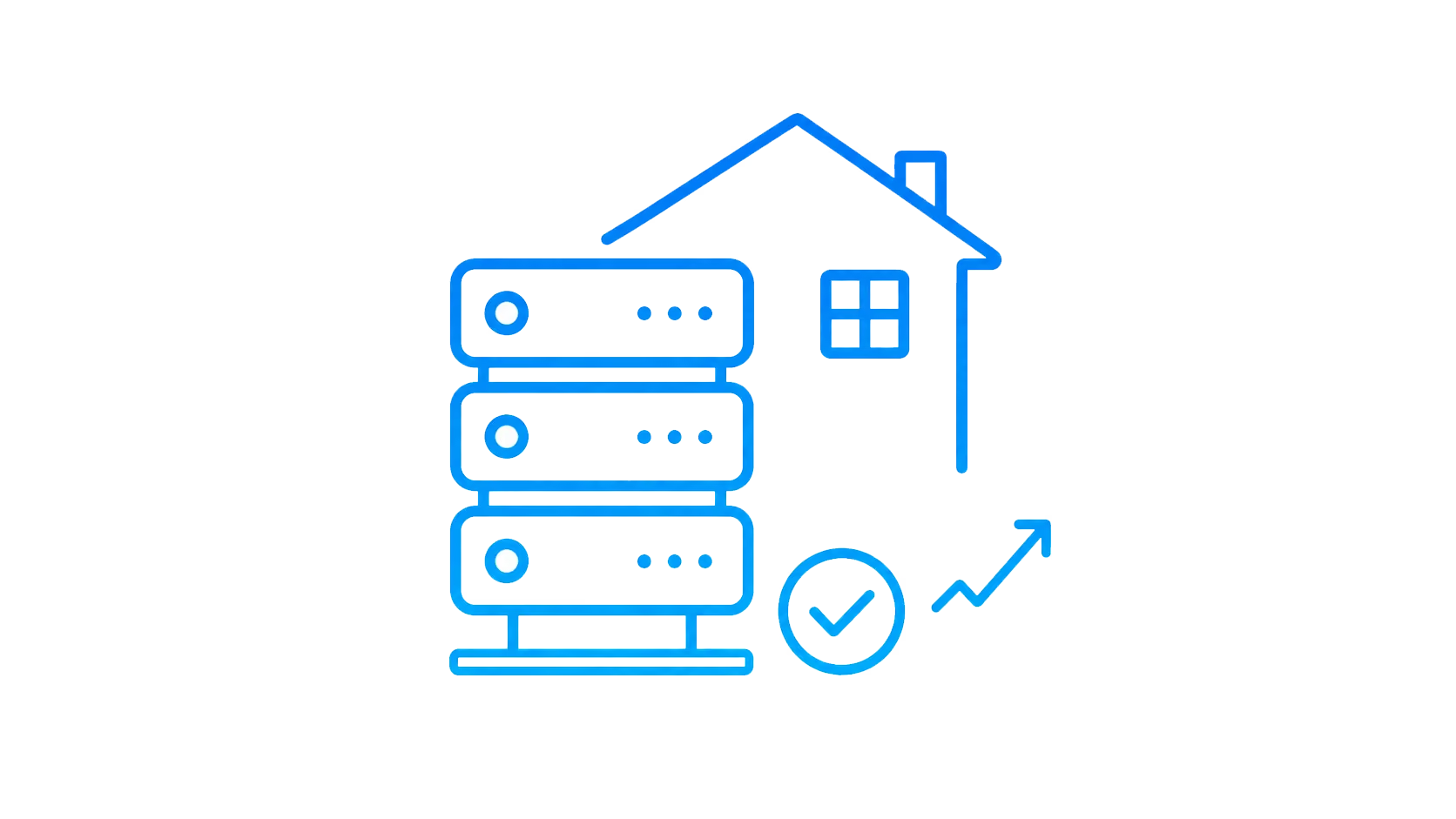
That is why a local render farm tends to work best for studios with a stable pipeline, consistent shot volume, and enough internal support to keep systems running smoothly. If the workload is predictable, owned infrastructure can be easier to plan around and easier to budget for.
Not every studio reaches the same conclusion, even when rendering is a regular part of its work. Classic Color, for example, chose not to maintain its own render farm and instead uses cloud rendering for intensive projects. Their reasoning was less about whether an in-house farm was technically possible and more about where they wanted to spend their time: they preferred to let specialists handle the render infrastructure while their team stayed focused on production.Their experience is covered in our Classic Color Blender and cloud rendering case study.
More control over the production environment
A local render farm can also be attractive because it gives teams more direct and full control. Storage, queue priority, asset access, security, and pipeline behavior all stay closer to home.
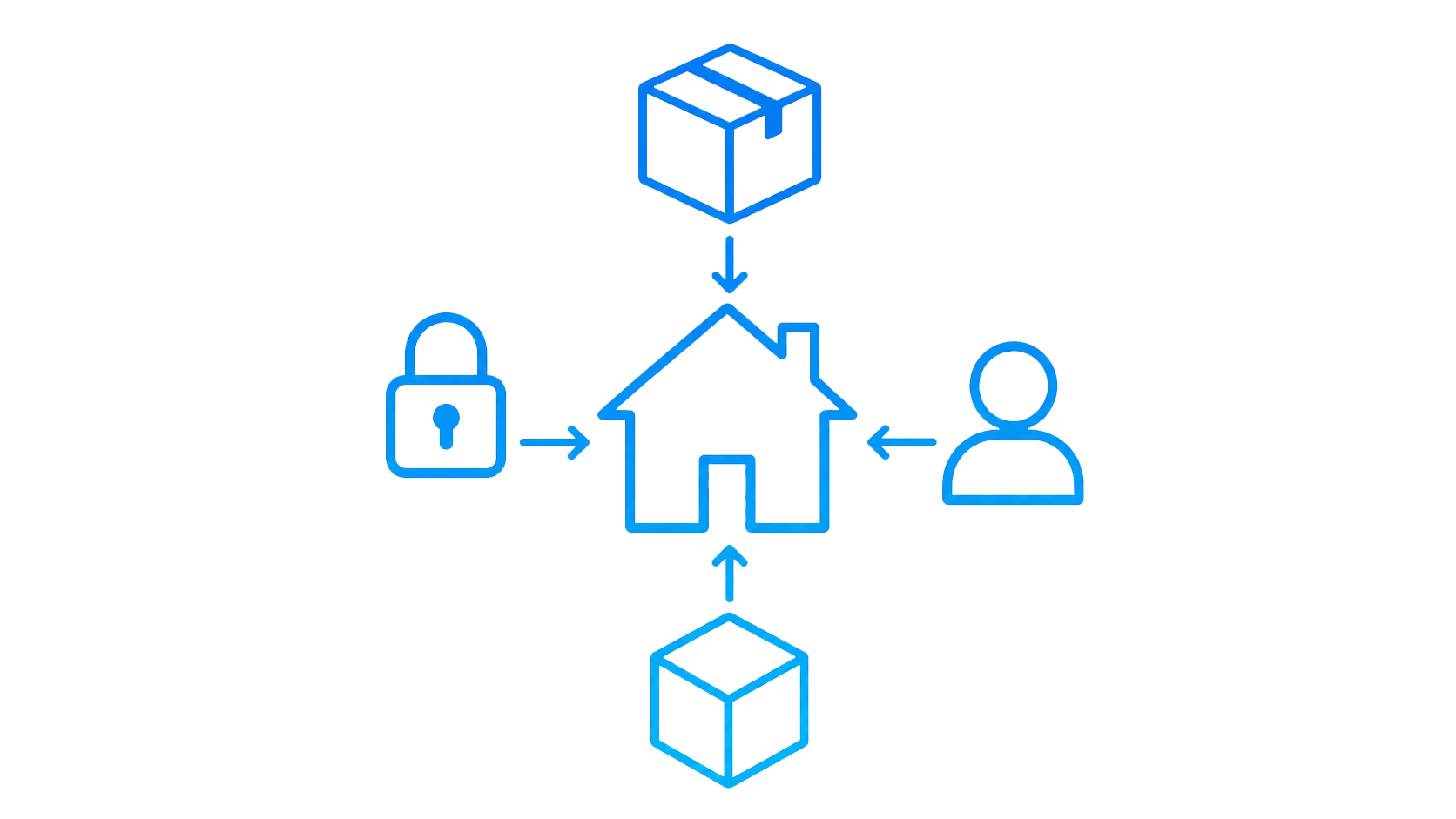
That control becomes more important as shots become more complex. As the number of tools and dependencies grows, so does the appeal of keeping core render infrastructure tightly integrated with the rest of the studio pipeline.
Cloud rendering cost vs local render farm cost
This is the part people often oversimplify. Cloud rendering cost and local render farm cost are both easy to underestimate, just in different ways.
Cloud spend can grow faster than expected
Cloud rendering is attractive because it lets studios scale on demand. But on demand scale also makes it easy to spend more than expected, especially when jobs are urgent and nobody wants to be the person slowing down delivery.

In Flexera’s 2025 State of the Cloud report, 84% of organizations said managing cloud spend is their top cloud challenge. The same report said cloud spend was expected to rise by 28%, while budgets were already running 17% over plan on average (Flexera). This suggests the issue is structural, not occasional. Cloud rendering can absolutely be the right answer, but it works best when the studio has solid cost controls, strong visibility, and a clear sense of which jobs really need that extra scale.
Local infrastructure has quieter costs

A local render farm does not send the same kind of monthly usage, but it comes with its own hidden costs such as hardware refreshes, power, cooling, rack space, maintenance, failures, technical issues, and support time. All of this, including underused capacity, can add up in the bills. This means a local render farm is not automatically cheaper just because the machines are already there.
If you're considering building your own infrastructure, our guide to building an in-house render farm versus using a third-party farm goes deeper into hardware, software licensing, networking, electricity, cooling, maintenance, and the other costs involved in running a farm yourself.
Why a hybrid render farm workflow works
For many studios, the strongest answer is not cloud rendering or local render farm. It is both.
Use a traditional render farm to keep baseline capacity local
A local render farm is often great for daily work. It handles normal shot flow, routine approvals, and the kind of steady demand a studio can predict with reasonable confidence.
Use cloud rendering for spikes
When deadlines tighten, projects overlap, or a sequence suddenly becomes heavier than expected, cloud rendering can step in as overflow capacity. That lets a studio avoid buying permanent hardware for short lived pressure.
For a deeper look at how studios can combine existing resources with on-demand capacity, see our guide to handling large rendering workloads in the cloud.
Google Cloud’s 2024 hybrid render farm guidance makes this case directly. It describes extending an existing render farm to the cloud as a cost effective way to use powerful resources without capital expense (Google Cloud).
Hybrid fits scene complexity better
Modern production pipelines are built around increasingly complex scenes and a growing number of tools. Kevin Wooley, Virtual Production Engineering Lead at ILM, described that reality clearly:
“With the performance improvement, we can handle incredibly complicated digital environments, with thousands of pieces of geometry, while preserving the editability of the scene.” (Openusd)
That quote gets to the heart of the modern render farm decision. Studios are now choosing where frames get rendered and how to support complexity without making the pipeline harder to manage.
How to choose between cloud rendering and a local render farm
The best render farm setup for a studio depends less on theory and more on pattern:
Look at your normal month
If the studio (or you) has steady rendering needs and most of the farm stays busy, a local render farm could suffice; given that artists still have the time to make reiterations and render without much issue.
Analyze your worst month
If demand regularly spikes far above normal than what your local render farm can handle, cloud rendering becomes much more attractive because it can absorb temporary pressure without permanent and expensive hardware purchases.
Know your team, not just your machines
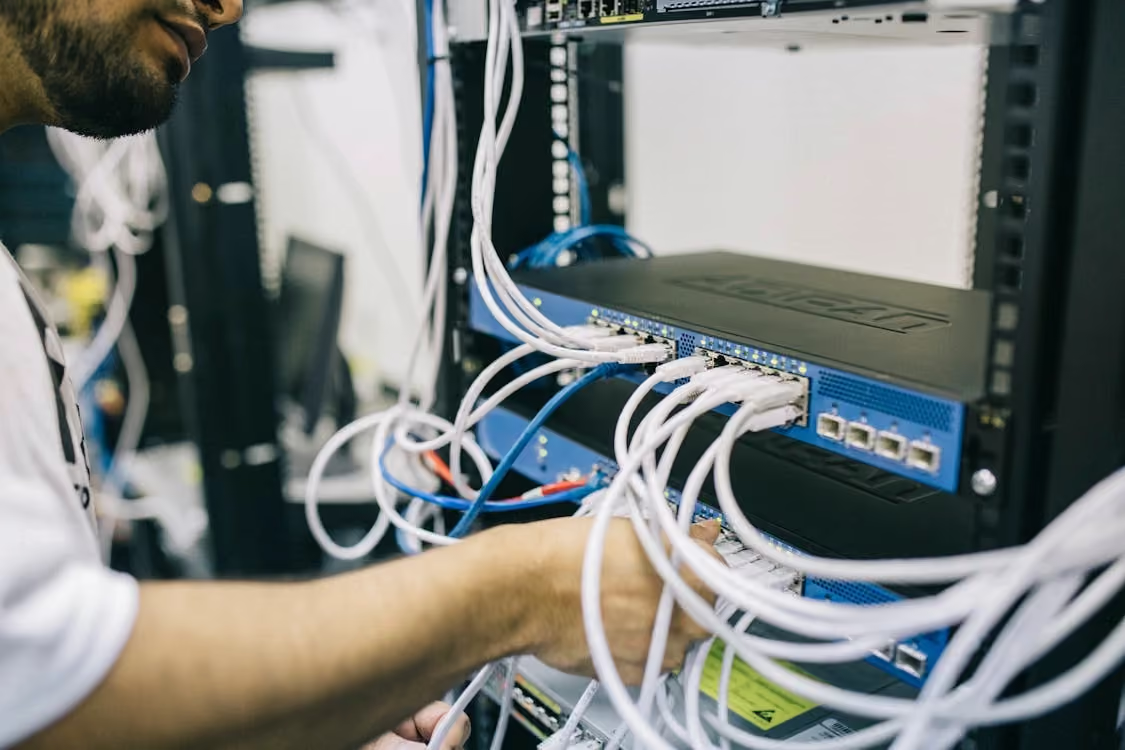
Infrastructure only works well when people can support it. A local render farm needs care, maintenance, and workflow planning. Cloud rendering also needs planning, especially around cost and storage. The better choice is often the one your team can manage consistently.
Look at the value of speed
Sometimes cloud rendering is not cheaper per frame. It is cheaper than delay, rework, or a missed delivery. That distinction matters. A render farm comparison that looks only at hardware cost can miss the real production value of faster iteration. David Hirst, former Head of Lighting at MPC Vancouver and later CG Supervisor, summed up the wider creative effect of modern physically based rendering well:
“This in turn freed the artist to make changes quickly and have a more interactive experience.” (Foundry)
That is a useful reminder: render infrastructure is not just about finishing frames. It is about helping artists move faster with confidence, without hurdles.
A project from Reatic Industry shows why that distinction matters. The animation contained 458 frames at roughly 30 minutes per frame, putting the local render estimate at about 229 hours, or more than nine days. The problem was not simply waiting nine days for a computer to finish. The artist also had other projects to manage during that time, so tying up the local machine carried a productivity cost as well as a rendering cost.
That workflow is covered in our Reatic Industry project case study.
Using cloud rendering vs local render farm: which is better?
If the question is which is better for flexibility, cloud rendering usually wins. If the question is which is better for more control, a local render farm often wins. If the question is which setup gives modern studios the best balance of control, scale, and resilience, a hybrid render pipeline is often the best answer. But even that in itself is not the only option for everyone.

The most useful conclusion is also the least dramatic one; cloud rendering vs local render farm is not really an all or nothing debate. Whether you do commercial renders, architectural visualization, product visualization, animation, film, or interactive experiences, it is a decision about how you or your studio handles pressure, complexity, and growth. More importantly, you'll never know how something works until you try it out; and GarageFarm is always here to help you start that journey.
Register Now and Get $50 FREE Credits!

.avif)