Key takeaways
- AI is becoming a useful animation tool, but creative direction still matters most.
- Tactile textures, handcrafted motion, and visible imperfection are giving digital content more personality.
- 2D animation and 3D animation are blending into bolder hybrid styles.
- Kinetic typography, liquid glass, mixed media, and expressive character animation are shaping modern animation.
- Short form animated content is still a major format for social platforms, marketing, and brand identity.
- The strongest animation trends for 2026 balance new technology with human touch.
TL;DR
Animation trends for 2026 are moving toward more expressive, textured, and style driven visuals. AI tools are changing the workflow, but the most memorable animated content still depends on strong design, motion, storytelling, and creative taste. Expect more painterly 3D, hybrid 2D and 3D animation, tactile textures, kinetic typography, glossy liquid motion, mixed media, stop motion inspired CGI, expressive mascots, and short form animation built to capture attention quickly.
Where animation is heading in 2026
Animation has changed a lot since 2025. AI video tools are more accessible, social feeds are more crowded, and brands are asking for more animated content across more platforms.
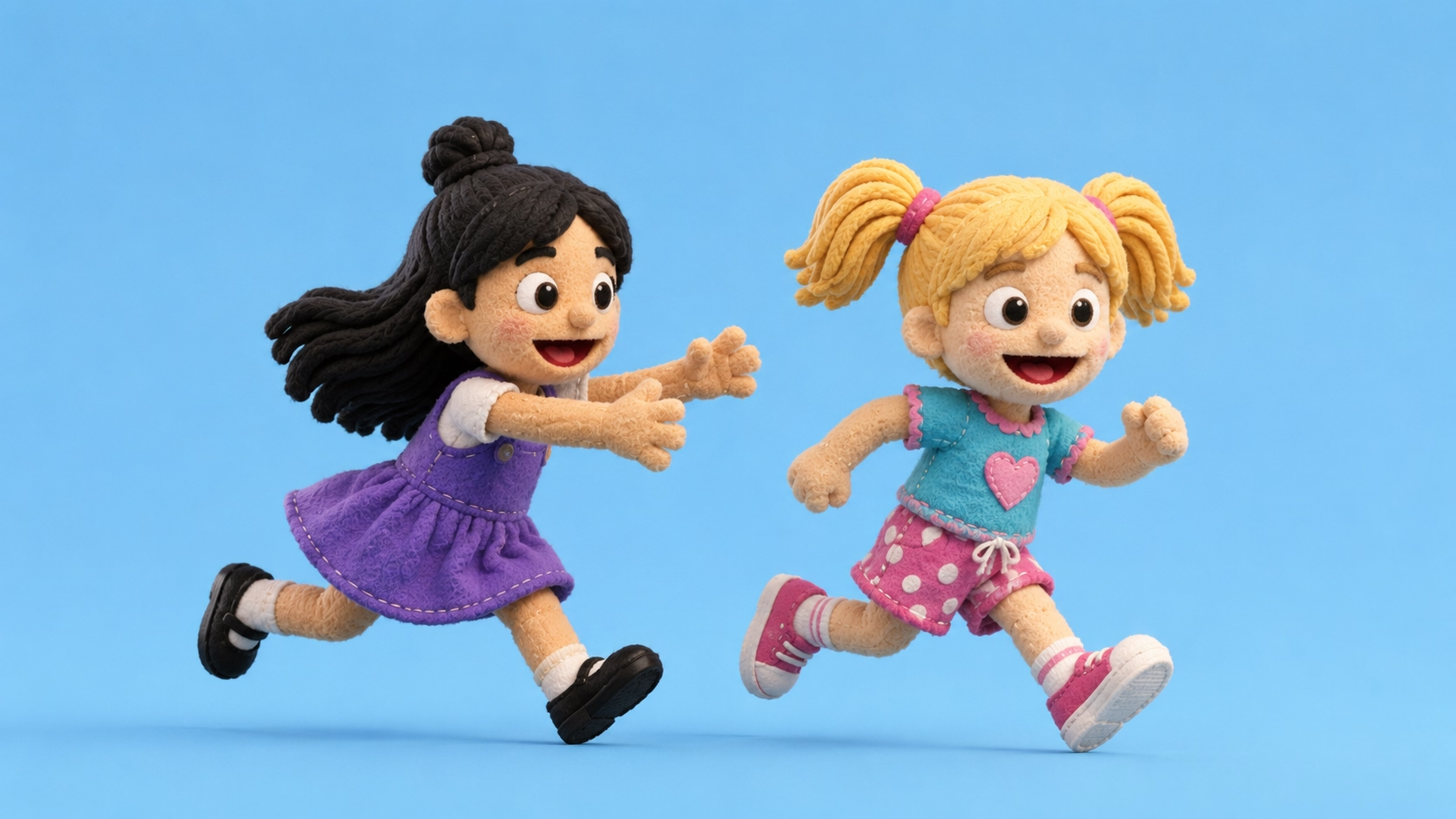
At the same time, audiences are getting better at spotting generic work, especially when it feels too automated or too polished. That makes 2026 an interesting year for animators, studios, marketers, and independent creators. The future of animation is about faster software, new tools, and how animation production can stay creative, scalable, and human while the entire workflow keeps changing.
AI assisted animation workflows
AI is one of the biggest animation trends for 2026, but the conversation is becoming more practical. Instead of treating AI as a replacement for the animator, more studios are using AI tools for concept exploration, previs, cleanup, localization, image references, and early motion tests.
AI is finally controllable! …with a stick [FREE ComfyUI Workflow + Tutorial] by Mickmumpitz
The global generative AI in animation market was estimated at USD 652.1 million in 2024 (Grandviewresearch), which shows how fast this space is growing. Still, AI works best when it supports the creative process instead of replacing it.
Animated demos and explainers get more aesthetic
Demos are becoming more polished and visual. Instead of only showing features simply, animated product videos, event openers, and more, now show a problem, a transformation, and a story based on eye-catching visuals.
BeyondTheBlack Event Opener by Buff Motion
This is especially useful for software, AI tools, apps, events, platforms, and technical products. Animation can simplify a complex product, service, or workflow without making it feel boring. So expect more product demos that mix 3D animation, user interface motion, kinetic typography, and smooth transitions into one clear visual story.
Hybrid 2D and 3D animation
The mix of 2D and 3D animation is still one of the strongest trends shaping 2026. Studios are combining 3D space, 2D linework, painterly textures, graphic shapes, and hand drawn effects to create animation styles that feel modern but still crafted.
My 2D + 3D Blender Animation Workflow by Stay Tooned
This works especially well for films, music videos, advertising, social content, and motion design. Instead of choosing between traditional animation and 3D computer graphics, more teams are using both in the same visual language. And this isn’t necessarily only on art style; exaggerated 2D-style animations (for example) or 2D workflows can be incorporated into 3D work as well.
Painterly 3D animation
Painterly 3D animation is gaining momentum because it gives complex 3D scenes a warmer, more handcrafted feeling. Instead of chasing pure realism, studios are using brush like textures, stylized lighting, and illustrated surfaces.
SINGULARITY - Painterly Space Adventure by Blender Studio
In 2026, this kind of style feels especially relevant because audiences are seeing more polished AI generated images. Painterly 3D helps animation feel more human and more artist led. The Wild Robot helped push this trend further into the mainstream. Director Chris Sanders said,
“We lost something when we stopped doing analog, handmade backgrounds. That was beautiful! I wanted to do that again, to go as far as we could into a painted world.”
Kinetic typography gets louder and more expressive
Typography is doing more work in animation than ever. In 2026, kinetic typography is not just a decorative effect. It is a major part of motion graphic design, advertising, user interface animation, and brand identity.
K-POP Demon Hunters - HOW IT'S DONE (Lyric Video | Kinetic Typography) by Designer DeokDi
Animated text can create rhythm, emotion, hierarchy, and clarity. It also helps brands stay recognizable when videos are short, muted, or cropped for different platforms. The best kinetic typography makes words move but at the same time helps viewers understand what matters first.
Liquid glass and glossy motion
Liquid glass is one of the more visible design trends for 2026, especially in user interface animation, motion graphic design, and glossy brand visuals. It uses translucent surfaces, smooth distortion, reflective depth, soft gradients, and fluid movement.
Introducing Liquid Glass by Apple
This look can make digital content feel polished, immersive, and futuristic. It works well for technology brands, AI tools, product demos, app visuals, and modern advertising.
Mixed media and collage inspired motion
Collage animation is growing because it gives digital work a more artistic and crafty approach. This style can combine photos, paper textures, rough cutouts, handwritten marks, scanned objects, 2D illustration, live action fragments, and animated typography. In this example below, we can see live footage combined with some animated cut out 2D images:

Snippet from Edie Peffley on TikTok
It feels expressive because the pieces do not have to match perfectly. That imperfection creates energy. It can also help a brand or artist stand out from clean template based visuals. Mixed media animation works well for music videos, social campaigns, fashion, editorial content, cultural projects, and bold brand storytelling.
Stop motion inspired CGI
Stop motion inspired CGI is becoming more relevant as audiences respond to tactile, physical looking animation. Even when the final image is digital, creators are adding clay like surfaces, puppet inspired movement, miniature sets, handmade lighting, and slightly imperfect timing.
Wildwood - Official Teaser Trailer by LAIKA Studios
Laika’s Wildwood is a strong 2026 example of the power of tactile animation. The production includes 136 sets, more than 230 puppets, and an eagle puppet with 9,000 hand crafted feathers. This trend shows how handcraft and digital tools can work together while keeping animation warm, physical, and memorable.
Expressive mascots and character led branding
Mascots and brand characters are becoming more expressive. Instead of safe and generic characters, more brands are using odd, funny, cute, surreal, or slightly weird personalities to make their visual identity easier to remember. One of the most famous examples of this is Duolingo’s bird mascot:
Duolingo Unlocks Advanced Language Content By Duolingo
This includes anthropomorphic characters, animated objects, food mascots, animals, blobs, robots, and logo based characters. These characters can appear in ads, social feeds, product onboarding, packaging, and short form content. The key is personality. A mascot should have clear motion, recognizable behavior, and a reason to exist beyond looking cute.
Performance driven character animation
Character animation is now becoming more focused on clear performance choices. This trend in animation shows up across animated content, hybrid filmmaking, and 3D animation, where characters need to feel specific even when the style is exaggerated, nonhuman, or heavily stylized.
How Kpop Demon Hunters Broke The Rules of 3D Animation by Calobi Productions
KPop Demon Hunters shows how bold expressions, snappy poses, and anime influenced acting can support comedy, music, personality, and story. Rocky from Project Hail Mary shows another side of the same creative trend. The character is more realistic and subtler in movements, and was brought to life through puppetry, animatronics, voice performance, CGI, and VFX, making a nonhuman alien feel emotionally readable through movement and timing.
For animators, the focus is on making every motion feel specific to the character, the scene, and the tone. The performance can be loud, soft, funny, dramatic, practical, subtle, digital, or highly stylized, as long as the acting feels intentional.
Glitch, surreal, and post AI aesthetics
Glitch and surreal animation are becoming more useful as creators look for visuals that feel unstable, strange, or intentionally imperfect. This can include broken images, distorted faces, warped typography, rough transitions, unnatural loops, and dreamlike scenes.
I went to the dentist. By バーバパパ
The appeal comes from contrast. As AI generated content becomes smoother, some animation styles are leaning into friction, distortion, and visual tension. This trend works well for music, fashion, youth culture, gaming, horror, technology, and experimental advertising. It can also help brands avoid looking too polished or too safe.
Real-time rendering speeds up creative decisions
Real time rendering is transforming animation workflows by making previews faster and more interactive. Artists can test lighting, camera movement, layout, materials, and animation choices without waiting as long for renders.
The Future of Virtual Production (No Green Screen, No LED Wall) by creative twins
The global 3D animation market was valued at USD 22.67 billion in 2023 and projected to grow from 2024 to 2030, which shows how much demand still exists for complex 3D animation (Grandviewresearch). For studios, faster previews can lead to better creative decisions earlier in the pipeline.
Immersive storytelling becomes more practical with AR and VR
Immersive storytelling is becoming more practical as tools become more accessible. Brands and studios are experimenting with animated experiences for virtual reality, augmented reality, events, product demos, and interactive spaces.
Marvel Studios’ What If…? – An Immersive Story by Marvel Entertainment
This kind of animation changes how attention works. In a normal video, the camera controls the viewer. In immersive experiences, motion, sound, typography, and layout help guide the viewer through the space. Immersive animation is less about novelty and more about useful, memorable digital content.
Oddly satisfying simulation motion
Oddly satisfying animation continues to work because it is instantly watchable. Soft body motion, liquid flows, magnetic snapping, looping machines, particle effects, folding objects, and perfectly timed transitions can hold attention without needing much explanation.
3D Product Animation in Blender - LYS Beauty Airbrush Concealer by Creative Sav
This is especially useful for short form animation, product demos, social feeds, and motion design for brands. Simulation based visuals can make abstract ideas feel physical and easy to understand. The strongest examples avoid random visual tricks. They use satisfying movement to support a concept, product, or brand story.
Retro digital and analog texture
Retro style is still a trend in animation, but it is becoming more selective. Instead of copying one decade directly, creators are mixing old film textures, early digital aesthetics, analog camera references, grain, music video inspiration, and vintage typography with modern animation tools.
How I made a 90s style anime car scene in Blender + DaVinci Resolve by Arrietty 3D
This works well because retro visuals can create instant mood. They can make a brand feel nostalgic, playful, rebellious, or handmade.But the best retro inspired animation feels specific and has a point of view rather than just a filter.
Short form animation becomes more platform aware
Short form animation remains one of the most important 2026 trends because social feeds still move fast. On Instagram, YouTube, TikTok, and other platforms, animated content needs to capture attention quickly and communicate clearly.
HubSpot’s 2025 marketing data found that short form video was the most used media format among marketers and one of the strongest formats for return on investment (Hubspot). That matters for animation because motion can explain a concept, sell a product, or build a brand story in seconds.
What these trends mean for the future of animation
The animation trends for 2026 show an industry moving in two directions at the same time. Production is getting faster because of AI, real time rendering, virtual production, and more accessible tools. But creative work is also becoming more selective because audiences can quickly sense when something feels generic.
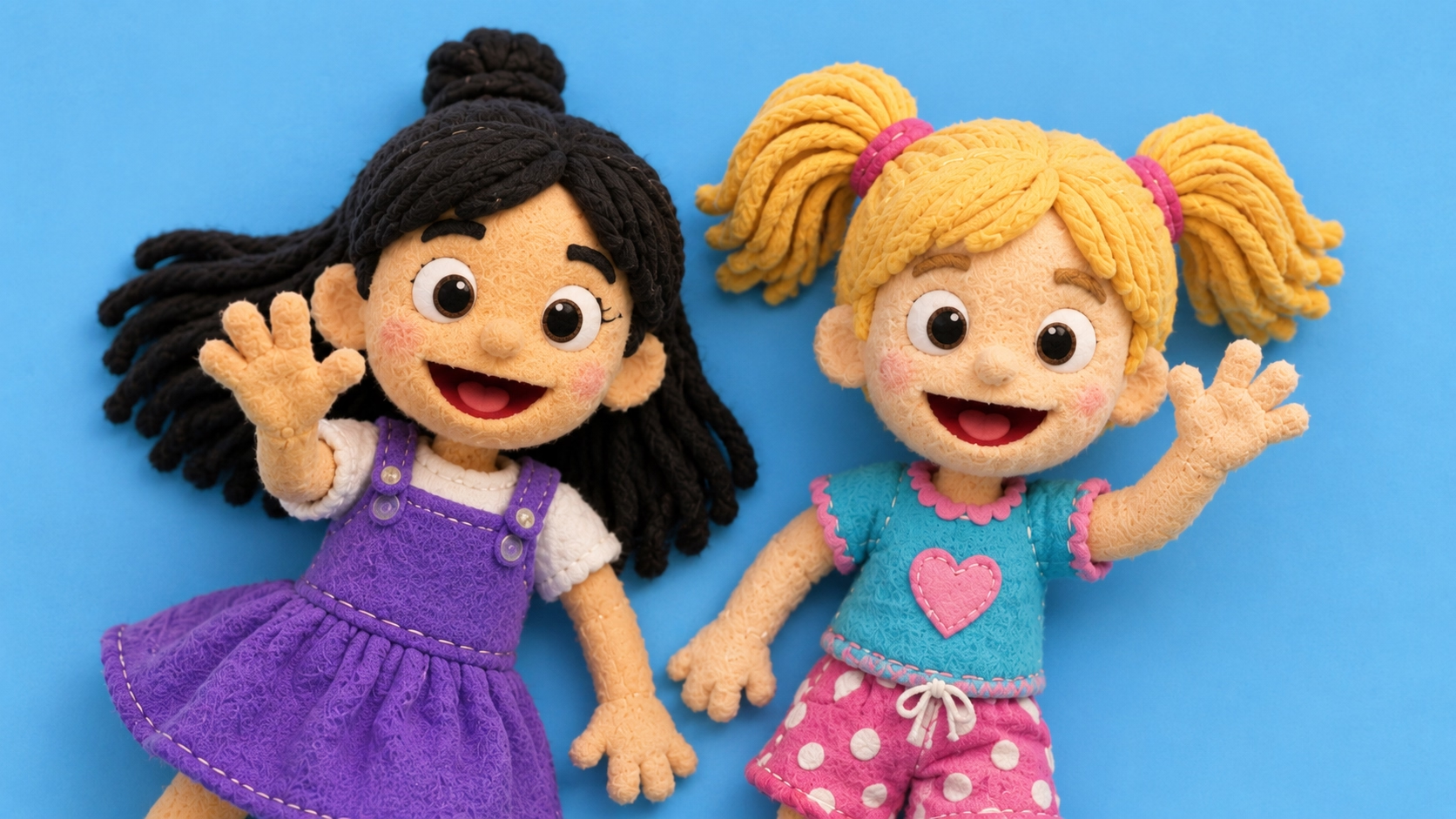
That is why the future of animation will not be defined by AI alone. It will be defined by how artists, studios, and brands use AI, 2D, 3D, motion design, typography, immersive technology, and storytelling together. The strongest animated content in 2026 will be fast enough for modern platforms, flexible enough for global reach, and crafted enough to still feel human.
Register Now and Get $50 FREE Credits!