


Key takeaways
- A well structured animation production pipeline organizes an entire project from concept to final render and reduces costly revisions.
- Collaboration between departments ensures a unified artistic direction and consistent visual quality throughout the production.
- Modern animation relies on sophisticated tools, cloud rendering, and AI supported technology to speed up workflows and improve output.
- According to Escape Studios London, the United States counted over two hundred twenty thousand animation professionals being employed in 2024.
- Pipelines keep productions on schedule and protect the budget by maintaining clear stages, checkpoints, and communication paths.
- Growing demand across film, television, and games supports expanding career opportunities for animators and pipeline specialists.
TLDR
The animation production pipeline is a structured framework used by studios to guide a project from concept through pre production, production, and post production. It ensures that story, design, animation, lighting, compositing, and sound all work together smoothly. This system prevents bottlenecks, maintains quality, and enables efficient collaboration across teams. As the animation industry grows, studios increasingly rely on advanced technology and AI supported workflows, making the pipeline more efficient and flexible than ever.
What is animation pipeline and why every studio needs one
An animation pipeline acts as the central blueprint for how creative ideas become finished animated films. It defines the order of tasks, the communication between departments, and the checkpoints required to maintain clarity and momentum.

Complex productions also involve hundreds of specialists. Without an organized structure, revisions multiply and schedules collapse. VFX Producer Karen Murphy noted in an interview,
“It’s very exciting to find supervisors and vendor crew that speak the same language [..] To see them find a short-hand in creative communication that drives the team toward a single cohesive visual goal.”
What happens during pre production in the animation pipeline
Concept development and story creation
Teams work on plot, dialogue, character motivations, themes, art styles, and story direction. Writers and directors refine the narrative until it reaches a structure ready for visual development.
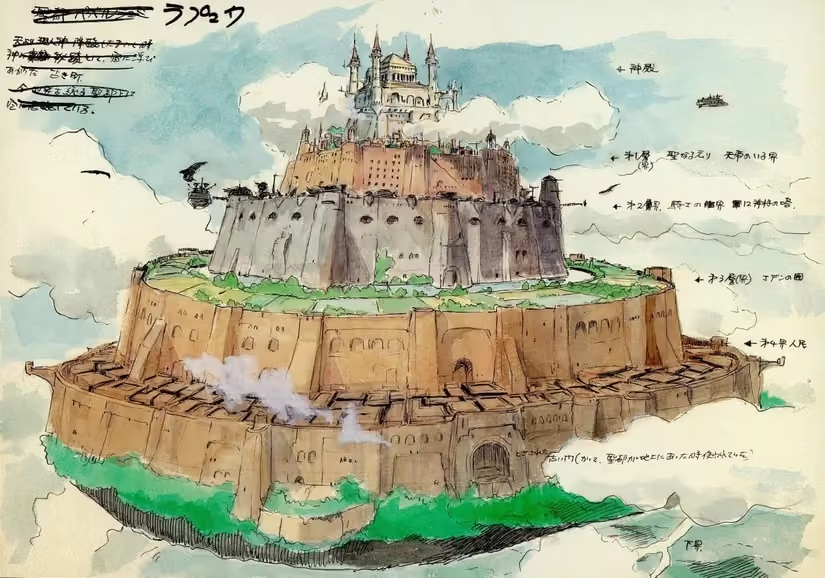
Storyboarding and animatics
Storyboards establish the first visual pass of the film, defining composition, character movement, and pacing. Animatics then combine these drawings with timing, allowing the team to see how scenes flow and identify issues long before animation begins. Below, we see Ghibli’s Spirited Away animatic as a perfect example:
Character and environment design
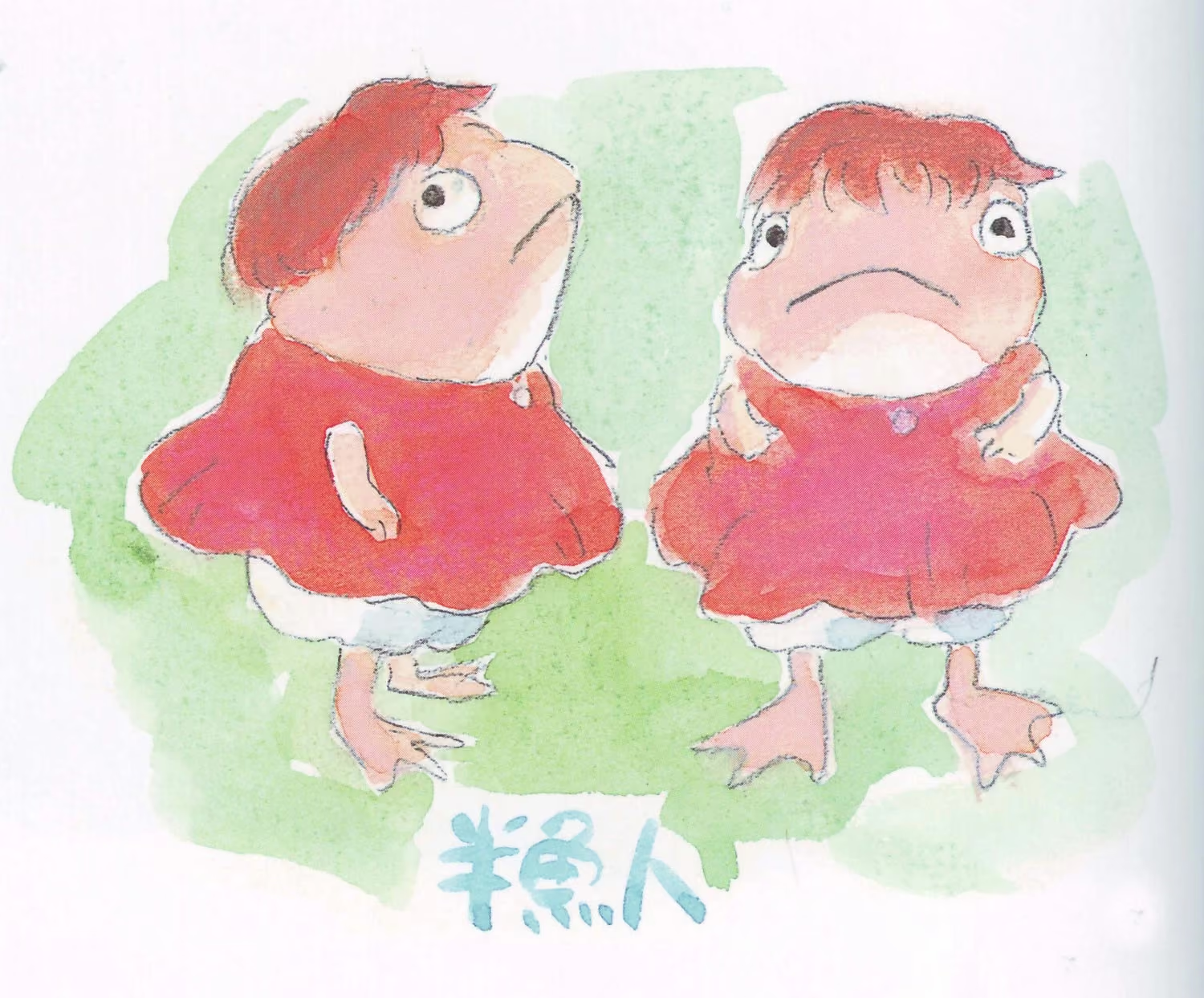
Concept artists build the visual identity through drawings, color scripts, and model sheets. emphasizing the importance of early design choices, illustrator Shugao advised,
"Always focus on things like creating a silhouette that describes the character's personality and on making a simple yet individual design."
Technical planning and asset preparation
Technical artists determine how characters and environments will be built, rigged, and integrated. This includes planning for 3D modeling, camera layouts, and naming conventions that keep assets organized.
How animation studios handle the production phase
Asset creation
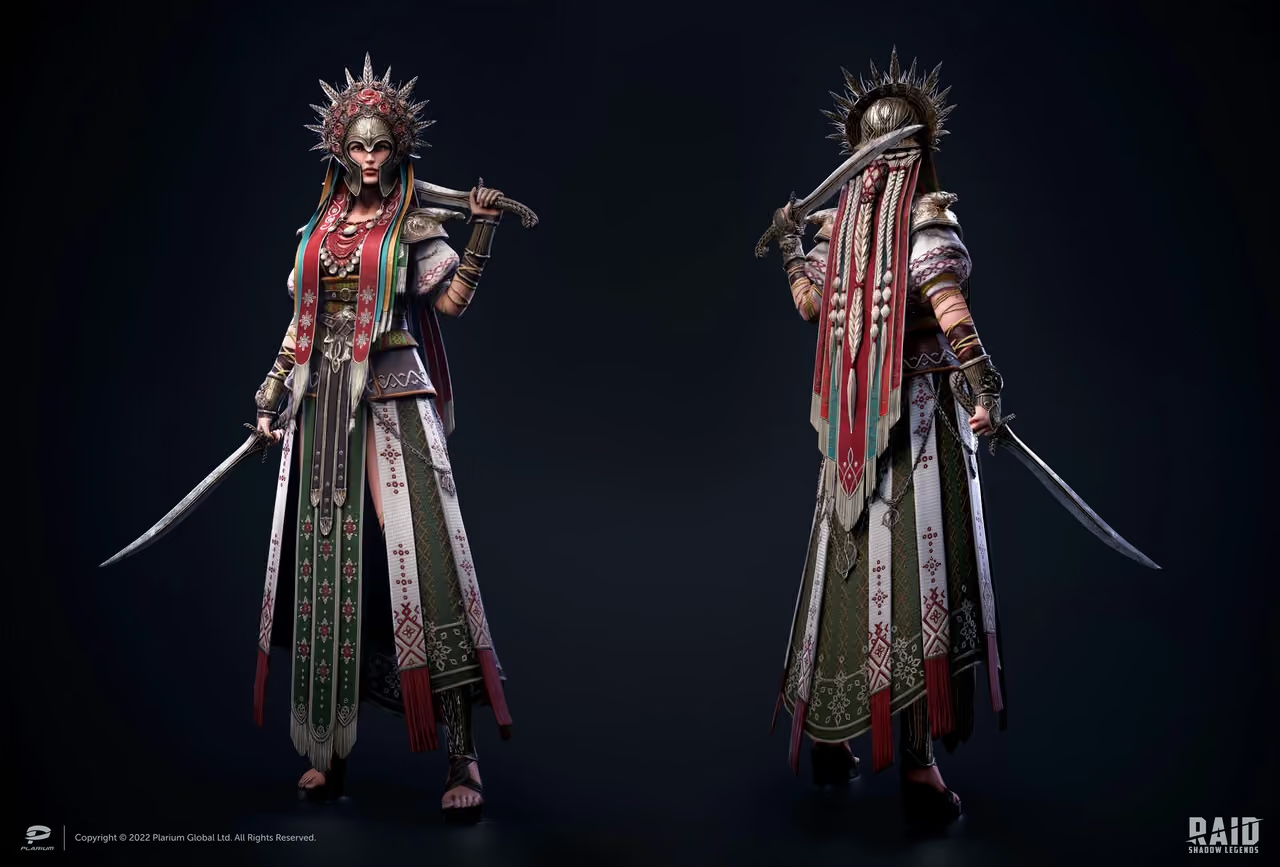
Artists create characters, sets, props, and environments in 2D or 3D. For 3D computer graphics, this includes high resolution sculpting and topology work suited for animation.
Rigging and animation workflow
Rigging teams design control systems so animators can manipulate characters. It not only involves movement, but also capturing the blend of technical and emotional work. As animator Glen Keane once advised,
"Live in the head of your character and animate what they are feeling, not what they are doing. The more you think like the character the more authentic and believable your performances and animations will be."
This video by Calobi Productions also shows an example of this in their breakdown video of KPop Demon Hunters:
Texturing, lighting, and shading
Shading artists determine how surfaces interact with light, while lighting artists create the visual mood, in the most optimized way possible. Photographer Jada Parrish put it succinctly in a blog post:
"[...] lighting can tell a story. It doesn’t just illuminate a scene; it sets the emotional tone and builds the narrative."

Visual effects and simulations
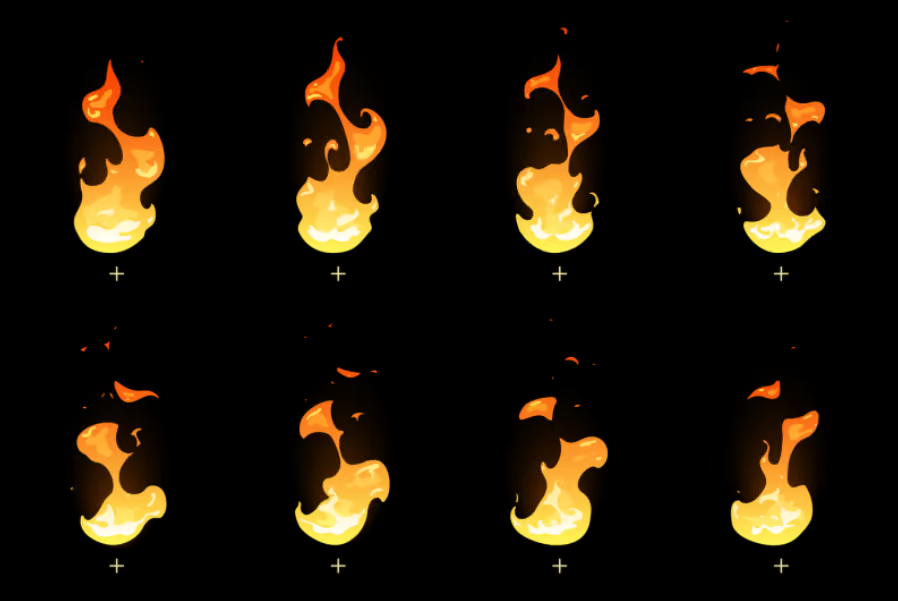
Simulations add realism with elements such as cloth, hair, fire, particles, and crowd systems. These must blend seamlessly with existing animation and light to keep in line with the animation’s cohesiveness in style.
What makes post production critical for animation quality
Compositing and visual effects integration
Compositors layer renders, adjust colors, create depth, and ensure visual continuity across the film. They merge all the visual components into a finished image, and we can see an example of how to do that in this video by Nomad R Productions:
Color correction and final polish
Colorists refine tone, contrast, palette, and shot consistency. This stage helps create emotional cohesion across sequences.
Sound design and music integration
Foley, ambience, effects, and musical scoring round out the film. Sound plays a central part in the illusion of liveliness and can even set the tone or mood of a scene. This video by Film Quest is an oldie but goodie, talking about the sounds in animation:
Rendering and output
Final rendering outputs the complete frames at production resolution. This stage requires careful planning to ensure deadlines are met and sequences render without errors. Render farms are often used to also speed up render times.
Which software and tools power modern animation pipelines
Industry standard 3D animation software
Studios rely on a combination of Maya, Blender, Houdini, Toon Boom Harmony, ZBrush, and other specialized tools depending on project style and needs.

Pipeline management and asset tracking
For management and tracking, ShotGrid and proprietary systems track versions, notes, shot progress, and department handoffs.
Rendering engines and farm management
Engines like RenderMan, Arnold, Cycles, and Redshift translate lighting, shading, and materials into finished frames. Cloud based tools help scale rendering loads across larger productions such as a render farm.
How AI has changed animation production workflows
AI supported tools now assist with repetitive tasks such as cleanup, interpolation, rotoscoping, and previs, giving artists more time to focus on performance and creative decisions. These systems can rapidly generate variations of camera angles, storyboard frames, and early blocking ideas, making experimentation easier during the initial stages.

By adopting AI, studios such as Hatch Studios achieved a 30% increase in animation production and a 25% reduction in expenses. (SuperAGI) In rendering, neural denoisers and predictive algorithms help reduce render times while preserving visual quality. Even with these advances, artists remain central to shaping emotion, timing, and storytelling, as automation enhances the workflow but never replaces human interpretation.
The biggest challenges in animation production pipeline
There are many different challenges when creating an animation, some being unique to the animation itself. However, here are three things that can be a problem in any project:
Managing complex data and version control
Productions generate thousands of assets, layers, and renders. Strong version control ensures consistency and prevents conflicts. Without this, the pipeline becomes a huge mess and can lead to a lot of errors or clean up later on.
Coordinating multiple departments
Animation requires continuous communication between modeling, rigging, animation, effects, lighting, and compositing. Misalignment causes delays, especially when work needs to be redone.
Quality control and consistency
Supervisors track revisions to ensure characters remain consistent in silhouette, emotion, and acting style across all shots. In this day and age where people are spoiled with good quality visuals, it’s important to keep up and present with quality.
How major studios like Pixar and Netflix structure their animation pipelines
Pixar’s USD system
Pixar developed and uses Universal Scene Description (USD) to allow multiple artists to work on the same scenes, reducing conflict and friction across departments (Open USD).
Netflix’s global production framework
Netflix uses a globally‑scalable production infrastructure (its Media Production Suite) that standardises tools, metadata flows and workflow protocols across markets, enabling collaboration across international studios and helping teams stay aligned (TVTech)
Studio specific innovations
Each major studio builds unique internal tools to solve their own bottlenecks, often extending standard software rather than replacing it. Some have their own render farms and some have their own animation software such as Presto, the animation software used in-house by Pixar.
Skills you need to work in the animation production pipeline
Working in animation production requires a blend of creativity, technical knowledge, and collaboration. First and foremost, strong storytelling skills are essential and understanding how to support a narrative visually is key. Technical proficiency with industry-standard software like Adobe After Effects, Toon Boom Harmony, or Blender can give you a solid edge.

Time management and organization are also crucial. Animation projects often involve many moving parts and tight deadlines, so being able to coordinate with teams, track progress, and stay on schedule is vital. Equally important is communication as clear and efficient communication helps keep everything aligned.

Finally, adaptability and problem-solving are invaluable. Animation workflows can change quickly, and the ability to troubleshoot issues or adjust plans without losing momentum makes you a stronger team player.
How much does a proper animation production pipeline actually cost
Animation studios require powerful hardware and secure data systems. Pixar has reported using render farms with tens of thousands of cores, reflecting the scale of the computational demands.
Software licensing and hardware requirements
A professional setup includes a combination of Maya, Blender, Houdini, Nuke, Toon B oom Harmony, Substance tools, and others. Electric hardware such as stylus displays, calibrated monitors, and simulation servers also play a critical role. While there are tools you can get for free such as Blender, the cost for paid software and hardware can easily reach thousands of dollars.
Team size and labor cost
Labor remains the biggest investment and the scale of staffing needed for large projects can be immense. According to Escape Studios London, the United States counted over two hundred twenty thousand animation professionals being employed in 2024. Each professional can also differ in salary, for example with 3D animators getting paid around USD 80,000 to USD 100,000+ a year (GlassDoor).
Where animation production pipeline technology is heading
RealityCanvas by Zhijie Xia, Kyzyl Monteiro, Kevin Van, Ryo Suzuki
As studios respond to evolving creative demands and faster production cycles, modern animation pipelines are being reshaped by technologies like VR, AR, and interactive media, which push artists to adapt for spatial storytelling and real time responsiveness. At the same time, cloud based production and remote collaboration are becoming standard, enabling global teams to manage rendering, assets, and reviews more flexibly. This shift is making render farms more valuable and accessible to professionals, indie creators, and hobbyists alike.
Register Now and Get $50 FREE Credits!