

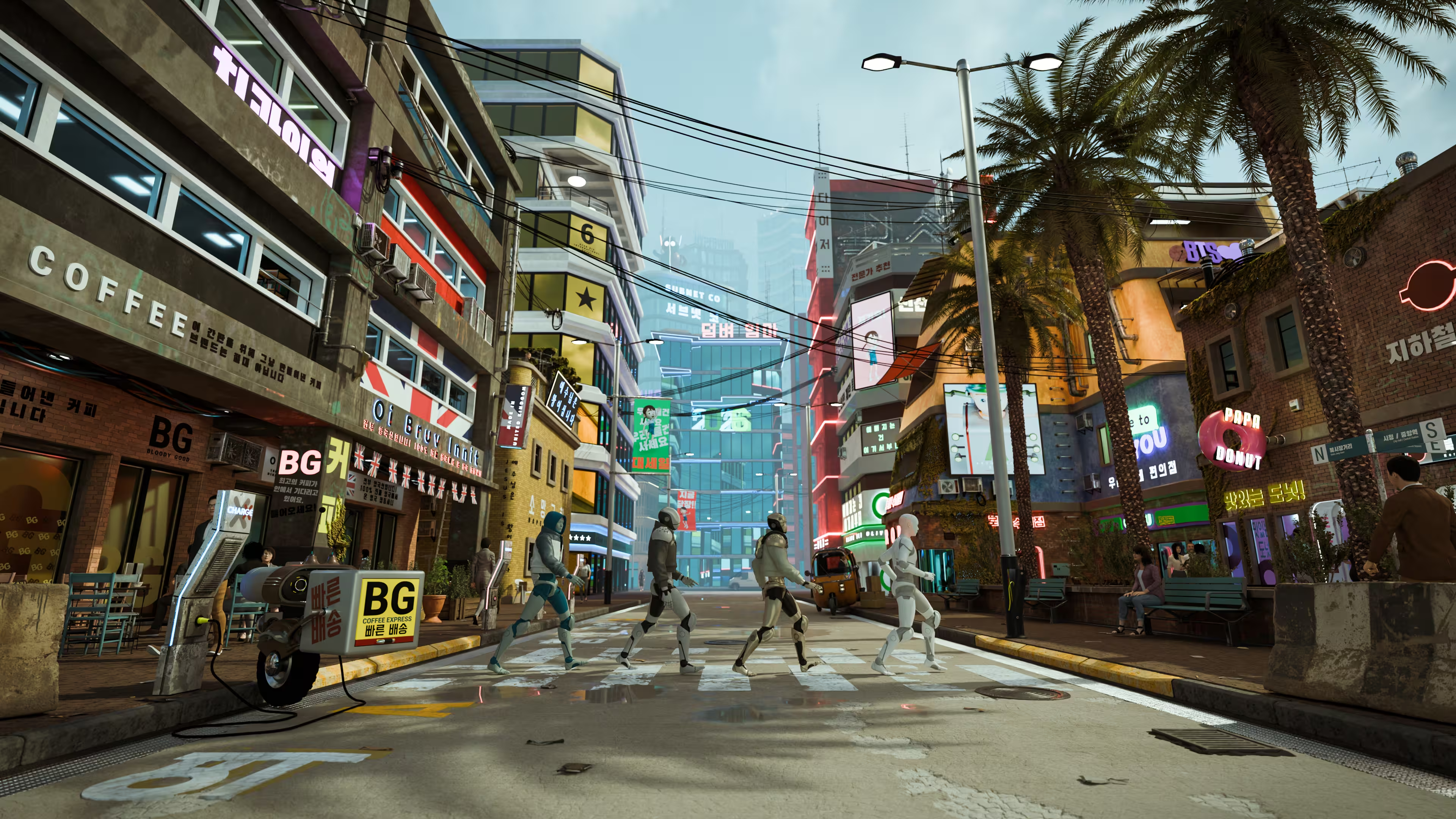
What began as curiosity around Blender has gradually become a way for Benjamin Stanton to turn ideas, references, and imagined worlds into something tangible. His personal projects include one of his most ambitious projects yet: a large urban environment developed over four months and brought to life as a 10-second animation. With GarageFarm.NET helping handle the final rendering, Benjamin was able to take a scene that had grown far beyond a simple Blender exercise and turn it into a finished moving piece.
Discovering a creative outlet through lighting and 3D
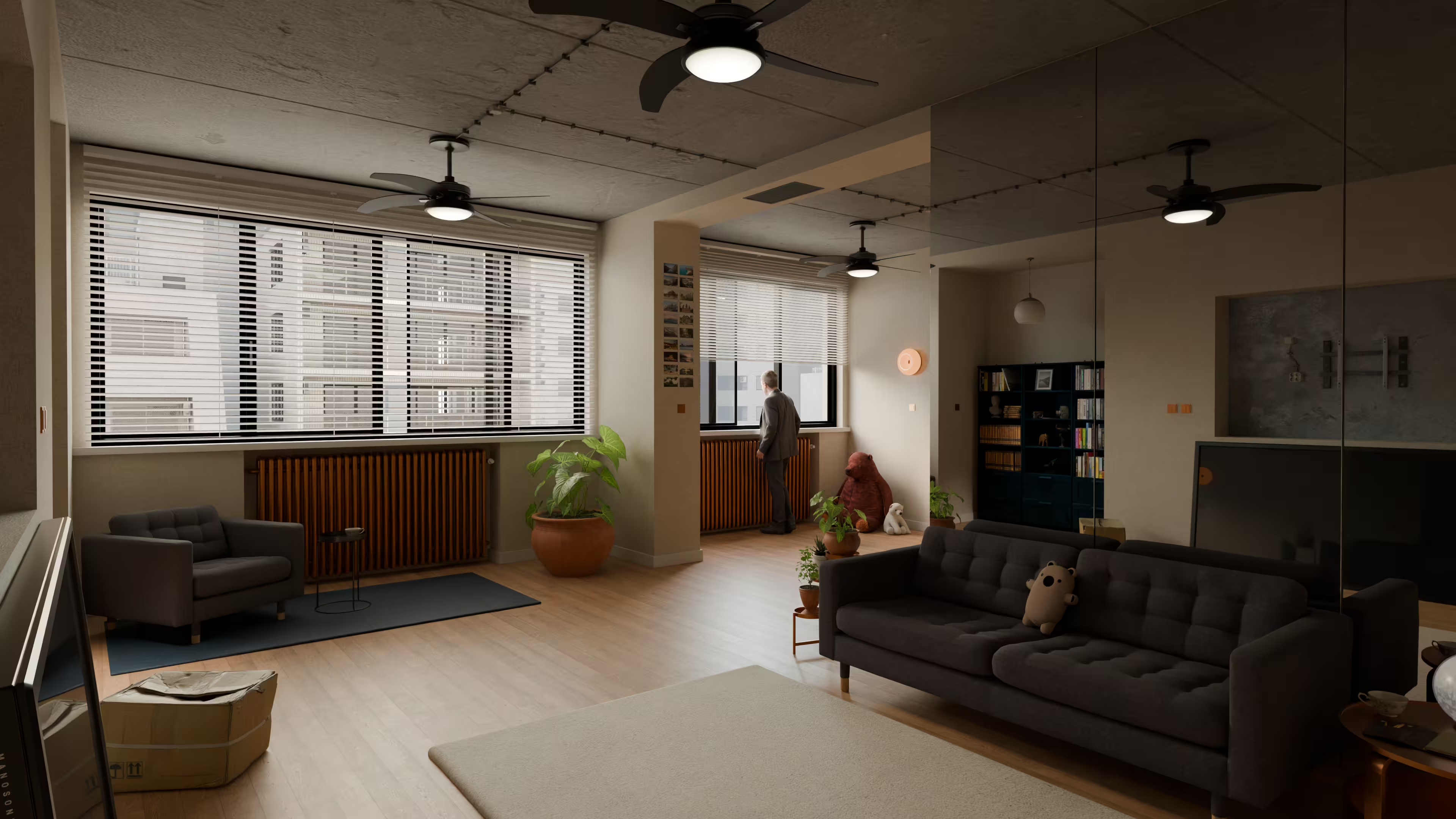
Benjamin has spent around two decades working in the lighting industry, mostly on the manufacturing side. But in 2022, an opportunity to train as a lighting designer shifted the direction of his career and placed him much closer to the creative side of the work. Today, he plans lighting for real buildings, but the move also opened the door to a broader interest in visual creation.
Then came in Blender.
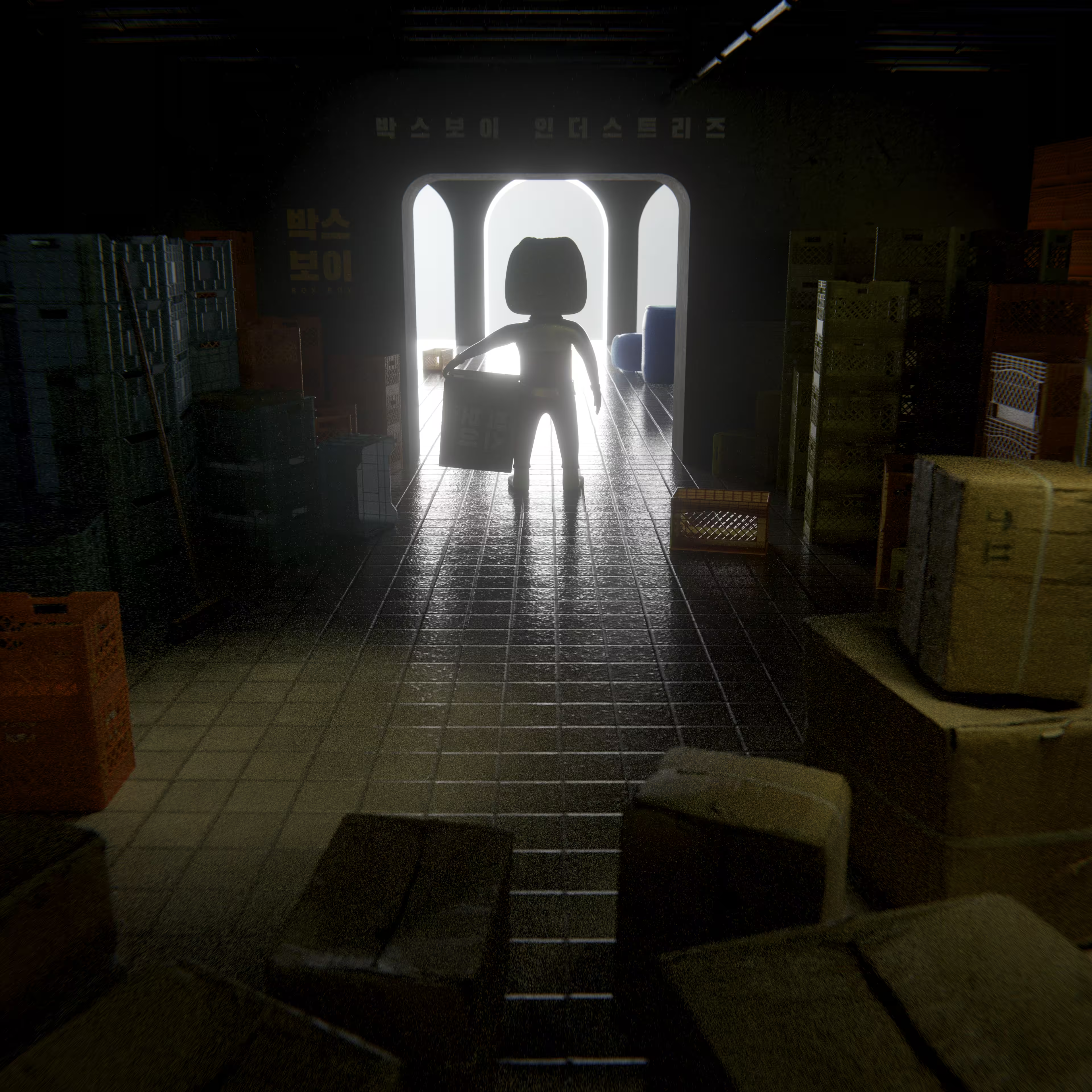
Like many people trying 3D for the first time, Benjamin had downloaded the software more than once, opened it, seen the default cube, and had very little idea what to do next. The turning point came when he started searching YouTube and found Blender Guru’s well-known donut tutorials. He didn’t even make it to the end of the series before coming up with new projects he could do.
“I don’t think I even finished the whole series before I already had 10 different ideas I wanted to try.” -Benjamin Stanton
Ideas gathered from everyday life
Benjamin’s projects don’t exactly come from a rigid brief. For him, ideas accumulate throughout the day in notes, screenshots, and passing observations. If something catches his attention, it may end up photographed, written down, or saved for later, with thoughts already running through his head on where he could take those interesting finds.
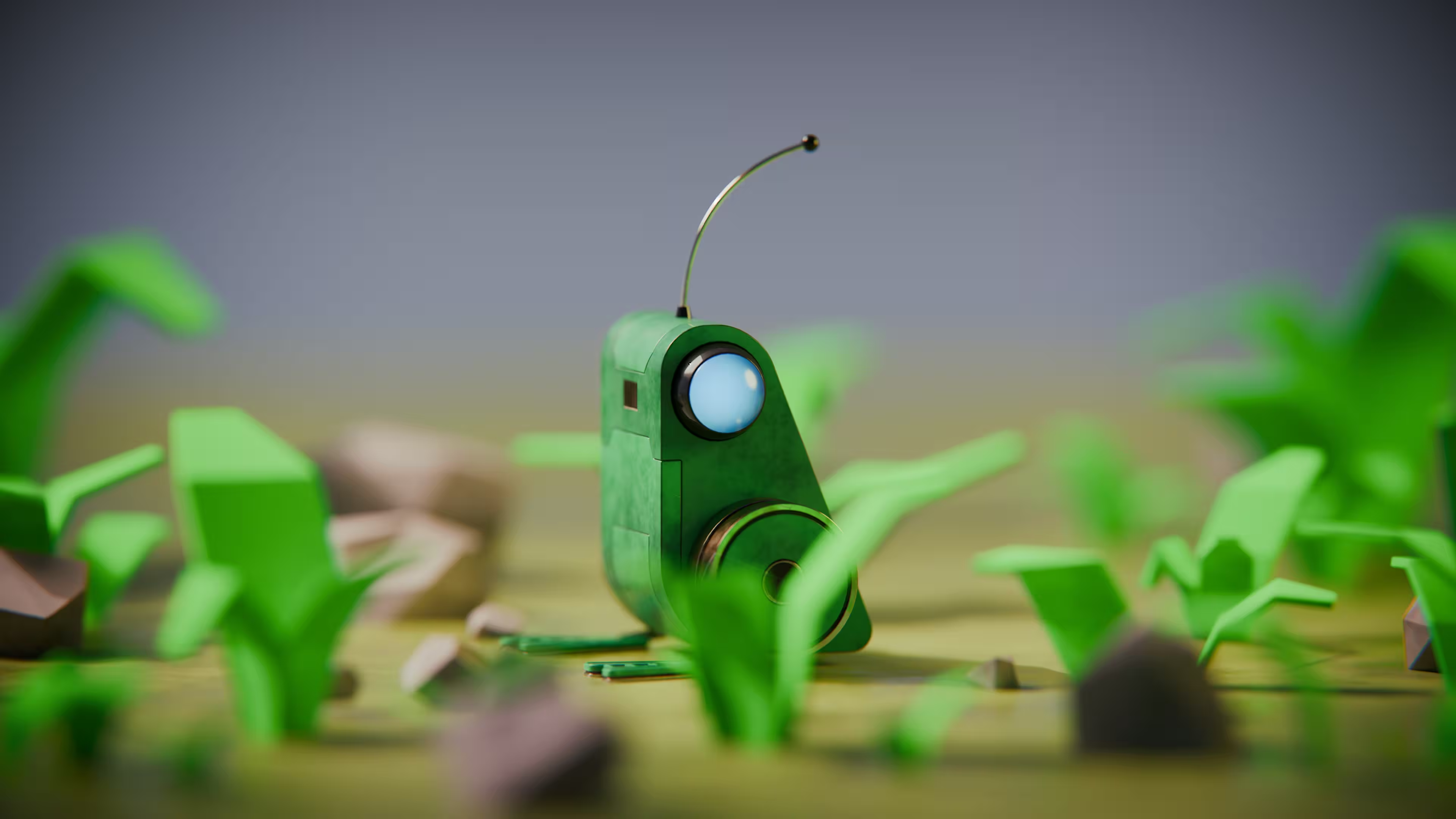
That loose process also leaves room for projects that are much more personal. His six-year-old nephew is fascinated by robots, which has turned them into a recurring subject. Benjamin makes small robots and superheros partly to entertain him and partly to encourage the same kind of imagination that drew Benjamin toward 3D in the first place.
“I get a huge amount of enjoyment seeing how he reacts to the robots and super heroes I make for him, and hopefully one day he will make his own too.” -Benjamin
Frozen in Time: Building a city inspired by Seoul
Benjamin’s interest in architecture made the CG Boost urban environments course an easy fit and “right up his street”. He had already learned a great deal through YouTube, but wanted something more focused and professionally structured to help him improve. The course gave him that framework, though the city he eventually created moved far away from the original street used in the lessons.
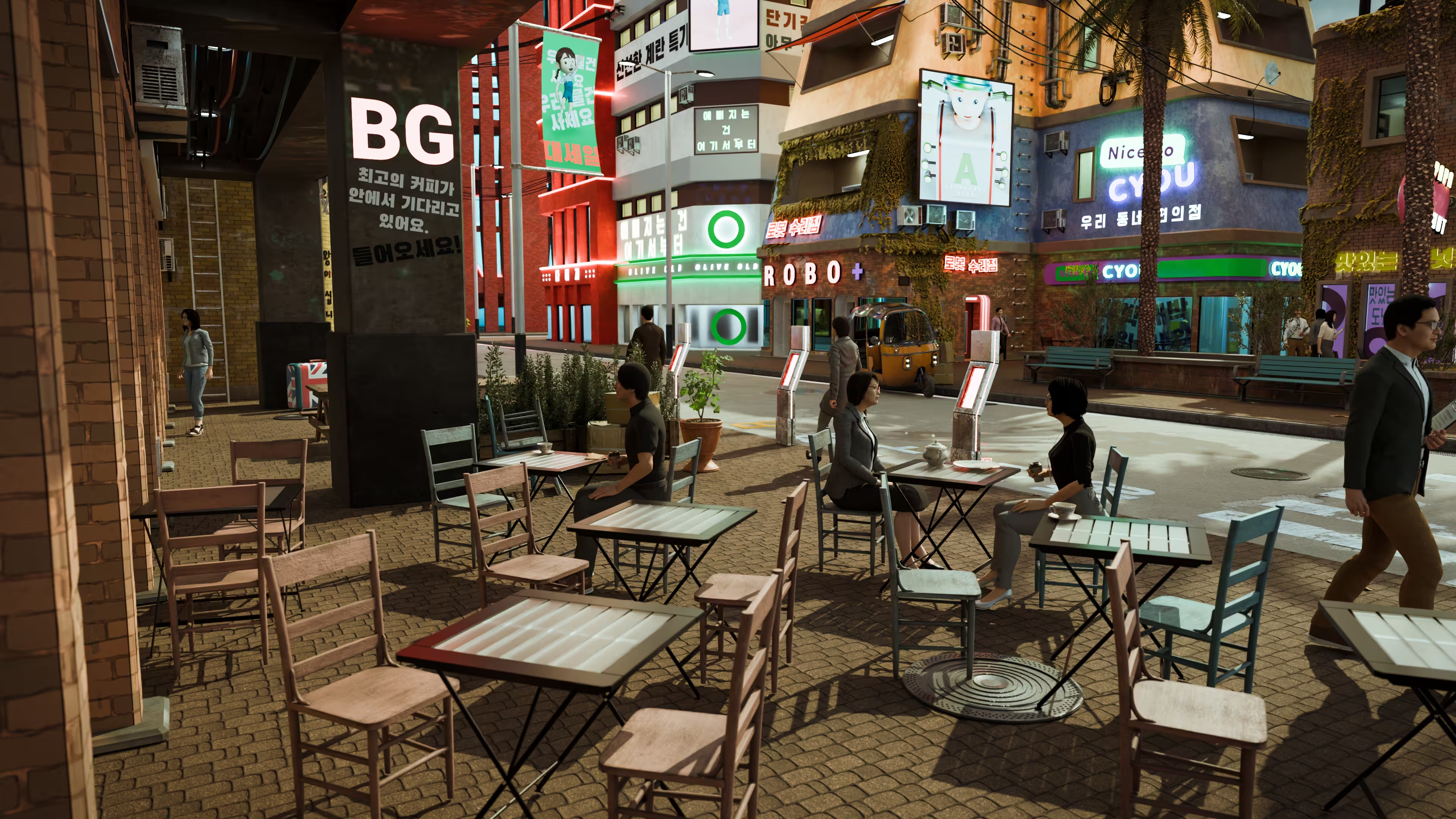
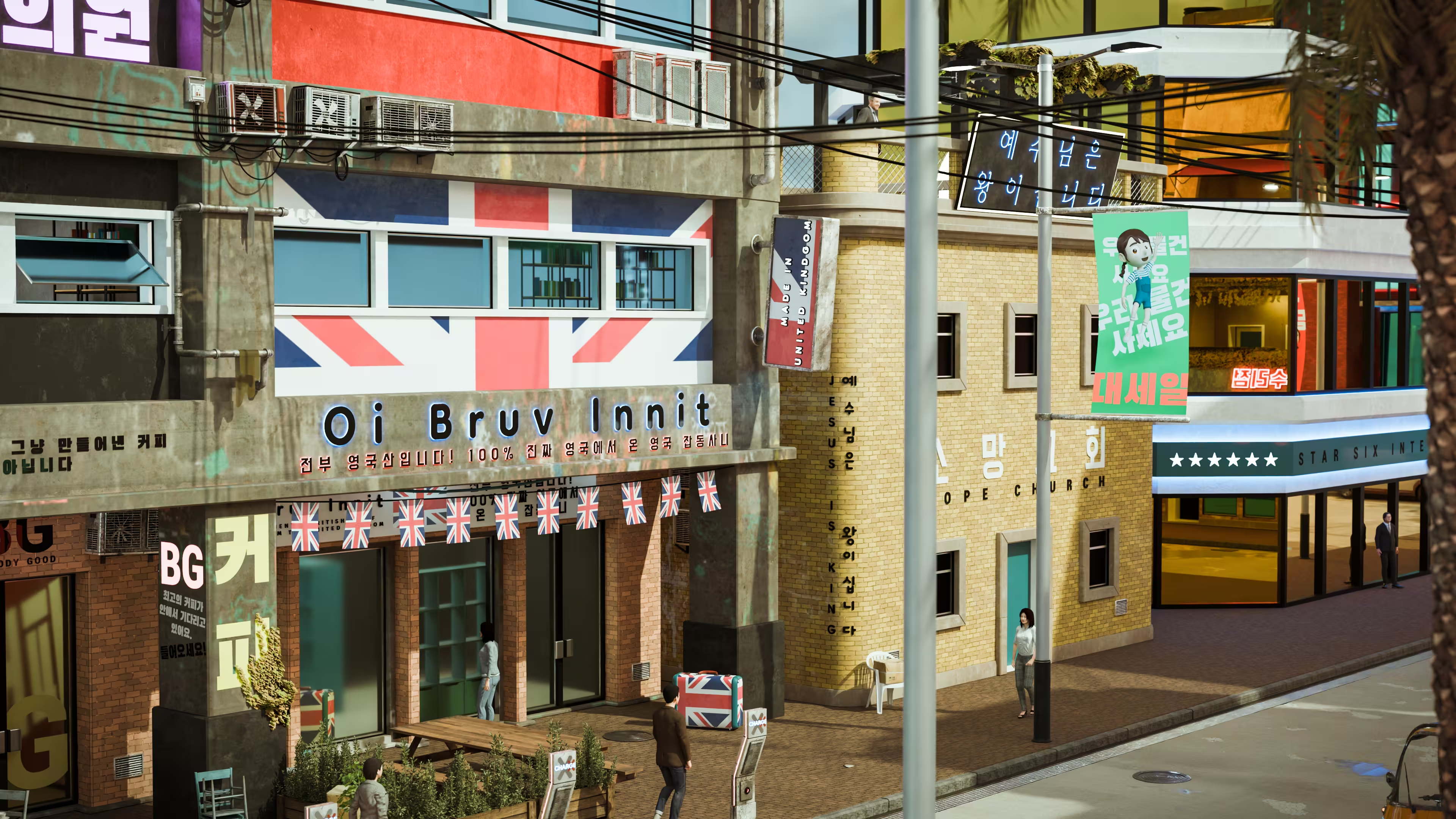
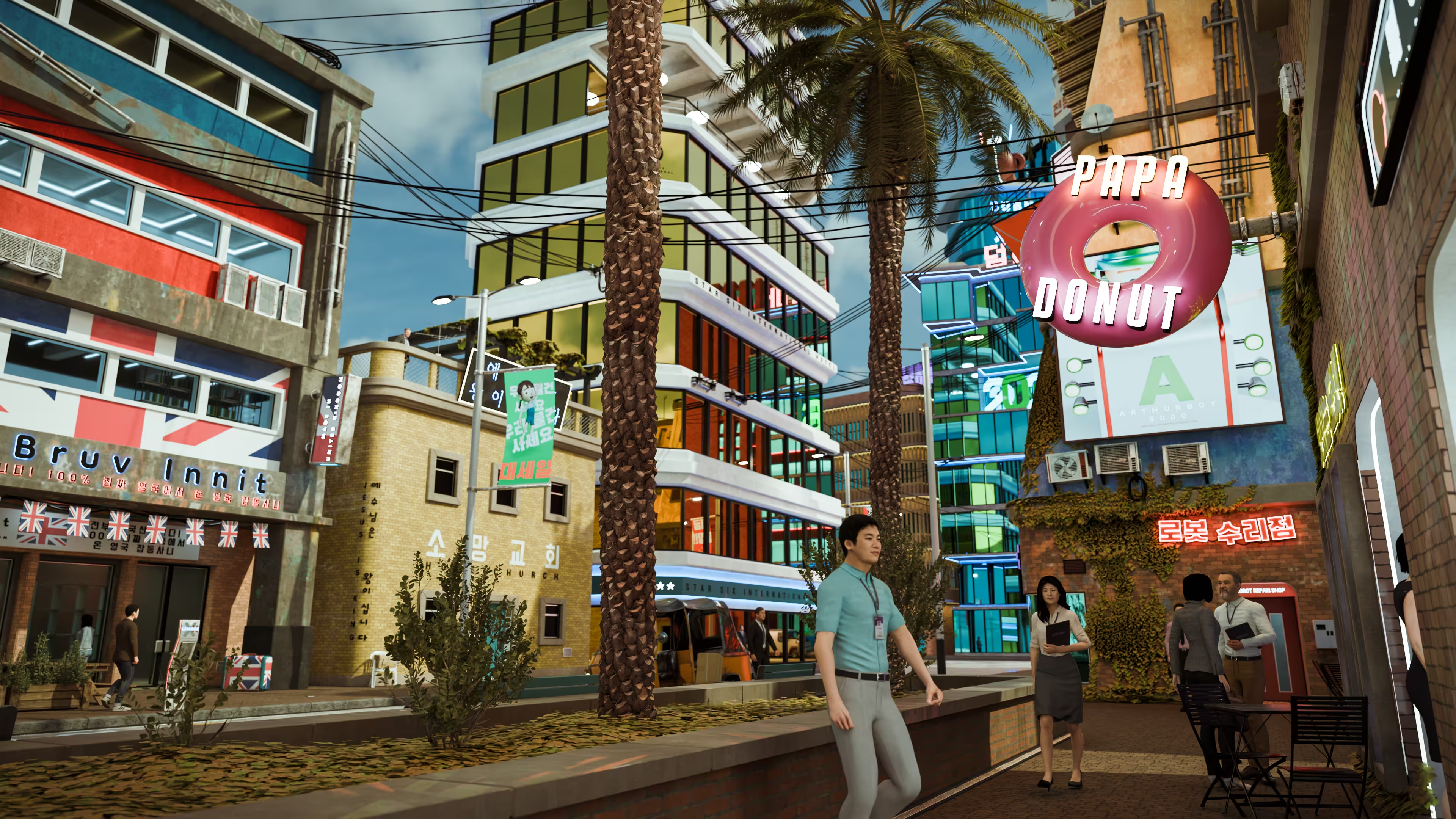
A recent trip to South Korea became the real visual starting point, as Benjamin had travelled to Seoul with his wife to support her brother in a dragon boat race. They stayed in Myeongdong, a district filled with cool neon signs, illuminated storefronts, and dense layers of visual information. That atmosphere stayed with him and began shaping the direction of the project.
The environment also became a way to connect his 3D work with another personal goal: learning Korean. Benjamin incorporated Korean writing throughout the scene, using the project as another form of immersion while he worked on his reading and writing skills.
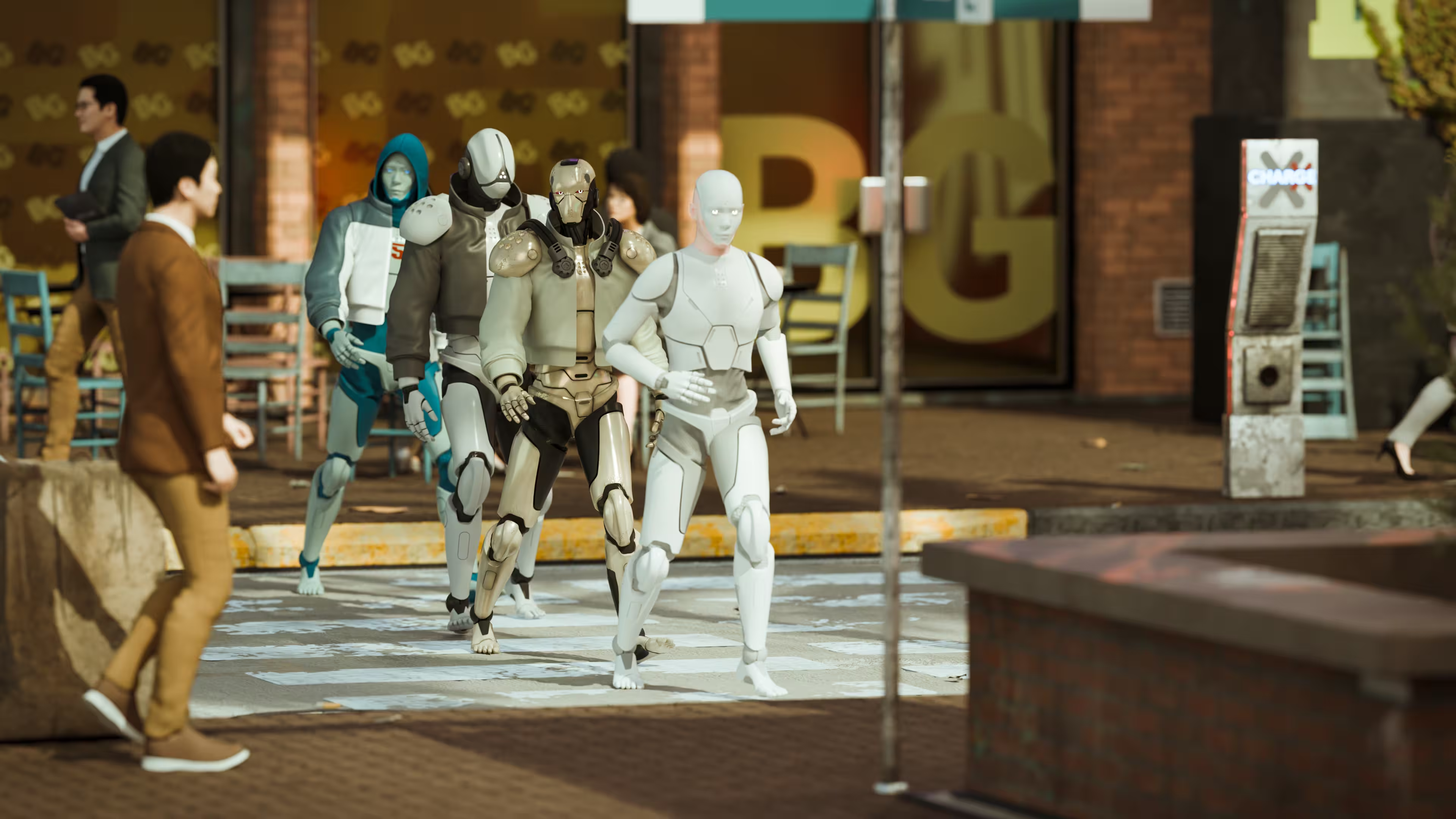
The project developed slowly around work and everyday life, with Benjamin fitting in design time whenever he could. Progress was rarely linear however, as he would sometimes get deep into the build, decide the approach was not working, and start large parts of it again. But each rebuild became more efficient and visually stronger than the one before it.
“I really learned where to add detail and where to use less. I also learned a lot about building up complex textures to really make the overall aesthetic of the design stand out and look more interesting.” - Benjamin
What he values most about the project now is not one particular building, texture, or shot. It is the fact that he stayed with it long enough to see how much his process could change.
By the end, the project had become an important turning point in his development. Blocking out scenes, adding detail, building textures, and eventually animating the environment all became part of a more complete workflow. The city also remains one of the projects that helped him understand how he wanted to approach 3D work in the first place.
“The thing I enjoy [about 3D modeling] the most is the end result… Knowing that I made something that (at least in my opinion) looks really cool, and also having an avenue to express my creativity.” - Benjamin
Making animation practical with a render farm
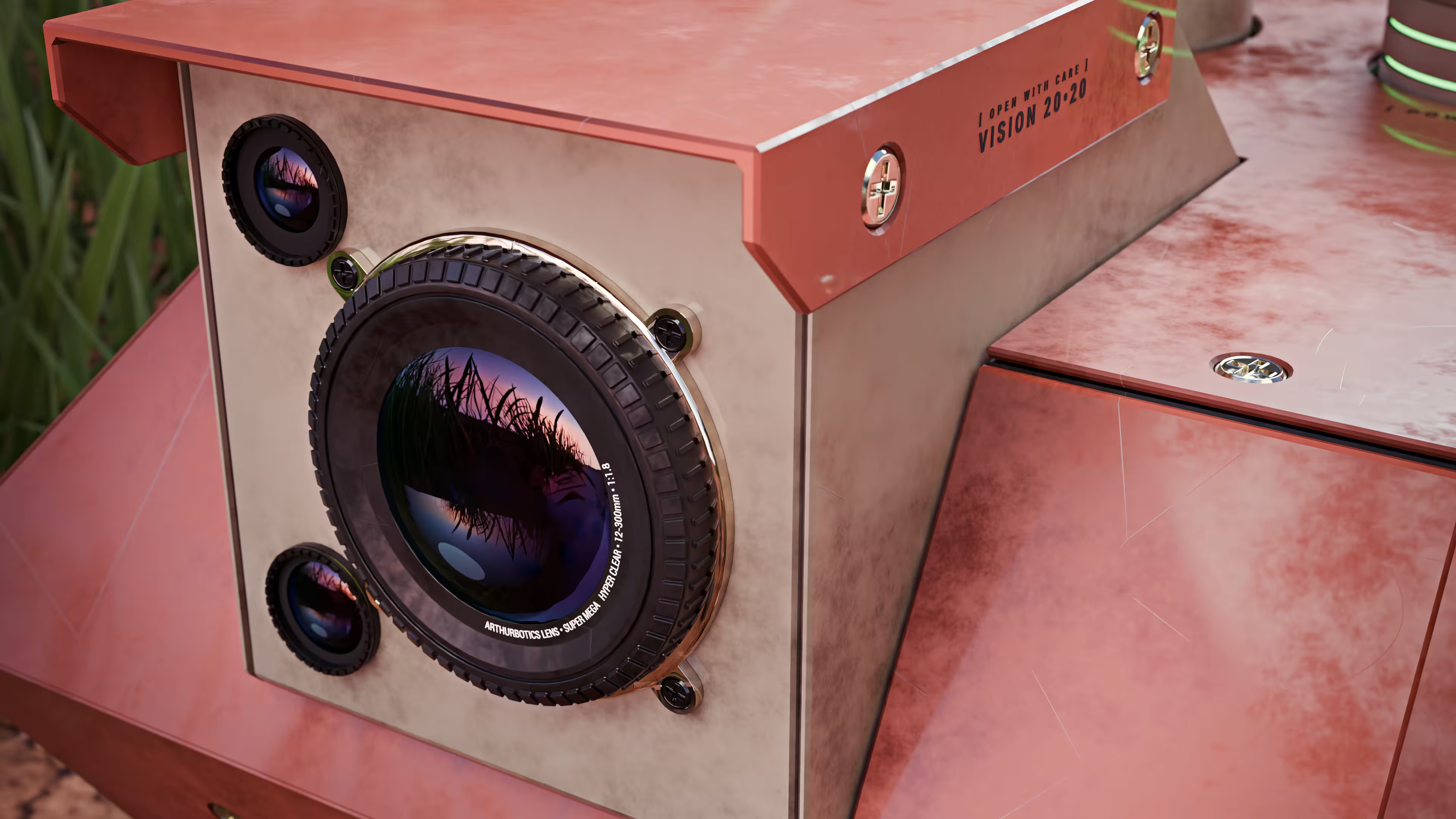
Before using a render farm, animation was effectively beyond the limits of what Benjamin considered practical for his personal projects. Even a 10-second flyaround at 24 frames per second could take so long to render locally that lowering the resolution felt like the only realistic option.
“Animations were basically not gonna happen for me!” - Benjamin
The city project made him realize this limitation, as Benjamin wanted to finish his project with an animation but rendering the sequence on his own setup could have stretched across weeks of separate sessions in his free time. GarageFarm.NET turned that final step into something far more manageable, with the animation frames rendered in minutes rather than weeks.
Benjamin first found GarageFarm.NET through a Google search while comparing render farms, and the city animation became his first real test of the service, in which he saw the biggest benefits in speed and support.
“The speed, for sure. I’ve had the odd technical issue come up, but when I’ve reached out to support, things were sorted really quickly.” - Benjamin
For the kind of personal projects Benjamin creates, cost also mattered. He describes his work as firmly in the hobbyist category and says even his most demanding renders have only cost a few dollars, making external rendering practical without changing the scale or character of the way he works.
Looking ahead to more worlds of his own
For Benjamin, looking ahead also means looking back at how far 3D has already come. He remembers playing Metal Gear Solid as a child and wondering how cool it would be to make a world of his own one day. At the time, it seemed that it was only a dream. But now with tools like Blender freely available, the kind of creative work he once only imagined has become something he can explore for himself.
“When I was a child, I could only dream of creating my own little 3D world. [...] Now I can finally realise my dream of being creative in a way I could have never imagined all those years ago.” -Benjamin
Over the next few years, Benjamin would like to keep developing his skills and eventually find a way to turn them into a second source of income. But for now, his focus remains on learning, experimenting, and enjoying the process of bringing ideas to life. As tools continue to evolve, Benjamin doesn’t know exactly where 3D will go next, but there is one part of the process he hopes remains essential: the human presence behind the work.
“I think it’s the human touch. The way it can be a window into someone’s mind to see the vision they wanted to create for everyone else to see. AI can’t do that kind of stuff.” -Benjamin
The tools may change and the workflows may become faster, but Benjamin’s ultimate direction remains straightforward: keep learning, keep making, and keep turning the worlds in his head into something others can see.
-
Enjoyed Benjamin’s work? See more at:
Instagram: /benjaminportfolio