


A new vision for everyday health
What if taking care of your health felt less like a task and more like a natural part of your morning routine? For industrial designer Jaehong Jeon, that question became the foundation of Argon, a graduation project that reimagines how medical devices fit into our homes and daily lives.
Created during his final year at Hongik University, Argon is a kitchen-based passive health monitoring system that disguises medical devices as familiar pieces of furniture. The project brings together product design, user experience, and 3D visualization in a concept that explores a future where managing long-term medication becomes less intrusive.
Bringing that vision to life required more than designing the products themselves. Jaehong also directed and produced a 4K product film to communicate how Argon would work in an everyday setting. With a graduation exhibition and a global online exhibition platform deadline approaching, GarageFarm.NET helped him overcome the limitations of his personal workstation and complete the film without sacrificing valuable time for creative refinement.
From industrial design to visual storytelling
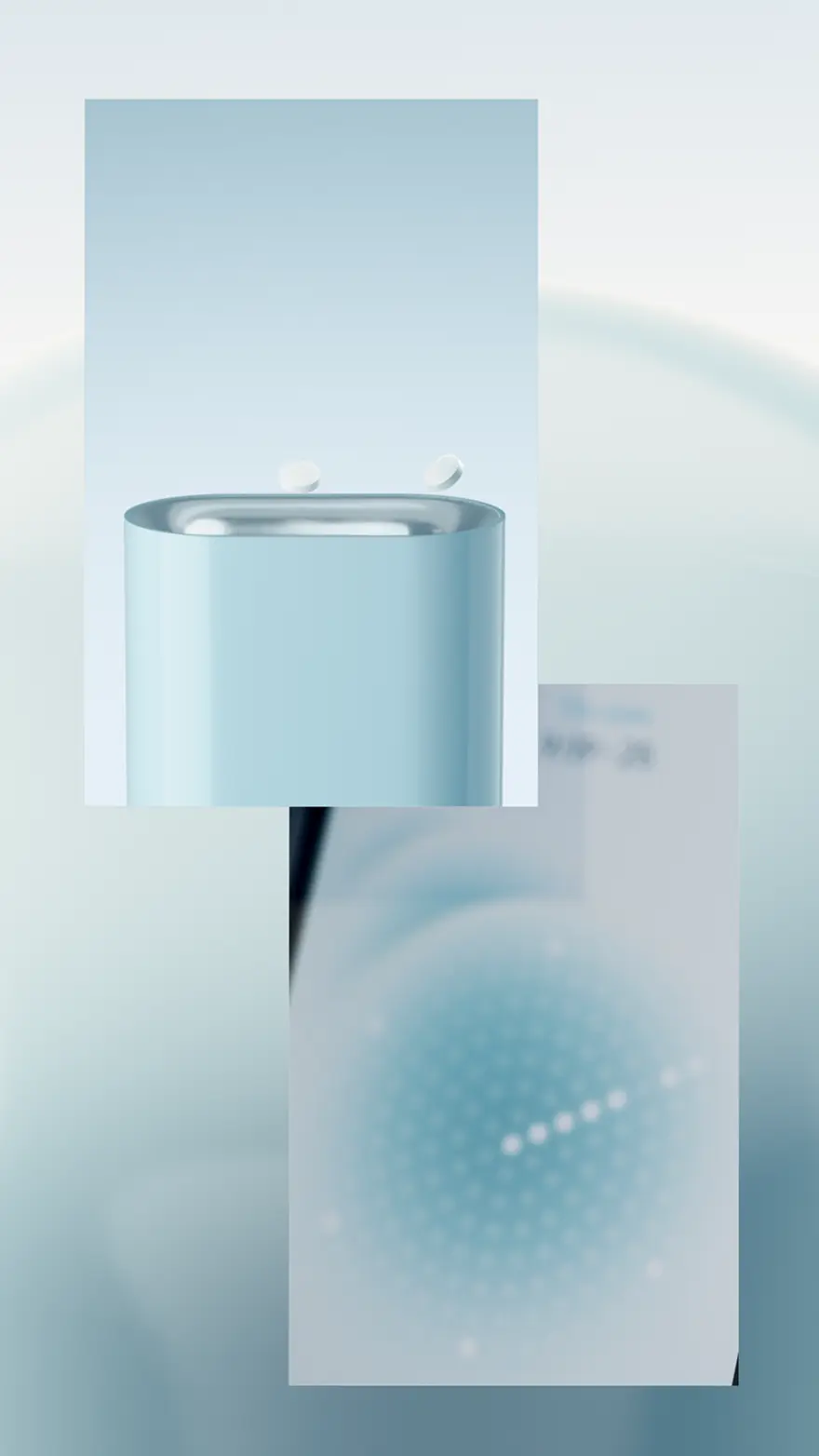
Jaehong's journey into design began in 2020, when he enrolled in the Industrial Design program at Hongik University in South Korea. While his experience has primarily centered on academic projects, his interests have gradually expanded beyond traditional product design. By his sophomore year, he had begun seriously exploring 3D rendering and video production, developing the skills to take an idea from its earliest research stages to a finished visual presentation.
For Argon, Jaehong took responsibility for nearly every stage of production, from initial research and product development to directing, rendering, and editing its accompanying film. The effort eventually earned the project a place in the Hongik University edition of Dezeen School Shows, a great milestone for a student preparing to enter the professional design industry.
"It was especially meaningful to condense a full year of research and design into a single film and have it featured in an international publication." - Jaehong Jeon
Argon: Making health monitoring feel at home
The heart of Argon is a simple observation: as long-term medication becomes part of everyday life for more people, the tools used to manage health may also need to find a more natural place in the home. Jaehong describes the project's theme as "products for an era where medication is part of everyday life."
Rather than designing medical devices that demand attention through their clinical appearance, he imagined a system that could blend into familiar domestic environments. The concept consists of two connected products and a companion application:
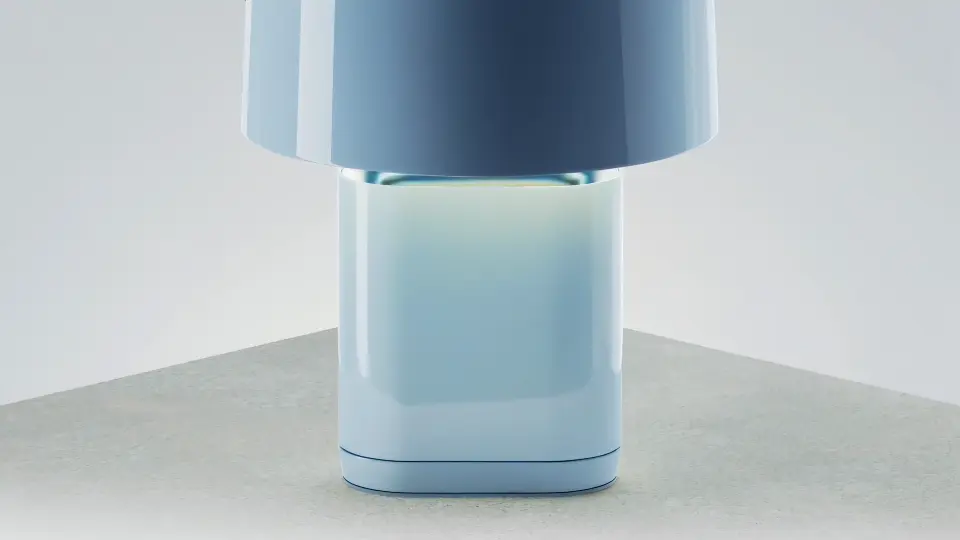
The first, Nest, is a pill dispenser disguised as a lamp. Its design allows a medication-related device to become part of the home's existing furniture rather than standing apart from it.
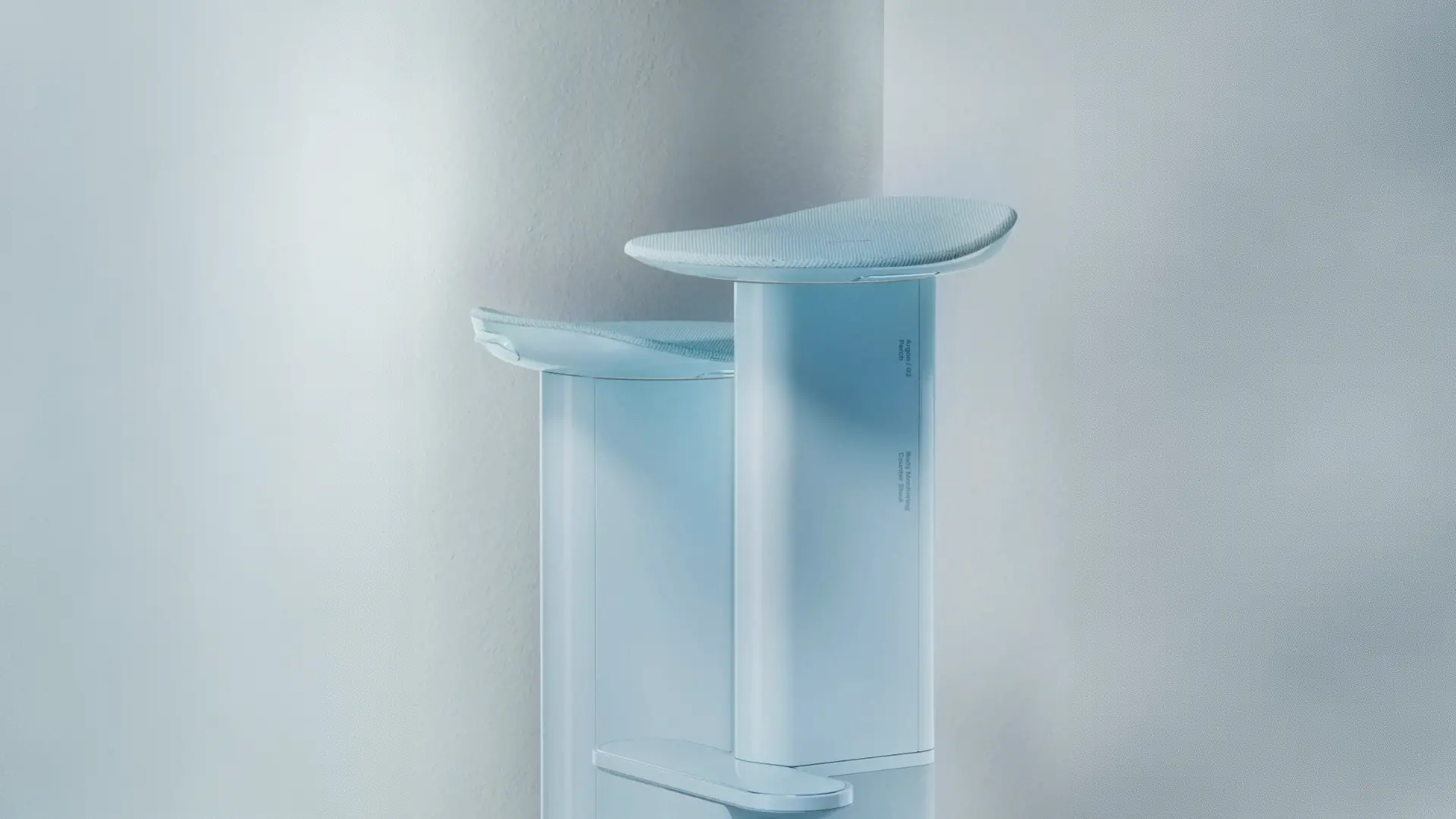
The second, Perch, is a body composition scale designed to resemble a stool. Together with the companion app, the two devices form a connected system intended to help users monitor their health through ordinary daily activities.
"The core concept is to integrate medical devices into the home in the form of furniture so that health trends accumulate naturally through a user's morning routine, without requiring deliberate measurement or manual logging." - Jaehong Jeon
The idea is particularly relevant to people managing long-term medication routines, including those using treatments such as GLP-1 receptor agonists. By making health monitoring less conspicuous, Argon explores how product design can reduce the friction between caring for one's health and simply going about everyday life.
But communicating this concept required more than static product renderings. Jaehong needed to show how the devices would exist within a home, how users might interact with them, and how their design could support the routines they were intended to become part of. That was where 3D visualization and motion graphics became essential to the storytelling.
Bringing a year of design into motion
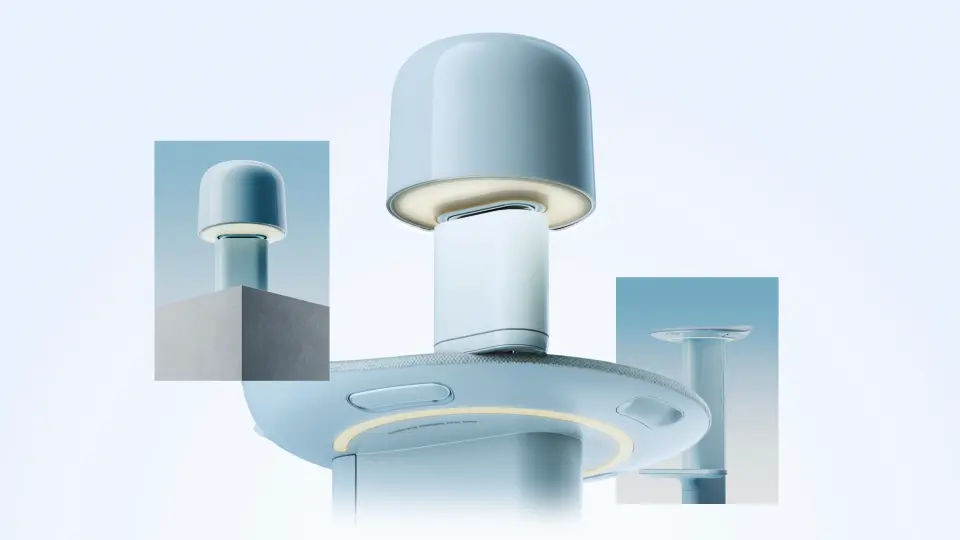
To present Argon, Jaehong created a product film and a concept film in 4K, with an approximate runtime of 80 seconds.
His production pipeline combined several tools, each serving a different purpose; Rhino was used for product modeling, while Cinema 4D and Redshift handled the 3D scenes and rendering. Finally, After Effects brought the visuals together through compositing, motion graphics, and editing.
Lighting was particularly important. Because Argon's design incorporated built-in lighting, its 3D scenes involved emission and reflections that added complexity to the rendering process. At 4K resolution and 30 frames per second, even a relatively short film demanded substantial rendering work. Every revision could mean another sequence of frames to process, and with the graduation exhibition approaching, time was becoming increasingly limited. For Jaehong, the difficulty was not simply the amount of rendering required, but what the rendering prevented him from doing.
“ [...] It was impossible to finish rendering within the remaining timeframe using only my personal workstation “ - Jaehong Jeon
When rendering becomes the bottleneck
Working independently gave Jaehong creative control over the entire project, but it also meant relying on a single workstation for several demanding tasks. Whenever his computer was occupied with rendering, other parts of production had to wait.
This became a problem as the deadline approached. Shots needed adjustments, edits had to be refined, and the final film had to come together while there was still time to make changes. With rendering already consuming significant amounts of time, completing everything locally was no longer practical.
"Another major issue was that running a render on a single computer prevented me from doing any other work, such as revisions or editing, in the meantime." - Jaehong Jeon
The situation called for a different approach that would allow Jaehong to continue working while his final-quality frames were being rendered elsewhere. A recommendation from a fellow student eventually led him to GarageFarm.NET, his first experience using a render farm.
Getting creative time back with GarageFarm.NET
For someone accustomed to handling the entire production process independently, moving rendering to an external service introduced a new workflow. There was some initial trial and error while uploading scenes and configuring settings and Jaehong also encountered a plugin rendering error, but guidance from GarageFarm's support team helped him resolve it without significantly disrupting his schedule.
As a student, rendering costs were another important consideration. The ability to estimate expenses beforehand and select different rendering priority tiers made it easier to balance his budget against the remaining production time. Once the workflow was established and with GarageFarm handling the rendering, Jaehong could now continue refining his film on his own workstation instead of waiting for frames to finish.
"While rendering ran on the farm, I could continue editing and making revisions, and receiving results quickly allowed me to polish the cuts right up until the deadline." - Jaehong Jeon
For Jaehong, the experience demonstrated how external rendering resources could support students and independent creators working on ambitious projects without access to extensive hardware. He particularly recommends render farms for graduation films and personal projects where deadlines are fixed, computing resources are limited, and compromising on visual quality is not an option.
"Even though it was my first time using a render farm, the process wasn't complicated, and above all, I received all the required shots before my deadline." - Jaehong Jeon
Looking ahead: AI, 3D workflows, and the future of design

With Argon's graduation exhibition behind him, Jaehong has begun preparing for the next stage of his career. He is currently organizing the project's online exhibition and final deliverables while developing new ideas inspired by the exhibition process. He is also preparing to enter the professional design industry, with plans to continue pursuing personal projects alongside full-time employment.
Looking further ahead, Jaehong sees AI as one of the most significant developments shaping creative production, particularly as AI tools become more closely connected with established 3D applications. He is especially interested in workflows involving Model Context Protocol (MCP), which can enable AI systems to interact with compatible software through connected tools. In his view, this could make 3D production more accessible to creators whose primary expertise lies outside traditional 3D modeling and animation.
“For example, someone without deep 3D skills can generate a previs using a modeling MCP connected to Blender or Cinema 4D to block out the direction, then feed that previs along with references into tools like Higgsfield or Weave to achieve their desired video. This kind of production workflow will become much more common and accessible in the future. “ - Jaehong Jeon
However, Jaehong does not believe this means traditional 3D rendering will become unnecessary.
"Shots that must accurately depict a product's form and materials still require true 3D rendering. Rather than replacing rendering, I see AI transforming the stages before and after it." - Jaehong Jeon
He also believes render farms have an opportunity to support this changing landscape by keeping pace with new software and rendering engines while making their services more approachable for first-time users..
In many ways, that outlook reflects the philosophy behind Argon itself. Good technology should fit naturally into the way people already work and live, making complex tasks easier without becoming an obstacle. And with new creative tools continuing to expand what individual designers can accomplish, there is plenty of room for those ideas to develop further.
Like Jaehong's work? Explore more of his projects and creative work:
Behance: https://www.behance.net/iwin_artwork
Instagram: https://www.instagram.com/iwin_artwork