

Mechanical animals for ELEKTRA
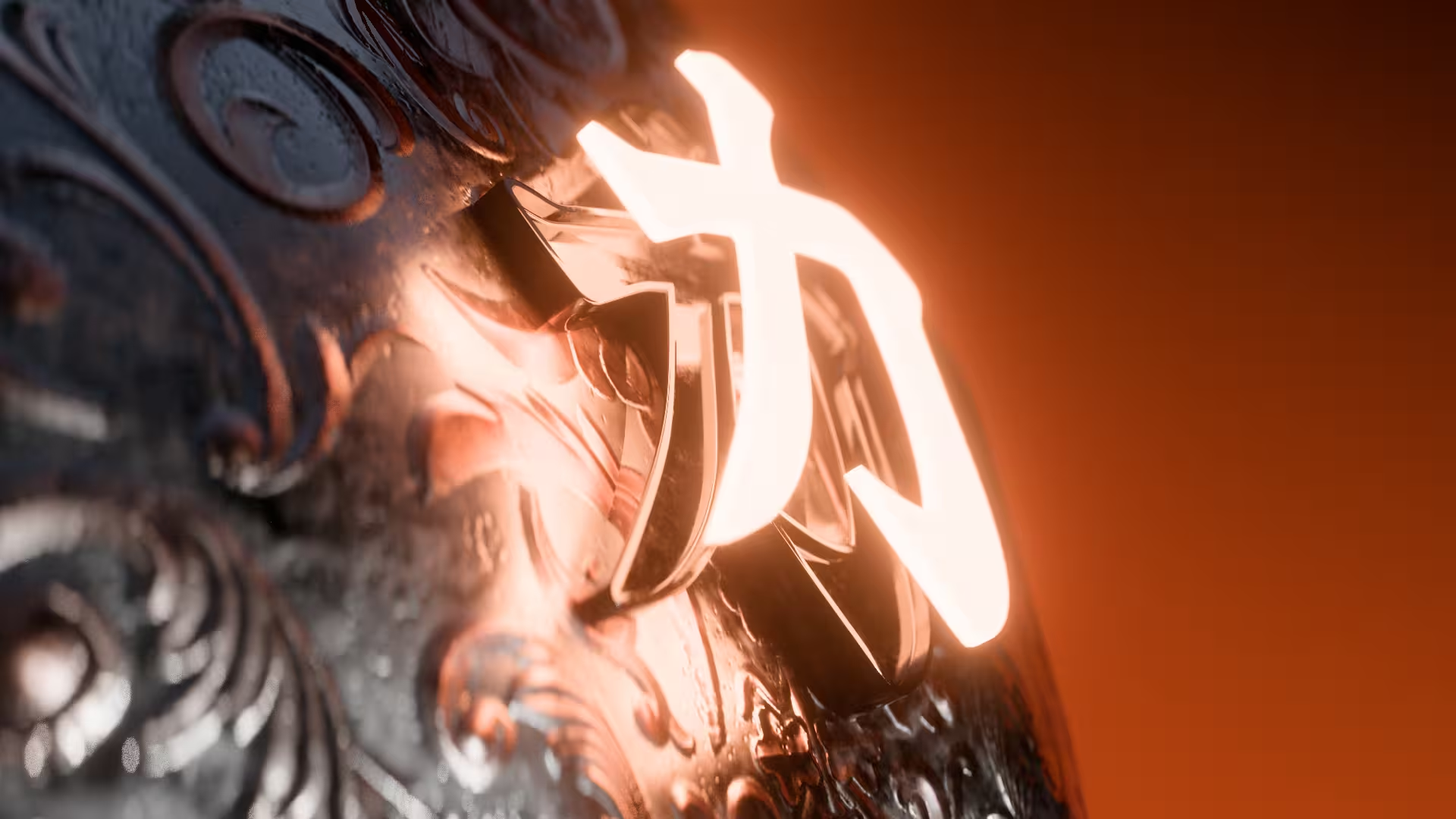
A tiger assembles itself from machine parts, each component moving with purpose before snapping into place, and a koi passes effortlessly through a simulated body of water. Across a continuing series for ELEKTRA, familiar animals such as these are rebuilt as futuristic forms shaped by machinery, movement, and atmosphere.
The artworks were created by Henry Drenth, founder of Stuttgart-based Achat Graphics, for Charlie Sparks’ record label and event brand. Created for events in Vienna, Los Angeles, and Paris, the series draws on animals that Drenth was given the freedom to place each one in an entirely new world.
Where industrial design met electronic music
Drenth entered 3D through industrial design, studying at HTW Berlin and spending a semester at TU Delft. The discipline taught him to think about form, materials, and how objects are constructed, ideas that remain visible in the mechanical structures of his current work.
At the same time, he spent years touring as a techno DJ and running his own record label. Design and music developed separately until 2023, when he moved into visual work full-time and the two sides of his practice began to merge.
“I know what a room feels like at 3am and I know what a track is doing structurally, and that ends up in the timing and the energy of the work.” - Henry Drenth
Achat Graphics now works across 3D motion design, branding, and web design. Many of its clients come from electronic music, including DJs, labels, and event organizers like Charlie Sparks and Techno Germany, while Drenth has also created work for brands outside the scene such as Monster Energy and Brut Builds.
Building worlds from concrete, machinery, and sound
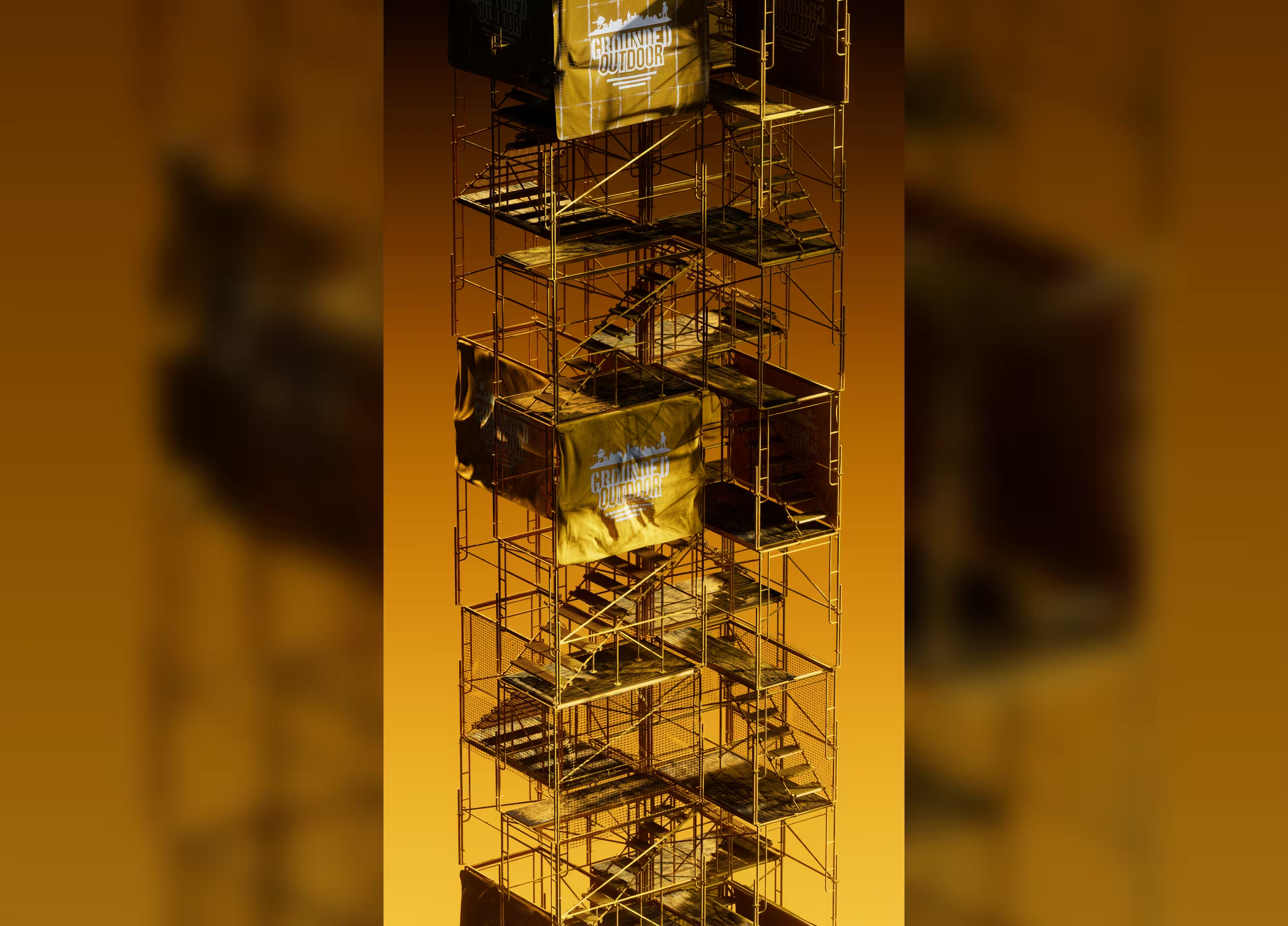
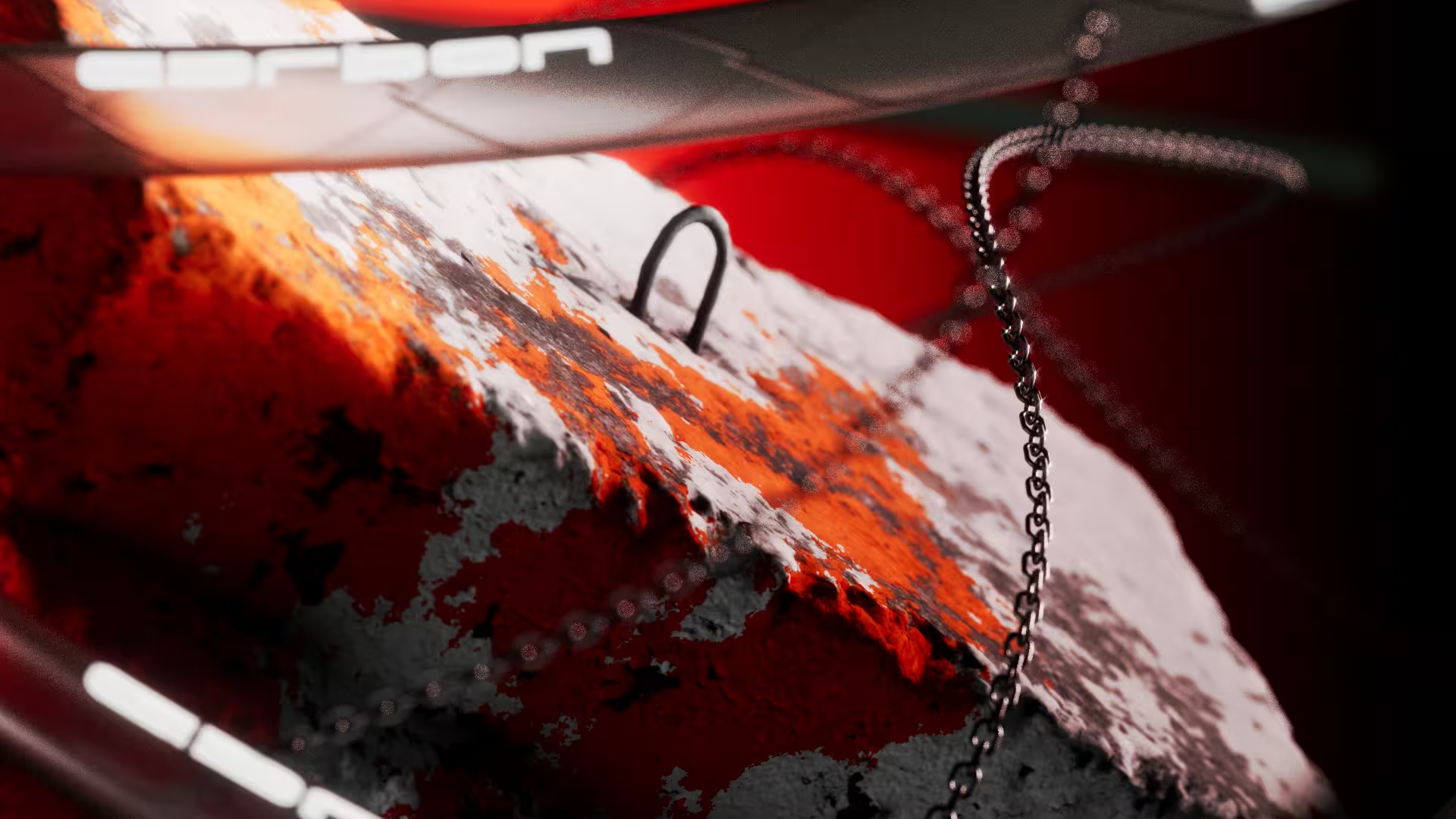
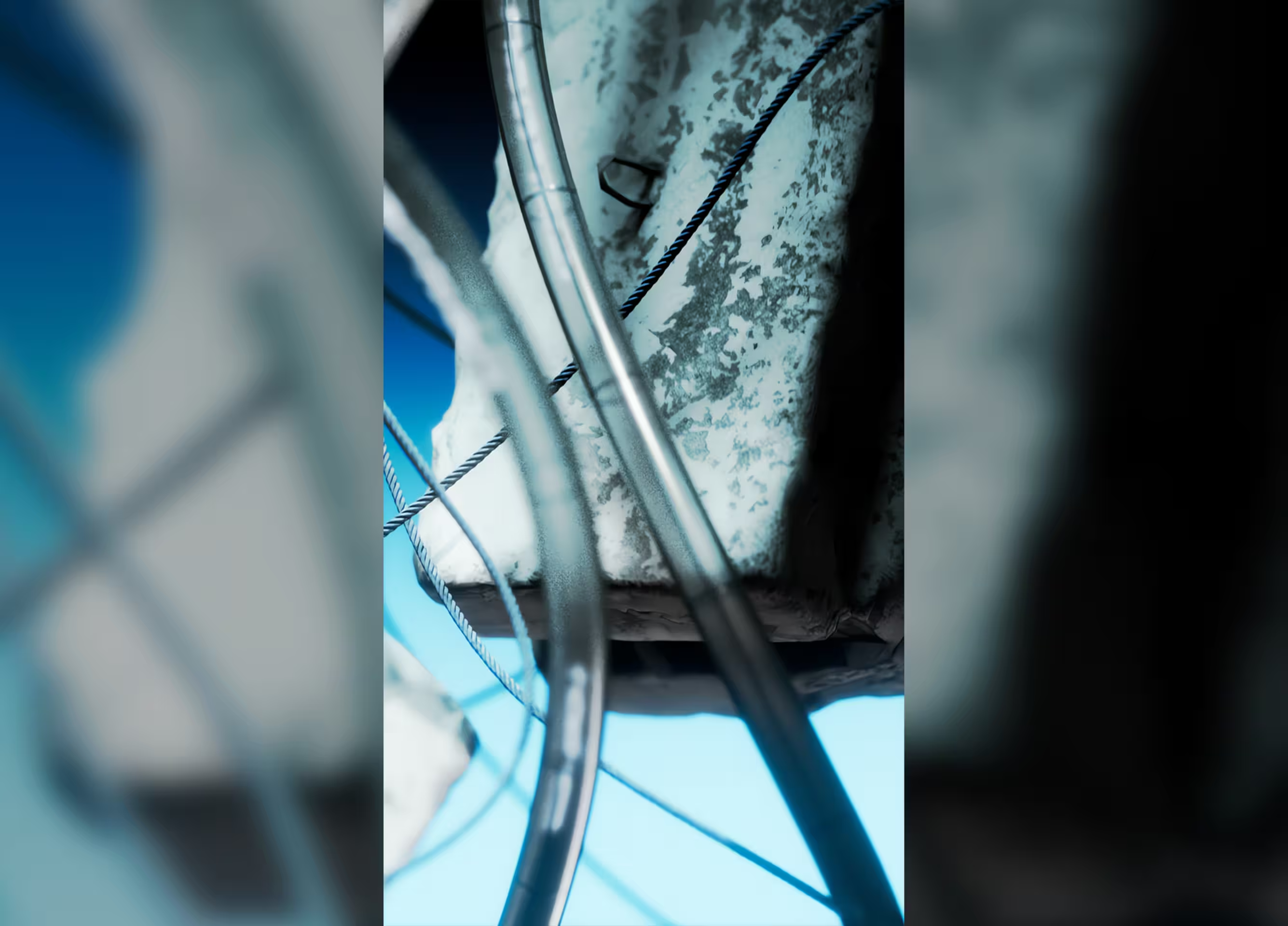
Drenth’s visual influences range from Akira, Alien, Doom, and Cyberpunk 2077 to brutalist architecture. He is particularly drawn to raw concrete, hard geometry, and monumental structures that seem immovable and make the viewer feel small beside them.
The electronic music world carries many of the same visual qualities. Festival stages are filled with trusses, containers, screens, and machinery, while underground clubs expose their concrete walls, pipes, and cables. Because Drenth came from that environment, its atmosphere appears in his work without needing to be consciously added.
His projects usually begin with research. Unless a client provides a strong moodboard, he gathers images and visual directions before opening Blender. As someone inclined to act quickly, he sometimes has to resist moving into production before the central idea is ready.
“With a strong idea and strong inspiration, the outcome will always be better than starting with trial and error and fixing it as you go.” - Henry Drenth
A workflow built from composition outward
Once the direction is established, Drenth begins building the scene in Blender, moving from rough forms toward detail. Composition comes first, followed by the camera and lighting. Materials and animation are introduced only after the image already works at a more fundamental level.
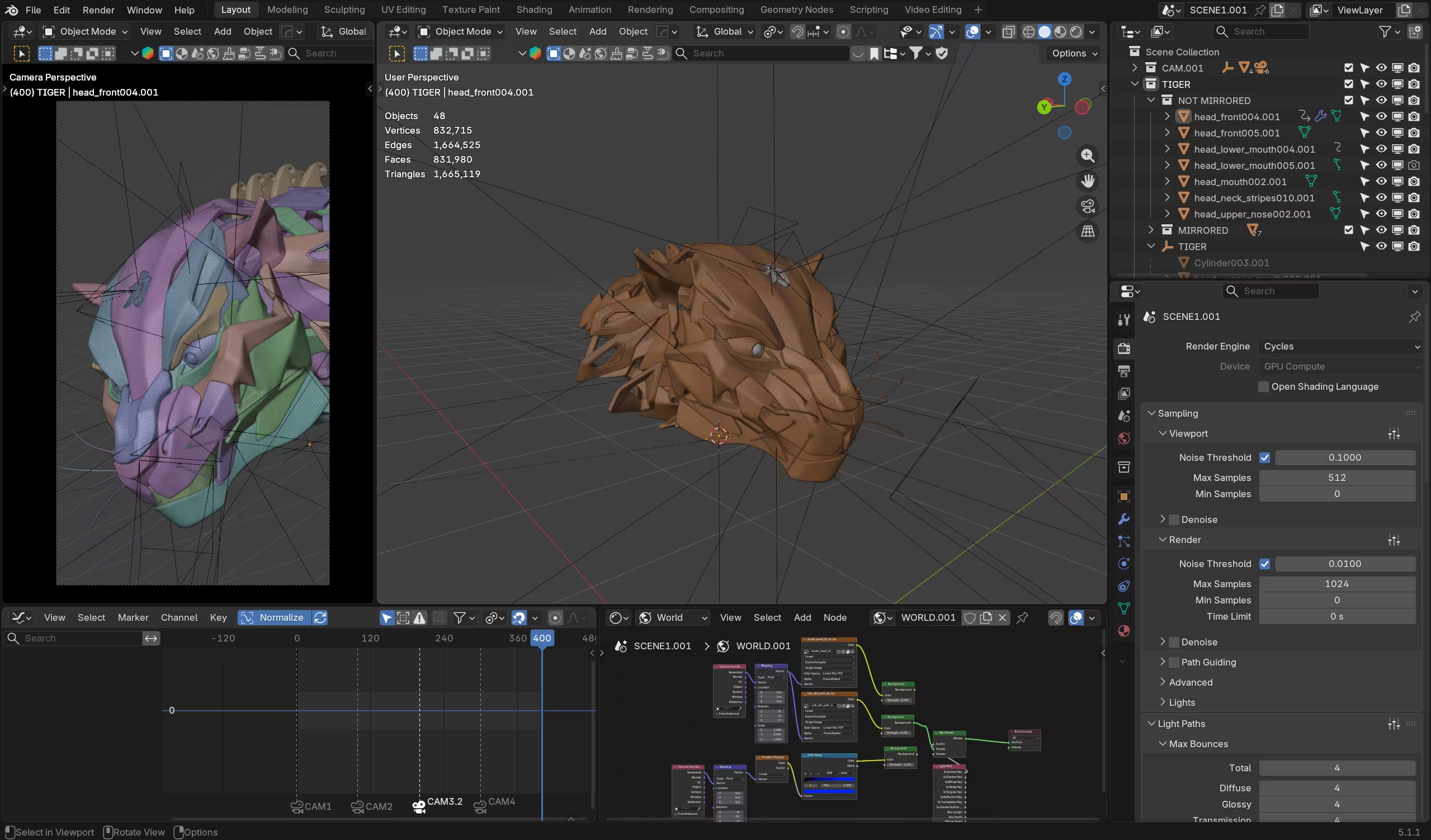
His principle is straightforward: if the composition works without finished lighting and materials, it has a strong composition. If the lighting works before textures are added, it’s strong lighting in which the materials can improve the image rather than compensate for weaknesses underneath it.
Look development is where Drenth feels most at home. Small adjustments to lighting and materials can create the largest changes in atmosphere, depth, and scale, making it the part of the process where he is most likely to lose track of time.
Blender remains at the center of his pipeline, supported by After Effects for compositing and final motion, and Photoshop and Illustrator for design work. He also develops his own Blender addons when an existing workflow becomes an obstacle.
“When the workflow is the reason you’re avoiding something, you go and fix the workflow.” - Henry Drenth
His Audio Trigger addon makes audio-reactive animation easier to control, while Render Viewport creates fast previews for look development and social media. Both emerged from problems he encountered in his own production process.
Reimagining animals through 3D motion
The ELEKTRA collaboration began through Decoy, a Berlin collective for which Drenth had previously created visuals. One of its organizers was also involved with ELEKTRA and recommended his work.
Each artwork begins with an animal selected by the client or proposed by Drenth. The subject provides a common thread, but its treatment remains open. That freedom allows him to explore science-fiction environments, mechanical construction, abstraction, and simulation without making every piece feel like a variation of the same image.
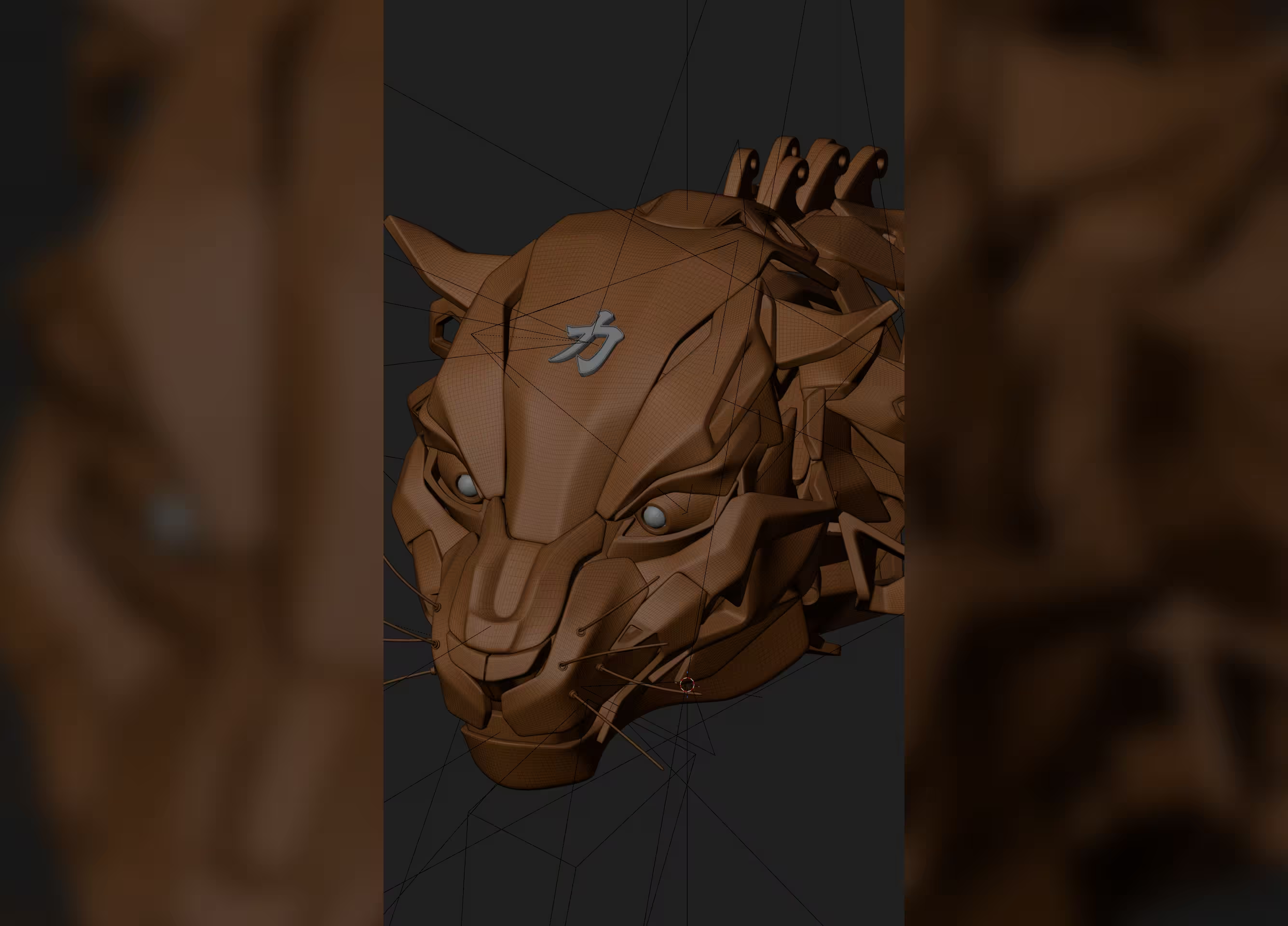
The animals remain recognizable, but Drenth gives them a second visual reading. The tiger, for example, is immediately understood as an animal before the viewer notices that its body is constructed from individual machine components.
Making the tiger feel mechanically alive
The tiger was Drenth’s favorite piece in the series and the one he most enjoyed creating. Its body assembles itself during the animation, with numerous components moving independently before becoming part of a complete mechanical animal.
The challenge was giving those movements convincing weight, because if the parts simply travelled from one location to another, the transformation would feel empty, regardless of how detailed the model was.
“The pieces have to lock into place with a real mechanical weight to them, so it needed very detailed keyframe work and a springy, mechanical feel to the motion. If the parts just slide into position it looks like nothing” - Henry Drenth
Drenth’s reference was the transformation language of the Transformers films, where many small pieces move with individual purpose while contributing to one coordinated action.
Learning through the koi simulation
While the tiger was the most enjoyable piece, the koi became the most technically difficult. Its scene contained an approximately 200GB water simulation and required considerable back and forth before the motion behaved as intended.
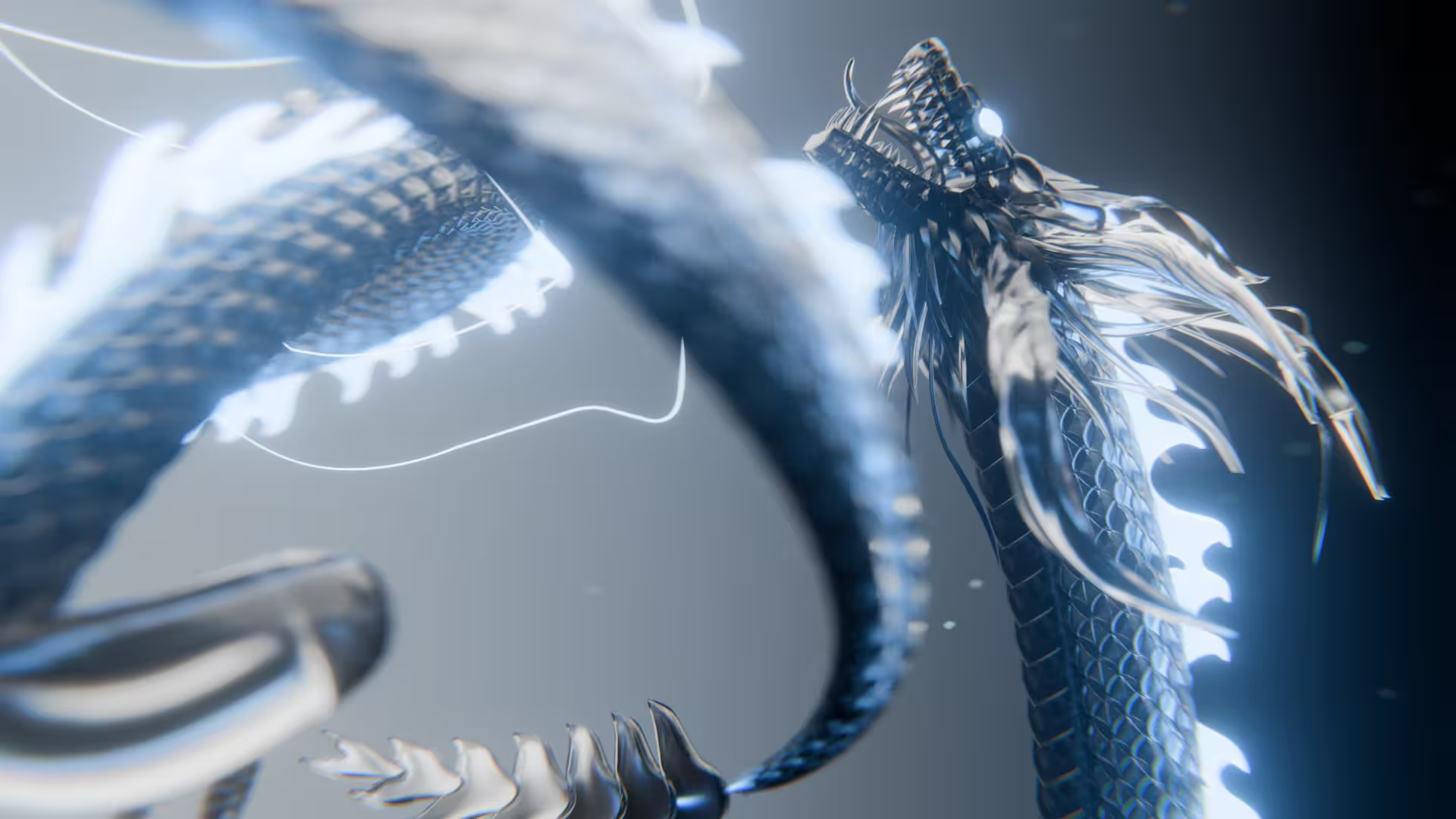
The simulation absorbed so much attention that Drenth felt the lighting, materials, and water shader received less development than they deserved. It remains the artwork in the series he would most like to revisit. The experience revealed how easily one complex technical element can dominate a project.
Rendering without giving up the workstation
Drenth first tried GarageFarm.NET after a colleague told him he used the service for all his renders. During the tiger project, he submitted a test containing every fifth frame and used twice the sample count of the version he eventually delivered.
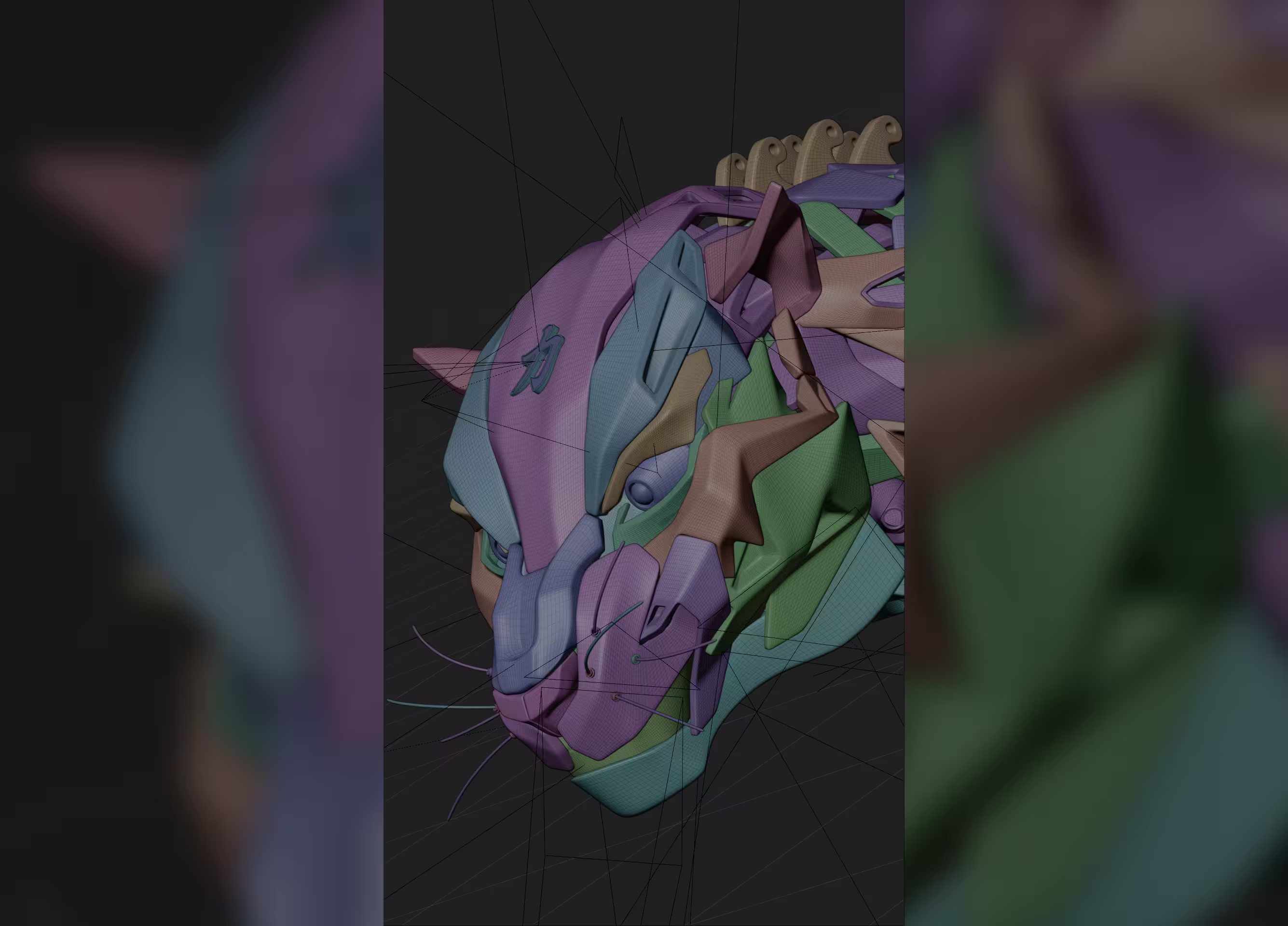
Twenty frames returned in six minutes and cost $0.48. Based on that test, Drenth estimated that the complete 400-frame sequence would cost less than $10, even at the higher sample count. The comparison was clear with ten days of CPU rendering on a damaged laptop, or an affordable external render that allowed him to continue working. More importantly, it meant Drenth could keep accepting client projects while travelling rather than turning them down because of his hardware.
“ I made the ELEKTRA tiger while travelling through Asia for three months, on a laptop with a dead graphics card [...]. It was built in a bungalow in the jungle on Koh Phangan and rendered on GarageFarm. That's proof that you don't need monster hardware to make good work. You need a way to get the frames out.” - Henry Drenth
Faster feedback for creative decisions
For Drenth, a benefit of the render farm is keeping his local machine available. While a test or sequence renders elsewhere, he can continue adjusting another scene, preparing a new version, or moving on to a different project.
“What it actually feels like is freedom. Test renders cost basically nothing, so I pull single frames from anywhere in the scene while I’m working on look-dev, lighting and texturing.” - Henry Drenth
The process shortens the distance between making a visual choice and being able to evaluate it. That matters particularly during look development, where a small change in lighting or materials can transform the entire image.
Drenth also values the responsiveness of the support team, particularly when issues arise close to a deadline. He finds the Blender plugin easy to integrate into his workflow, although he believes the web interface could present important information more clearly for new users.
“The support, without question. Any time I've had an issue I've messaged them through the support window and they've resolved it within minutes, no matter the day or the time. They're always there. That matters more than people realise” - Henry Drenth
Taking club culture into larger spaces
Drenth plans to grow Achat Graphics into a larger studio, work with other artists, and take on more ambitious projects. He intends to remain rooted in electronic music while bringing its visual language to brands and spaces that may not normally look toward club culture for creative direction.
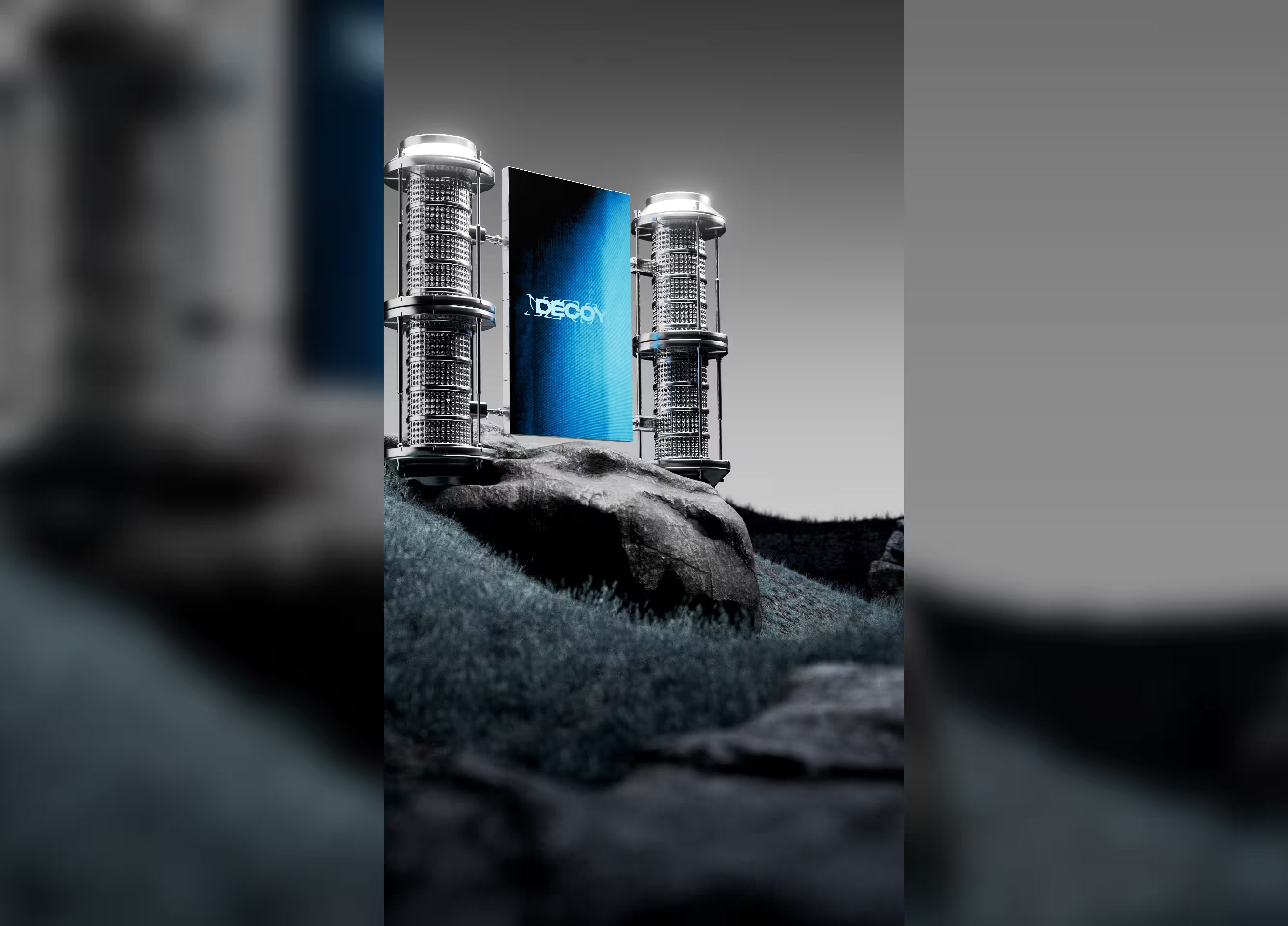
His dream project is a large public LED screen, either as part of a festival stage or in a city center. The appeal is not simply producing a larger image, but experiencing the work in a physical environment with architecture and people around it.
Tool development will continue alongside client work. Drenth sees AI as useful for specific technical tasks, including render optimization and debugging complex Geometry Nodes setups, but not as a replacement for the artistic decisions that determine what a project should become.
“The creative parts. Concept creation and look-dev, the stages where taste actually lives. You still need real artistic vision and experience there, and AI is basically unusable for it” - Henry Drenth
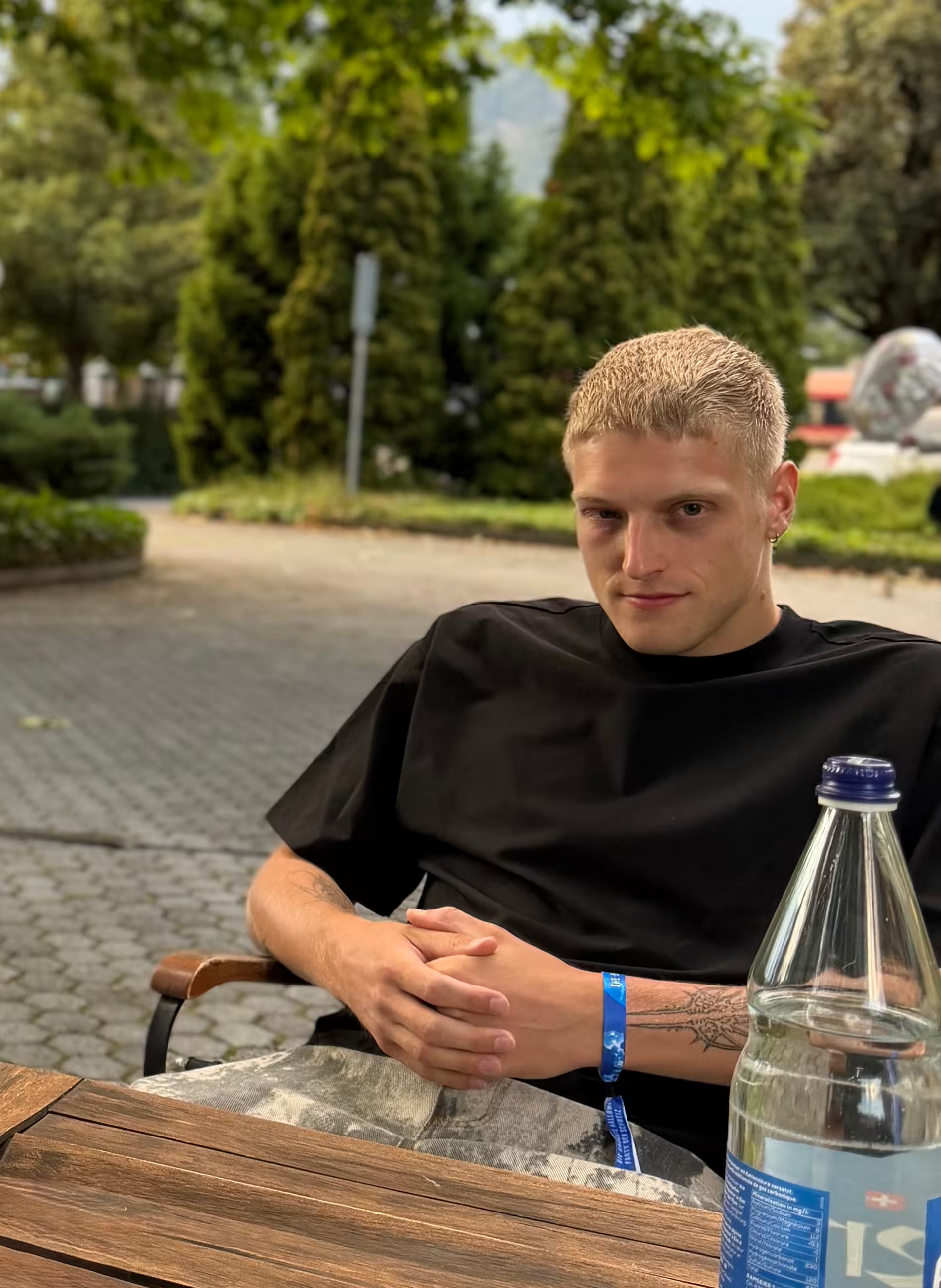
The ELEKTRA series reflects that balance. Software, simulations, custom addons, and distributed rendering support the production, but the identity of each animal still begins with Drenth’s decisions about form, atmosphere, and movement.
Now that the animals have been simulated and released, Achat Graphics remains open for another world and another opportunity to turn the industrial language of electronic music into something built to move.
To see more of Henry Drenth and Achat Graphics’ work, visit:
Website: https://achat.graphics
Instagram: https://www.instagram.com/achat.graphics/
Superhive: https://superhivemarket.com/creators/achatgraphics
Gumroad: https://achatgraphics.gumroad.com